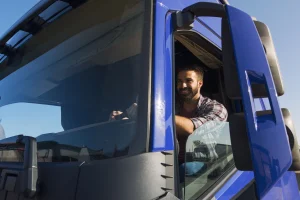
Every February 14th, millions of fresh flowers arrive at homes and businesses across the United States. But how are they transported, and where do they come from? We’ll tell you everything.
Every Valentine’s Day, millions of fresh flowers make their way to homes and businesses across the U.S., a process that involves a complex logistics chain in which transporters play a crucial role.
On this date, the transportation sector works at full speed to ensure that roses, tulips, lilies, and other varieties arrive at their destinations in perfect condition.
A Race Against Time
The journey of flowers begins in countries like Colombia, Ecuador, and Mexico, the main exporters to the U.S. From there, they are shipped on refrigerated cargo flights to key airports like Miami, which receives around 90% of imported flowers during this season. Once on U.S. soil, transporters take over, distributing them in trucks equipped with specialized technology to keep them fresh.
Refrigerated trucks play a key role in this process. Flowers must be kept at temperatures between 34 and 41 degrees Fahrenheit to prevent wilting before reaching florists and supermarkets. Drivers must adhere to strict schedules, avoiding delays that could compromise product quality. “At this time of year, deadlines are tighter than ever. A delay of just a few hours can mean millions in losses,” says Luis Ramírez, a transporter with over a decade of experience in the industry.

High Demand and Logistics Challenges
The surge in flower demand for Valentine’s Day puts immense pressure on transporters. “We work longer shifts, and many of us make express runs to meet delivery deadlines,” explains María González, a refrigerated truck driver in Florida. In addition to long hours, drivers face challenges such as traffic in major cities and weather conditions that can delay shipments.
Flowers not only need to arrive quickly but also in optimal condition. To achieve this, advanced technologies such as temperature and humidity sensors are used to monitor conditions inside the trucks in real time. Additional techniques, like hydration with special water and packaging designed to minimize damage during transit, are also implemented.
Valentine’s Day: Peak Season for the Industry
The flower transport business is highly lucrative during this period. It is estimated that more than 500 million flowers are moved across the U.S. in February alone. This activity benefits not only transporters but also farmers, distributors, and florists, all of whom rely on efficient logistics to meet the high demand from couples celebrating their love.
Despite the stress and long hours, transporters understand that their work is essential to keeping the tradition of giving flowers on Valentine’s Day alive. “It’s a huge effort, but it’s worth it knowing that millions of people will receive a beautiful bouquet thanks to our work,” concludes Ramírez.

Trucking faces continued job losses as 2026 uncertainty looms
The U.S. trucking industry continues to lose jobs and reduce capacity, will this trend continue in 2026? The U.S. trucking industry continues to lose jobs

U.S. Allocates $1.5 Billion for Truck Road Infrastructure
The 2026 BUILD Grants program will invest $1.5 billion in truck road infrastructure across highways, ports, and truck parking facilities, with direct impact on logistics and freight transportation in the United States.

Wall Street Record: Transportation Stocks Boost Confidence in the Economy and Logistics
Transportation stocks in the United States have staged a strong rally so far in 2025, reflecting growing market confidence in the real economic activity behind logistics, freight movement, and mobility services more broadly.

The meaning of Hanukkah and how to celebrate it on the road
Hanukkah is a celebration of resilience and hope, and here are some ways you can take this on the road. December is one of the

Waymo under investigation for potential safety risk in school zones
A recent wave of videos has shown that some Waymo vehicles are not complying with safety regulations in school zones. The autonomous vehicle company Waymo,

Don’t Blame the Snow: The Real Causes Behind Winter Truck Accidents
Don’t Blame the Snow: Why Most Winter Truck Accidents Are Preventable