 Hable con un agente al (888) 572-7520
  Enviar mensaje a un agente



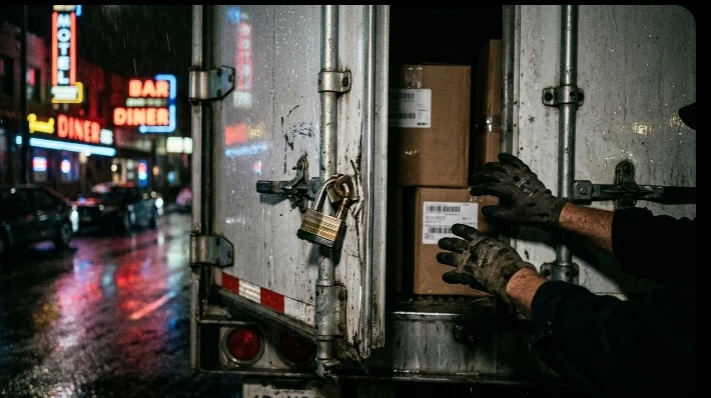
It’s an ordinary Monday. One of your drivers pulls into a truck stop to rest, grab a coffee, or refuel before continuing the trip. Everything seems routine. Twenty minutes later, the driver returns—and the parking space is empty. The truck is gone.
At that moment, the race against the clock begins. The vehicle has disappeared, the cargo is missing, and the customer is waiting for a shipment that may never arrive.
While law enforcement takes the report and the company works to reconstruct the truck’s last known movements, a series of questions immediately arise—questions no trucking business wants to face. Was the truck properly insured? Does the policy cover the cargo as well? How long will it take to get back on the road? What happens to pending contracts?
Truck and cargo theft remain among the most significant threats facing the transportation industry in the United States.
Criminal organizations are no longer targeting only entire trucks. In many cases, they specifically seek high-value freight, including electronics, food products, pharmaceuticals, and beverages. In other situations, the truck itself is the target, either to be dismantled for parts or used in other criminal activities.
For a trucking company, however, the real challenge begins after the theft.
The Real Cost Is Never Just the Truck
When a truck disappears, the most obvious loss is the vehicle itself. But that is rarely the company’s biggest expense.
Businesses must also deal with the value of the stolen cargo, customer claims, delivery delays, contractual penalties, and the need to reorganize their operations to replace the missed shipment.
If the truck remains out of service for days or even weeks, additional costs quickly accumulate. Companies may need to rent replacement equipment, pay overtime to reschedule routes, cover administrative expenses, hire legal assistance, and even risk losing future business if customers decide to move their freight elsewhere.
Insurance premiums may also increase at the next renewal, particularly if the insurer determines that the operation now represents a higher level of risk.
In many cases, the financial impact ends up being several times greater than the value of the truck itself.
The First Hours Are Critical
When a theft occurs, every minute matters.
In addition to filing a police report, it is essential to notify the insurance carrier immediately, inform the cargo owner, activate any available GPS or tracking systems, and gather all documentation needed to begin the claims process.
Keeping organized records of the vehicle, insurance policy, driver, permits, and cargo can significantly speed up both the investigation and the insurance claim.
On the other hand, missing documentation or delays in reporting the incident can complicate the process—and, depending on the policy terms, may even affect insurance coverage.
Technology Helps—But It Doesn’t Eliminate the Risk
Today’s fleets increasingly rely on GPS tracking, real-time telematics, remote immobilizers, onboard cameras, door sensors, and geofencing systems that alert operators whenever a truck leaves its authorized route.
These technologies improve security and increase the chances of recovering stolen equipment, but they cannot guarantee that theft will never happen.
Criminals have also become more sophisticated. Some use GPS signal jammers, forged documentation, or elaborate fraud schemes to pose as legitimate carriers and steal freight before the driver even realizes something is wrong.
For that reason, technology should always be supported by strong internal procedures, driver training, and a comprehensive risk management strategy.
Does Your Insurance Policy Really Cover Everything?
One of the biggest surprises often comes after the theft—when companies review their insurance policy.
Many businesses discover only then that certain situations were excluded or that compensation limits were far lower than they expected.
That’s why it’s important to regularly review key aspects of your coverage, including:
The insured value of each truck.
Cargo insurance coverage.
Applicable deductibles.
Policy exclusions.
The geographic areas where the fleet operates.
Security requirements established by the insurer.
Reporting obligations in the event of theft.
A policy purchased several years ago may no longer provide adequate protection if the company has added trucks, expanded into new states, begun hauling higher-value freight, or changed its business model.
Discovering those gaps after a theft is almost always far more expensive than reviewing the policy beforehand.
Prevention Starts Long Before the Theft
Reducing the risk of theft involves much more than installing GPS equipment.
Choosing secure parking locations, planning routes carefully, screening drivers and subcontracted carriers, maintaining clear communication protocols, and keeping documentation up to date all contribute to a stronger security strategy.
Drivers should also know how to respond to suspicious situations, and companies should have well-defined procedures for handling theft or attempted theft quickly and effectively.
Preparation before an incident occurs can make the difference between a manageable disruption and a major operational crisis.
At Saint George, We Protect More Than Just Your Truck
At Saint George, we work with trucking companies, fleet owners, and logistics operators to evaluate the real risks behind every operation and ensure that insurance coverage keeps pace with business growth.
We review policies, identify potential coverage gaps, and help our clients understand exactly what their insurance protects—and under what conditions.
Because a stolen truck represents far more than the loss of a vehicle. It can mean missed contracts, dissatisfied customers, weeks of operational downtime, and significant financial losses.
The best protection doesn’t begin after the theft. It starts long before it happens—with a risk management strategy designed to keep your business moving, even when the unexpected occurs.
 Business hours: Monday to Friday from 8:00 AM to 5:00 PM. California time