As America honors the brave men and women who gave their lives in service to the nation, thousands of truck drivers continue moving across the country’s highways.
A Day to Remember
Memorial Day, observed on the last Monday of May, was established after the Civil War to honor fallen soldiers. Over the years, it has become a day of national reflection, marked by military cemetery ceremonies, patriotic parades, and commemorative events across the country.
For many, it’s also the unofficial start of summer—a long weekend that sends millions of families on the road, creates traffic congestion, and activates the logistics network in full force.

Heavy Traffic and Road Closures
On May 26, highways across the U.S. are busier than ever. According to the Department of Transportation (DOT), over 42 million road trips are expected between Friday and Monday. Cities like Washington D.C., San Francisco, and Dearborn have road closures due to patriotic events and parades.
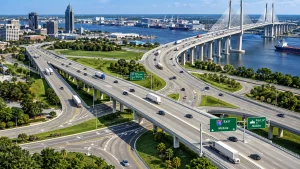
Key intersections such as I-16 and I-95 in Georgia, US-75 in Kansas, and the Williamsburg Bridge in New York are affected by ongoing maintenance or temporary detours. For truckers, that means longer hours, tighter schedules, and the need for heightened caution on the roads.

No Days Off Behind the Wheel
While most Americans relax or gather with loved ones, many truckers keep working.
“I’m on the road today, hauling a food shipment to New Jersey. It’s due tonight,” says Roberto Martínez, a Mexican-American driver who’s covered the East Coast for 12 years. “You learn to celebrate holidays later, once you’re home.”
For many drivers—especially those paid per mile or per delivery—Memorial Day is a valuable workday. It’s also a serious responsibility: many are delivering essential goods for hospitals, grocery chains, or critical industries that never shut down.
Patriots on the Road
At truck stops and gas stations, it’s not uncommon today to see American flags fluttering on hoods, commemorative decals, or rigs decorated with military emblems. Some drivers are veterans; others are children or grandchildren of fallen soldiers.
“I serve the country from a different front—not with a weapon, but behind the wheel,” says Linda Rowe, a Texas-based driver and daughter of a Vietnam War veteran. “I’ve got a flag in my cab today. That’s how I remember.”
Several trucking companies also join the tribute, offering fuel discounts, symbolic bonuses, or messages of gratitude. On social media, posts multiply with the phrase: “We honor the fallen. We thank those who keep going.”
More Than Just a Day Off
This Memorial Day, the nation reflects on the past with reverence—but it also pays attention to the present. Out on the interstate highways, in the trucks crossing state lines, are those who keep America moving.
They may not wear uniforms, but they uphold the chain that keeps the country standing.
Because remembrance isn’t only found in monuments—it’s also lived daily through duty. And in that, truckers remain part of the working soul of America.

Trucker Fashion: A Revolution Born on the Road That Still Sets the Trend
Trucker fashion remains relevant due to its authenticity, its seamless integration into streetwear, and its reinterpretation by luxury brands, consolidating itself as a revolution born on the road that evolved from a work uniform into a global cultural symbol

North Dakota among states regaining non-domiciled CDL authority
North Dakota will reissue approximately 150 of the 526 CDLs and CLPs for non-resident drivers that were active during the FMCSA audit.

The Growing Threat of Chameleon Fleets
A CBS ‘60 Minutes’ investigation exposes the rise of ‘Chameleon Fleets’ in the U.S. trucking industry.

US transportation begins to show signs of recovery
With tonnage at record levels and rates on the rise, carriers are leading the expansion of the logistics market. If the forecasts hold true, years of uncertainty could be over.

Trump Administration Restarts California Pipeline to Lower Gasoline Prices
Under Trump, the restart of the Santa Ynez Pipeline aims to boost local crude supply and impact gasoline prices amid persistently high energy costs in California.

Lawmakers push to raise minimum truck insurance compensation to $5 million
The “Fair Compensation for Truck Crash Victims Act” seeks to increase insurance requirements for interstate motor carriers.