 Hable con un agente al (888) 572-7520
  Enviar mensaje a un agente



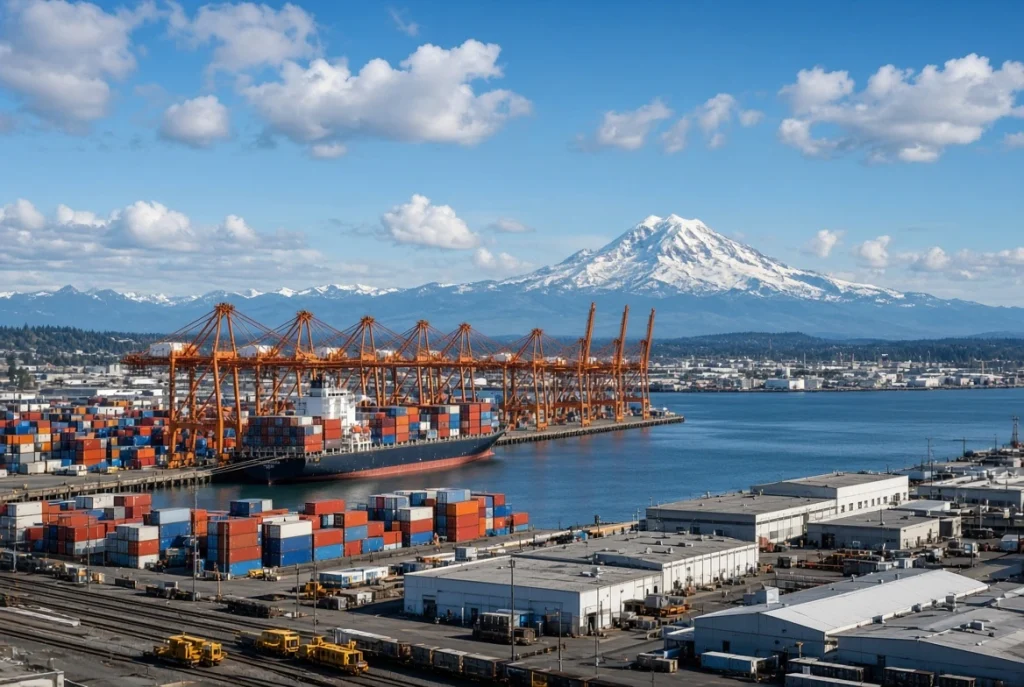
The state of Washington is a strategic hub for many truck drivers handling maritime freight on the U.S. West Coast. When referring to trucking transportation at the Port of Washington, this generally means the port complex formed by the Ports of Seattle and Tacoma, which handle a significant share of container traffic, international cargo, vehicles, and goods in the Pacific Northwest.
Both ports work together on maritime cargo operations under the alliance known as The Northwest Seaport Alliance. Seattle has several marine terminals and connections to the region’s major highways, while Tacoma is particularly important for container transportation and intermodal operations.
This means truck drivers may receive loads destined for marine terminals, rail yards, distribution centers, or transload facilities. Therefore, understanding state regulations, access procedures, permits, and terminal-specific requirements can be essential for making an efficient delivery.
Weight, Dimensions, and Permits at Washington Ports
One of the most important considerations for any truck driver working in Washington is the state’s weight and dimension regulations. As a general statewide reference, legal limits include 8 feet 6 inches in width, 14 feet in height, 53 feet for a tractor-trailer, and 75 feet for a truck-and-trailer combination, although specific rules vary depending on the type of vehicle and cargo.
The Washington Commercial Driver Guide also provides weight references, including up to 20,000 pounds on a single axle, 34,000 pounds on tandem axles under certain conditions, and up to 80,000 pounds for a vehicle combination, subject to applicable requirements concerning tires, axles, and axle spacing.
If the load exceeds legal limits and is indivisible, an oversize or overweight permit may be required before the trip. The Washington State Department of Transportation (WSDOT) allows certain permits to be processed online and advises carriers to check route restrictions before moving the load.
The Port of Tacoma Heavy Haul Corridor
One feature that every port trucker should be familiar with is the Port of Tacoma Heavy Haul Corridor. This area allows certain operations involving sealed marine containers that may exceed some standard weight limits, provided that the established conditions are met. Requirements published by the City of Tacoma include:
- The cargo must be inside a sealed marine container.
- The trip must be between a transload facility and a marine terminal.
- The established routes must be used.
There are also specific requirements regarding axle spacing and gross vehicle weight.
This is particularly relevant for drayage drivers transporting containers from transfer yards to marine terminals. It should not be interpreted as a general authorization to operate overweight vehicles on any road in Tacoma. The corridor’s conditions and any applicable permits must be strictly followed.
Terminal Access and the Transportation Worker Identification Credential
Another fundamental consideration is port security. To access restricted areas of the Port of Tacoma without an escort, drivers need a Transportation Worker Identification Credential (TWIC). The port states that this credential is required for truck drivers and other workers who need regular, unescorted access to restricted areas.
Operators without a TWIC may be subject to escort procedures at certain facilities, but leased terminals may have their own requirements. For this reason, drivers should confirm the specific requirements of the terminal where they will pick up or deliver their cargo before arriving.
What to Check Before Entering the Port
Proper preparation can save a significant amount of time. Before heading to Seattle or Tacoma, drivers should check:
- Container number and type of cargo.
- Exact origin or destination terminal.
- Appointment or gate-entry window, when applicable.
- Transportation documentation.
- TWIC and identification documents.
- Total weight and cargo distribution.
- Condition of the chassis and equipment being used.
- Highway and bridge restrictions.
- Traffic conditions and potential construction zones.
- Special terminal requirements.
At the Port of Seattle, digital appointment systems are available for certain operations, so the specific procedure should be verified directly with the terminal or the appropriate operator. The port’s official pages also provide information on commercial operations and contacts for specific facilities.

Tips for Truck Drivers Hauling Freight at Washington Ports
Working as a truck driver at Washington’s ports can provide good opportunities in freight transportation, particularly in drayage, container, transload, and intermodal operations. However, efficiency depends on understanding the rules before entering the port.
The key is simple:
- Confirm the terminal.
- Check the appointment.
- Verify the weight and dimensions.
- Carry the correct documentation.
- Confirm TWIC requirements.
- Check the route before departing.
For oversize or overweight loads, certain jurisdictions, including Seattle and Tacoma, have additional requirements. To stay up to date, truck drivers should check directly with WSDOT and the port authorities before each trip, since road restrictions, terminal procedures, and operational requirements can change. WSDOT’s official information is specifically designed as a reference for commercial operators working in the state of Washington.
 Business hours: Monday to Friday from 8:00 AM to 5:00 PM. California time