Are you a new carrier? This is what you need to know about permits, registration, and compliance.
The trucking industry can be quite challenging for beginners and newcomers. With the large amount of information, processes, permits, and records that only seasoned drivers fully understand, entering the sector can feel overwhelming. Even truckers with many years of experience can still get lost in the sea of requirements and regulations, which also change frequently.
Therefore, for those who are just getting started or still trying to find their way, let’s talk about the steps to take after obtaining your USDOT number (United States Department of Transportation) — or even before getting it.
I’m new to the trucking industry, what permits and requirements do I need?
A responsible carrier must be familiar with the state and federal permits that apply to their operations. However, memorizing all the requirements can be challenging even for those with years of experience. To make this task easier, we have condensed some of the most important permits every new trucker should know.
Although covering every permit in one place can be difficult and some details may remain unclear, the list below will serve as a helpful and concise guide for anyone seeking quick and accurate answers.
Let’s start with vehicles for in-state use only and non-CDL. These are the permits required to operate them:
- USDOT Number
- DOT physical exam and medical card
- Driver qualification file
- Intrastate authority (requirements vary by state)
- Commercial insurance policy
- Annual vehicle inspection
- Electronic logging device (exemptions apply)
- Vehicle markings (USDOT number + state abbreviation, company name)
For interstate and CDL vehicles, everything listed above is required, plus the following:
- Commercial driver’s license (CDL)
- Drug and alcohol testing consortium
- Employer account in the FMCSA Clearinghouse
- Driver account in the FMCSA Clearinghouse (not required for owner-operators)
- Clearinghouse queries (pre-employment and annual)
- Supervisor training certificate (not required for owner-operators)
- Heavy Highway Vehicle Use Tax Form 2290 (if the gross vehicle weight/gross combined weight is 55,000 lbs or more)

For interstate and non-CDL, the required permits and registrations are:
- USDOT Number
- MC Number (not applicable to private carriers)
- BOC-3 filing (not applicable to private carriers)
- Unified Carrier Registration (UCR)
- DOT physical exam and medical card
- Driver qualification file
- Intrastate authority (varies by state)
- Commercial insurance policy
- Annual vehicle inspection
- Electronic logging device (exemptions apply)
- Vehicle markings (USDOT number, company name)
Interstate vehicles with a CDL license require everything listed above, plus:
- Drug and alcohol testing consortium
- Employer account in the FMCSA Clearinghouse
- Driver account in the FMCSA Clearinghouse (not applicable to owner-operators)
- Clearinghouse queries (pre-employment and annual)
- Supervisor training certificate (not applicable to owner-operators)
- Heavy Highway Vehicle Use Tax Form 2290 (if the gross vehicle weight/gross combined weight is 55,000 lbs or more)
- International Fuel Tax Agreement (IFTA)
- Quarterly IFTA reports
- International Registration Plan (IRP)
State-specific requirements
Some states have their own requirements for carriers operating within their borders. If you travel point-to-point within the following states, you will likely need additional items:
- California – CA Number and Motor Carrier Permit (MCP). Required for intrastate operations (over 10,001 lbs) or for-hire vehicles of any weight.
- Texas – TxDMV Number. Required for intrastate CDL vehicle operators, household goods carriers, school buses, and heavy agricultural vehicles.
- Ohio – PUCO Number. Required for for-hire carriers.
- Michigan – CVED Authority. Required for for-hire carriers.
Now, the key question: How do you obtain these requirements? If you need to acquire or renew any of these permits, we invite you to contact one of our agents, who will be happy to answer your questions and guide you through the entire process. You may also visit the official USDOT pages (transportation.gov) for more detailed information about the requirements for obtaining your permits.
We hope this brief guide has been helpful. If you are new to the industry, we warmly welcome you.

The best roadside attractions for truckers in the U.S.
America’s highways hide unique places that break up the routine, don’t hesitate to check out these roadside attractions along the way. The road is much

The trucker style: comfort, function, and identity
Truckers’ style is much more than workwear; it’s an identity. These are the most commonly worn garments among truckers. Truckers’ style is much more than
Chaos on Highway 61: Viral Wrong-Way Truck Video Reignites the CDL Debate
An 80-ton tractor-trailer traveling miles in the wrong direction on Missouri’s Highway 61 has reignited a nationwide debate over Commercial Driver’s License (CDL) standards, training

How technology affects driver retention
Friend or foe? 52% of drivers say technology directly influences their decision to stay with or leave a fleet. Fleet telematics company Platform Science published

Dalilah Law seeks to remove non-english speaking commercial drivers
President Donald Trump proposed the “Dalilah Law,” an initiative aimed at prohibiting undocumented immigrants from obtaining commercial driver’s licenses. On February 24, President Donald Trump
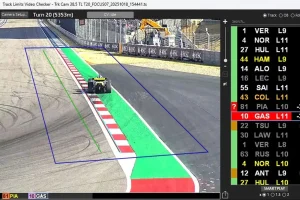
FORMULA 1 and the AI That Could Transform Transportation in the U.S.
The artificial intelligence system that Formula 1 implemented to monitor every car on every turn is opening the door to new applications in trucking, logistics,