Llame al (888) 572-7520 para hablar con un agente

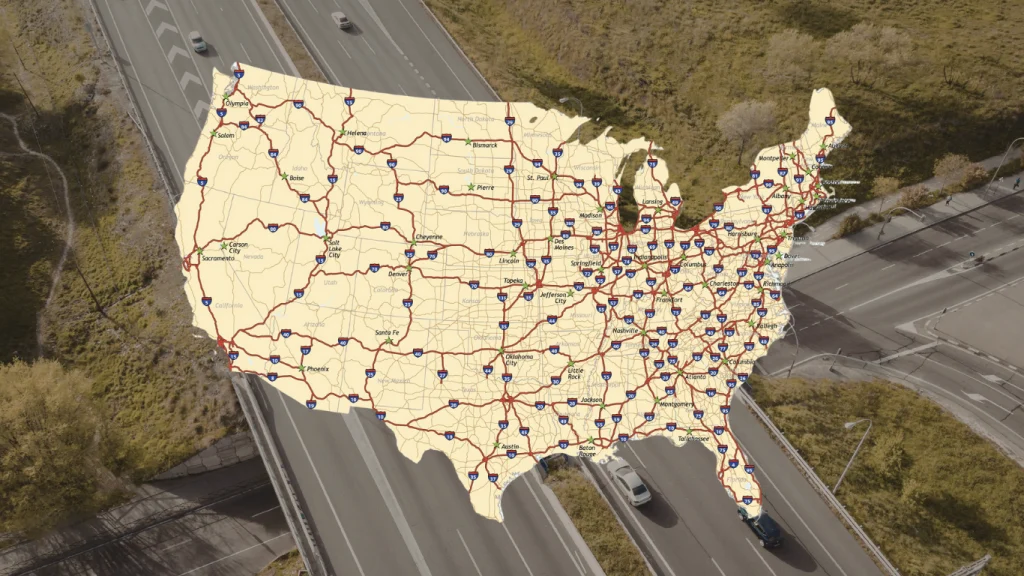
The U.S. Numbered Highway System provides an integrated national network of roads designed to facilitate long-distance travel.

The numbering of U.S. highways follows a structured system that, to those unfamiliar with it, may appear arbitrary. However, these numbers use a grid-based system grounded in direction, location, and hierarchy for each highway. What is often perceived as random numbering is, in fact, a precise and functional geographic information code carefully designed by transportation engineers.

Many drivers are not familiar with this system, which dates back to 1926. The United States Numbered Highway System provides an integrated national network of roads designed to facilitate long-distance travel and standardize routes across different states.

The system was created to replace the loosely marked auto trails of the early 20th century, with the goal of connecting states and major population centers through a basic transportation network distinct from the later high-speed Interstate Highway System.

Sistema de Autopistas Numeradas de Estados Unidos: ¿cómo funciona?

United States Numbered Highway System

Understanding the numbering patterns is extremely valuable for navigation and trip planning. So, how does it work?

What may seem like a complicated system is actually based on the concept of parity, where the parity of a route number indicates its general compass direction. North–south routes are assigned odd numbers, while east–west routes use even numbers. In this way, travelers can orient themselves using only the highway number.

This numbering system also establishes a geographic progression, in which numbers increase predictably across contiguous states. One- and two-digit numbers are reserved for major cross-country routes that form the backbone of the network.

Thus, east–west routes are designated with even numbers, typically using two digits for major corridors that span multiple states. The geographic progression of these routes dictates that numbers increase from north to south across the country. For example, US 2 runs very close to the northern border of the United States, while US 90 lies along the southern part of the country.

On the other hand, north–south routes with odd numbers follow a geographic progression in which lower numbers run parallel to the Atlantic coast in the eastern part of the country, such as US 1. Routes with higher numbers, like US 101, are located near the Pacific coast on the western side of the country, confirming the longitudinal progression.

United States Numbered Highway System: how does it work?
Image: Wirestock, via freepik.com

100 years of a functional system

In this way, the system was created to facilitate orientation long before the invention of GPS, offering drivers a relatively simple method of navigation. It remains in use today due to the efficiency it has demonstrated for an entire century.

Although there are some exceptions within the system, such as “split routes, which are designated by adding a directional suffix (US 11E, US 11W), the established grid system continues to be the governing structure of the United States Numbered Highway System.

Facebook
Twitter
LinkedIn
WhatsApp
custom trucks

The Wildest Truck Modifications on the Road Today

Truck customization has become a serious industry, with some builds rivaling high-end RV conversions in complexity and cost. From redesigned sleepers to upgraded suspension systems, these modifications do more than change appearance — they alter weight, electrical load, and the technical profile of the truck.

Read More »
Pollution

Air Quality Alert in California Impacts Transportation

An air quality alert has been issued as high levels of fine particle pollution (PM2.5) trigger health warnings across several parts of California. The situation is affecting visibility, driver health, and logistics operations, forcing transportation professionals to take extra precautions on highways and in urban corridors

Read More »

Leave a Reply

Your email address will not be published. Required fields are marked *

Business hours: Monday to Friday from 8:00 AM to 5:00 PM. California time
Leave your number and a member of our company will contact you
Horario de atención: Lunes a viernes de 8.00 AM a 5.00 PM. Hora california

Deje su número y un miembro de nuestra empresa se pondrá en contacto con usted

Privacy summary

This website uses cookies so that we can offer you the best possible user experience. Cookie information is stored in your browser and performs functions such as recognizing you when you return to our website or helping our team understand which sections of the website you find most interesting and useful.

More information about the privacy policy: Privacy Policy

More information about the terms of use: Terms of use 

More information about the disclaimer: Disclaimer 

More information on acceptable use policies: Acceptable Use Policies