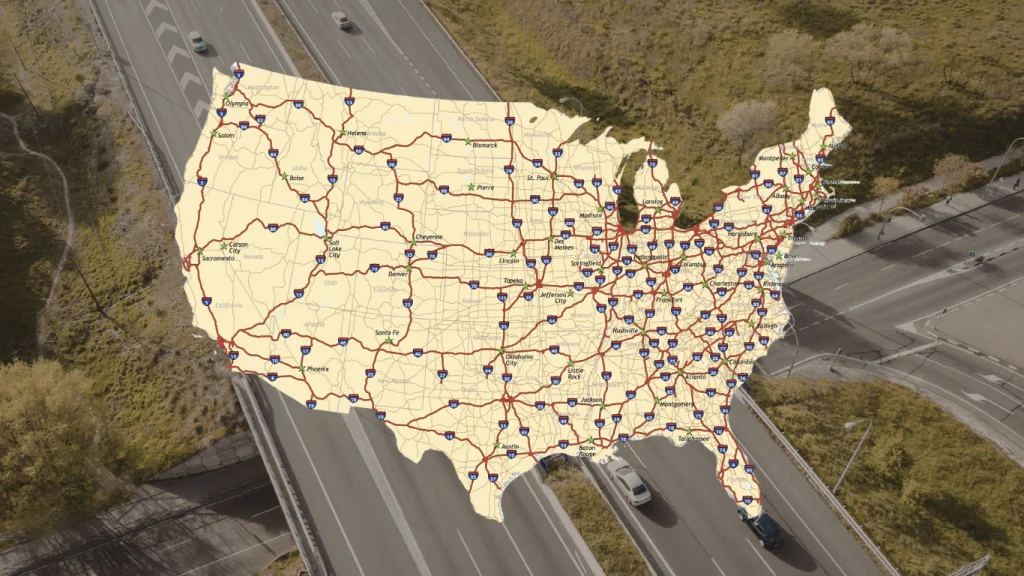
The U.S. Numbered Highway System provides an integrated national network of roads designed to facilitate long-distance travel.
The numbering of U.S. highways follows a structured system that, to those unfamiliar with it, may appear arbitrary. However, these numbers use a grid-based system grounded in direction, location, and hierarchy for each highway. What is often perceived as random numbering is, in fact, a precise and functional geographic information code carefully designed by transportation engineers.
Many drivers are not familiar with this system, which dates back to 1926. The United States Numbered Highway System provides an integrated national network of roads designed to facilitate long-distance travel and standardize routes across different states.
The system was created to replace the loosely marked auto trails of the early 20th century, with the goal of connecting states and major population centers through a basic transportation network distinct from the later high-speed Interstate Highway System.

United States Numbered Highway System
Understanding the numbering patterns is extremely valuable for navigation and trip planning. So, how does it work?
What may seem like a complicated system is actually based on the concept of parity, where the parity of a route number indicates its general compass direction. North–south routes are assigned odd numbers, while east–west routes use even numbers. In this way, travelers can orient themselves using only the highway number.
This numbering system also establishes a geographic progression, in which numbers increase predictably across contiguous states. One- and two-digit numbers are reserved for major cross-country routes that form the backbone of the network.
Thus, east–west routes are designated with even numbers, typically using two digits for major corridors that span multiple states. The geographic progression of these routes dictates that numbers increase from north to south across the country. For example, US 2 runs very close to the northern border of the United States, while US 90 lies along the southern part of the country.
On the other hand, north–south routes with odd numbers follow a geographic progression in which lower numbers run parallel to the Atlantic coast in the eastern part of the country, such as US 1. Routes with higher numbers, like US 101, are located near the Pacific coast on the western side of the country, confirming the longitudinal progression.
100 years of a functional system
In this way, the system was created to facilitate orientation long before the invention of GPS, offering drivers a relatively simple method of navigation. It remains in use today due to the efficiency it has demonstrated for an entire century.
Although there are some exceptions within the system, such as “split routes,” which are designated by adding a directional suffix (US 11E, US 11W), the established grid system continues to be the governing structure of the United States Numbered Highway System.

What if the Oscars were about trucking? Hollywood characters reimagined as truckers
This week marks the 98th Academy Awards, what if the categories were inspired by the transportation industry?

TCA Professional Drivers of the Year 2026: 5 drivers who paved the road
TCA Professional Drivers of the Year selects drivers with the greatest impact, outstanding safety records, and individuals with inspiring stories that made a difference.

Unusual Stories from the Road: When Reality Outruns Logistics
From a giant magnet moving down the highway like a spacecraft to millions of bees taking over a highway, the world of freight transportation is full of events that are as strange as they are real. Some of these stories went viral, others became legends among drivers, but all of them reveal the unexpected side of logistics.

The safest, most reliable and crash-resistant cars for protecting you on the road
Based on ratings from the NHTSA and the IIHS evaluation system, this list shows some of the safest and most crash-resistant cars.

U.S. greenlights electric flying taxi tests across 26 states
The Department of Transportation announced the selection of eight electric air taxi proposals aimed at accelerating and integrating electric aerial vehicles in the U.S.

Immigrant Drivers: How the “Second Wave” of Road Checks Will Be
A firm and more sophisticated surveillance targets thousands of drivers. The cancellation of licenses and operations on highways challenge the transport sector and reduce the labor supply. A guide to not get left behind.