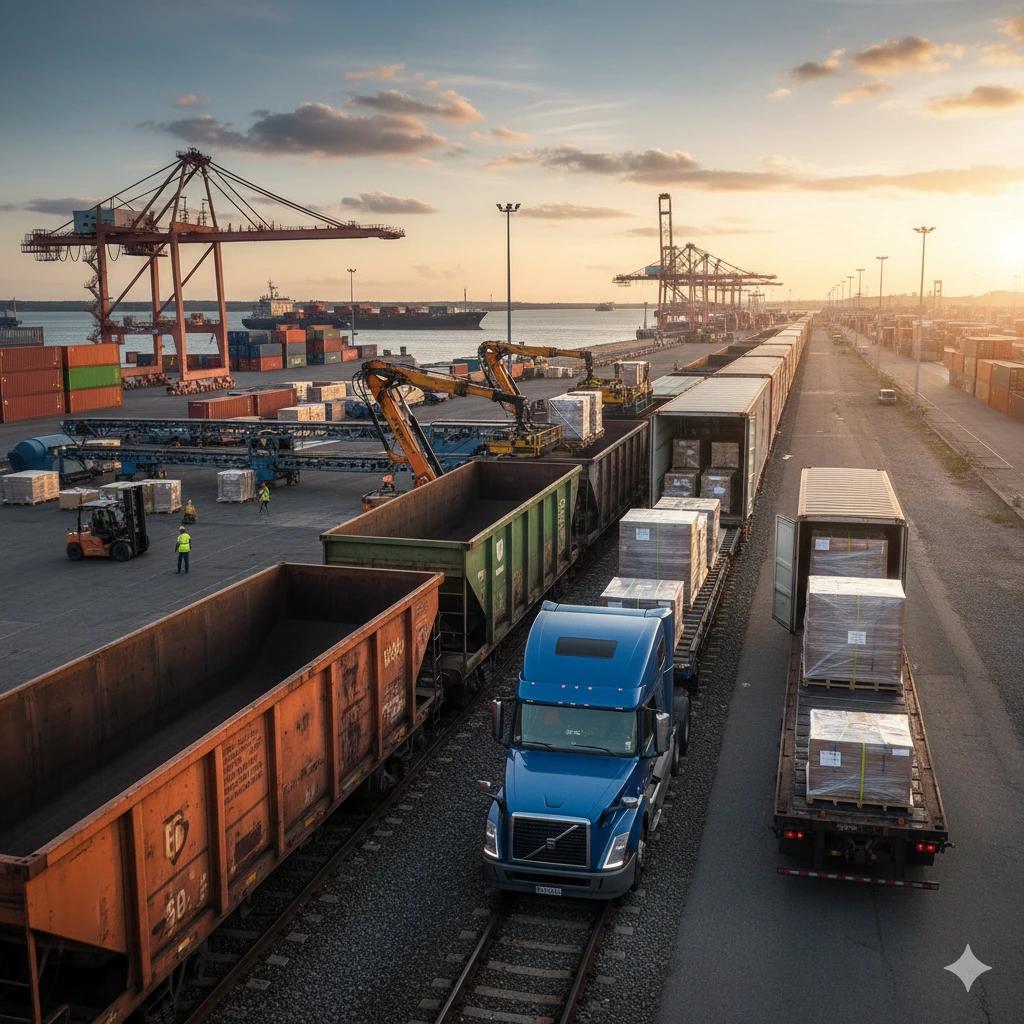
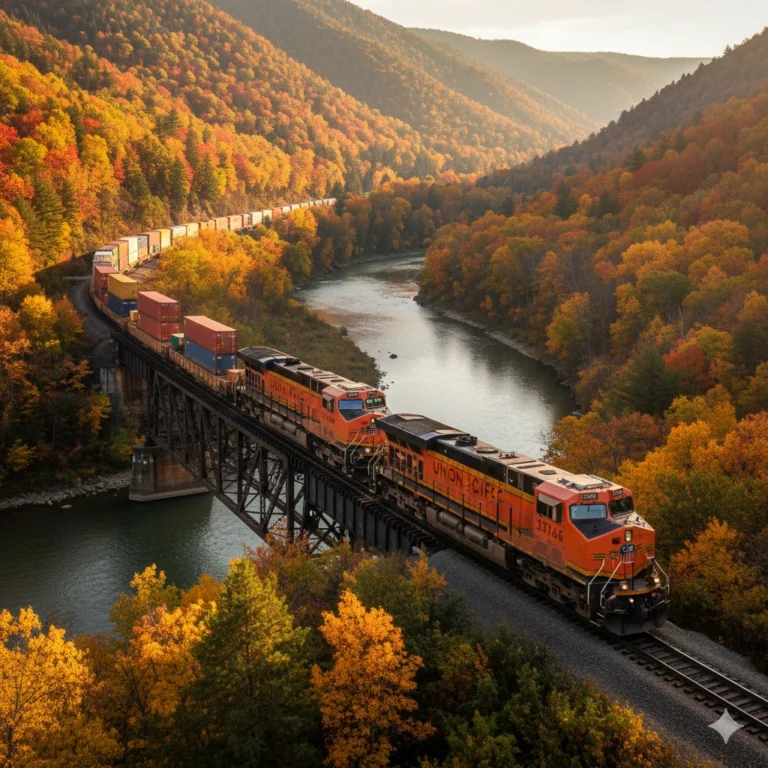
ATA warned that rail cannot replace road transport and that favoring one mode over another is unrealistic for the needs of the U.S. economy.
The American Trucking Associations (ATA) explained why proposals to shift most of the country’s freight to rail are neither viable nor practical for the U.S. economy. According to the organization, “calls to shift freight transportation from trucks to trains are nothing new, but the idea that rail can replace road transport—or that policymakers should favor one mode over another—simply does not align with reality.”
Trucks and Trains: Distinct Roles in the Supply Chain
The ATA emphasized that rail directly competes with trucks in less than 10% of the nation’s freight volume. While trains have advantages in moving bulk commodities such as coal, gravel, or grain, their role is limited when the logistics chain demands precision, speed, and reliability.
“Trains don’t deliver to hospitals, supermarkets, schools, or homes. Trucks do,” the association stressed. In the context of booming e-commerce and growing demand for same-day delivery, trucking becomes indispensable.

Infrastructure and Costs: The Major Obstacle
The ATA noted that expanding the rail network to the point of significantly replacing road transport would require thousands of miles of new tracks, additional terminals, more labor, and connections to communities that currently lack rail access.
“The cost would be exorbitant, the disruption enormous, and the benefit minimal, because trucks would still be needed to finish the job,” the association warned. In this regard, the more realistic alternative is to invest in existing highways and bridges, where nearly 75% of the nation’s freight moves today.
Sustainability: Concrete Advances in Road Transport
The ATA also highlighted the trucking industry’s progress on environmental issues. Modern trucks produce 99% fewer nitrogen oxide and particulate emissions than those from decades ago. In addition, new vehicles emit over 40% less carbon than those manufactured in 2010.
Thanks to innovation in clean technologies, alternative fuels, and more efficient engines, it now takes 60 modern trucks to generate what a single vehicle emitted in 1988.
Complementarity, Not Replacement
The ATA underscored that the debate should not focus on choosing between trains and trucks, but on recognizing that both modes complement each other. However, it firmly argued that without road transport, “every link in the supply chain would break.”
“Rail will always have its place, but when it comes to keeping America moving, trucking is not optional—it is indispensable,” the statement concluded.

Freedom 250 Grand Prix Set to Make History in America’s Capital
Organized by INDYCAR in collaboration with the White House, the “Freedom 250 Grand Prix” will combine high-speed racing with a celebration of American patriotism.

Safe Driver Week 2026 Begins: Stay Prepared
The Safe Driver Week by the Commercial Vehicle Safety Alliance (CVSA), officially began on July 12.

ICE Expands Inspections for Truck Drivers: Required Documents
ICE agents have joined commercial vehicle inspections at selected U.S. weigh stations. Drivers should be prepared to present a valid CDL, vehicle documents, proof of legal work authorization, and meet the federal English proficiency requirement.

Common DOT Violations and How to Avoid Them
Common Department of Transportation (DOT) violations for truck drivers in Texas and California and how to avoid them.

New World Screwworm Cases Rise in Texas as Origin Remains Unknown
Uncertainty surrounds the spread of the New World screwworm in Texas; experts still don’t know how it entered the U.S.

Cyclospora Outbreak: How to Protect Your Health on the Road
The Cyclospora outbreak has already sickened more than 1,400 people in states including Michigan, Ohio, Illinois, Indiana, New York, North Carolina, and Texas. For truck drivers, recognizing the symptoms and preventing dehydration could make the difference between a safe trip and an unexpected stop.