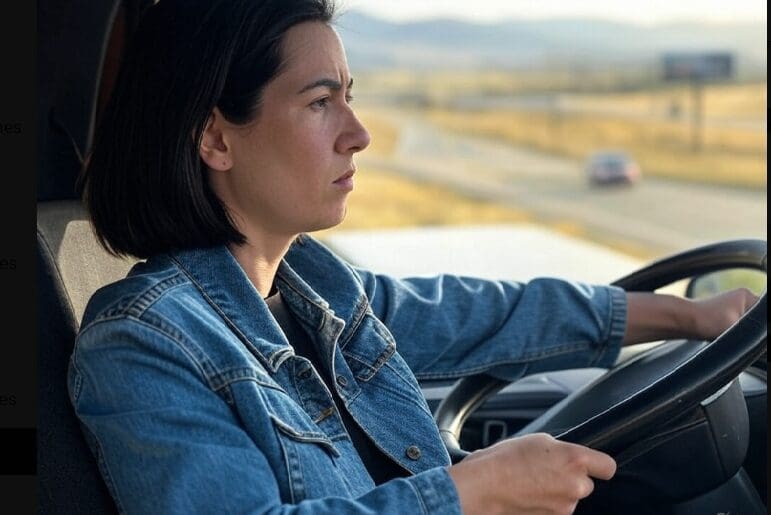
Open to non-driving industry stakeholders, the survey seeks to understand career pathways, challenges, and opportunities to shape policies and resources that support women in the industry.
The Women In Motion (WIM) Council of the American Trucking Associations (ATA) has launched its first-ever industry-wide survey to amplify the voices of women in trucking.
This initiative aims to gather crucial insights from trucking professionals across diverse backgrounds, paving the way for best practices in recruiting and retaining women in the industry.
“We’re thrilled to launch this groundbreaking survey focused on the experiences of women in the trucking industry,” said ATA COO and WIM Co-Chair Sarah Rajtik.
“While designed to highlight women’s perspectives, we welcome participation from everyone in the industry to help us gain a comprehensive understanding of the challenges and opportunities in trucking. The insights gathered will shed light on key issues, helping us drive meaningful change and create a stronger future for women.”

The WIM survey is open to all non-driving industry stakeholders, regardless of gender, and focuses on understanding career pathways in trucking—from entry points into the industry to factors that foster long-term retention. By collecting this feedback, WIM aims to shape policies, create valuable resources, and establish gold standards to better support women in the trucking profession.
The survey will remain open until April 18, 2025. As an added incentive, three participants will be randomly selected to win a free pair of AirPods. Both men and women in non-driving roles within the industry are encouraged to participate.
Survey Details and Objectives
Responses to the survey will:
- Provide data-driven insights to guide WIM’s policy and content development.
- Highlight effective strategies for recruiting and retaining women in trucking.
- Enhance the industry’s understanding of the challenges and opportunities women face today.
To ensure privacy, all collected data will remain completely confidential. Personal and organizational information will not be publicly disclosed, and results will only be reported in aggregated, non-identifying formats.

Complementary Research
This initiative builds on recent research conducted by the American Transportation Research Institute (ATRI), which explored challenges faced by women truck drivers. Over 1,600 truck drivers contributed to ATRI’s study, the results of which are available for free on ATRI’s website.
By combining the findings from both studies, ATA’s Women In Motion Council aims to create a more inclusive and supportive environment for women in trucking, ultimately driving progress across the industry.
For more information about the survey or to participate, visit ATA’s Women In Motion Council website.

How to Perform a Pre-Trip Inspection: A Guide for Truck Drivers
A pre-trip inspection is one of the most important procedures for any truck driver.

Best Road Tunnels to Visit in the USA
Some cut through towering mountain ranges, while others pass beneath rivers, bays, and major urban centers: these are the best road tunnels.

How Many Miles Does the 2026 World Cup Move?
With host cities located more than 2,800 miles apart, the 2026 FIFA World Cup is testing one of the most ambitious logistics operations in sports history.

The History of Soccer: From an Ancient Game to the World’s Most Popular Sport
Soccer is much more than a sport, it’s a passion that brings together cultures, generations, and entire nations.

Truck Accident Compensation: Economic, Non-Economic, and Punitive Damages
In addition to physical injuries, victims of truck accidents often face emotional trauma and financial hardships that affect their quality of life.

U.S. Dismantles Chinese Espionage Network: Transportation Is at Risk
The seizure of 13 internet domains allegedly used for espionage linked to China has once again highlighted growing cybersecurity concerns. Experts warn that transportation and logistics companies are becoming increasingly attractive targets because of the critical information they manage regarding cargo, routes, and supply chains.