Based on investment, quality and accident rate, these are the states with the best roads
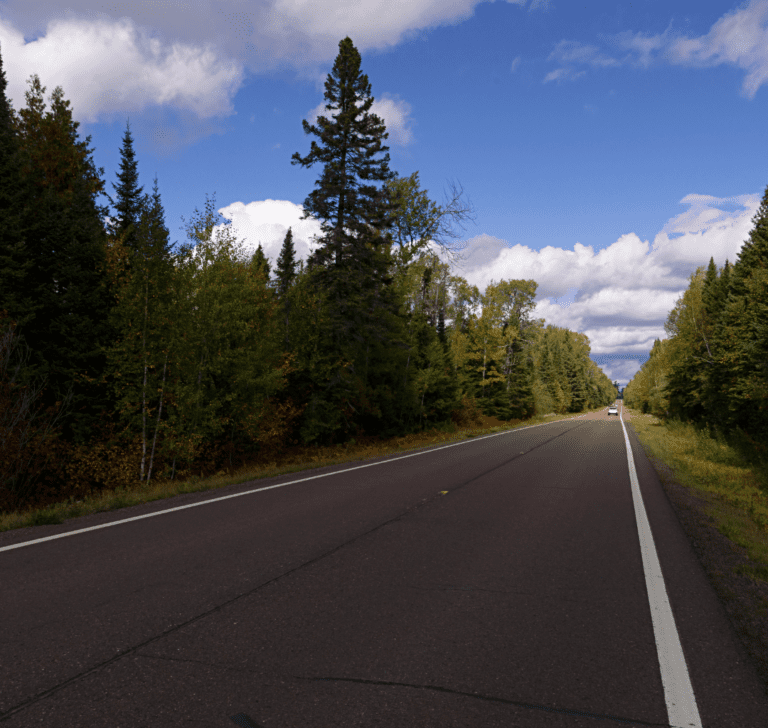
The United States prides itself on its extensive network of roads traversing diverse landscapes, from majestic mountains to vast plains and deserts. However, not all roads are equal in terms of quality and safety for drivers. ConsumerAffairs, relying on data provided by the U.S. Federal Highway Administration, has conducted a comprehensive analysis of states known for offering the best roads in the country. Here are the top seven states with the highest-quality roads in the United States.
7. Idaho
Despite its challenging mountainous terrain, Idaho’s rural roads receive praise for their smoothness and excellence, as the state allocates nearly its entire road improvement budget to these enhancements. The state has ambitious infrastructure investment plans, with a Transportation Investment Program proposing 1,000 projects over the next seven years, totaling $4.85 billion. Although urban roads present challenges with an 11% in poor condition, Idaho is committed to continuous improvement, with an annual expenditure of $1.196 billion.

6. Florida
In Florida, a generous budget of over $10 billion for road improvements ensures that the majority of rural and urban roads in the state remain in excellent condition. Only 1% of rural roads and 5% of urban roads are rated as in poor condition. Residents have varied opinions on the roads, with a clear need for improvements, especially concerning road safety. Despite facing high rates of fatal accidents per mile traveled and significant tourism pressure.

5. Vermont
Despite having the lowest maintenance budget in the country, Vermont efficiently manages its resources. Its low rate of fatalities per kilometer traveled, the lowest in the United States, is attributed in part to Vermont’s Strategic Highway Safety Plan. Still, residents express that their roads could improve, reflecting the need to optimize fund utilization. The state allocates $579.794 million annually for road improvement.

4. New Hampshire
New Hampshire’s rural roads stand out with only 3% in poor condition. However, the state’s urban roads aren’t as fortunate, with 9% in poor condition. The complexity of funding state roads is a challenge, relying on federal and state funds, mainly from fuel taxes. With a fatality rate of 0.869 per mile and an annual road improvement expenditure of $628.307 million, it ranks fourth on the list.

3. Indiana
Indiana maintains a low fatality rate per mile traveled despite high traffic generated by its location at the intersection of several interstate highways. With less than 2% of its rural roads in poor condition, the state prioritizes maintenance with a significant portion of its budget allocated to improvement projects. Indiana residents rate their roads as “quite decent” and “easy to drive.” Annual road improvement spending reaches $3.722 billion.

2. Alabama
In Alabama, according to roughness indices, only about 1% of over 2,500 miles of rural roads are in poor condition. Residents note some roads have been recently renovated, although urban areas often complain more about potholes. Significant improvements have been made thanks to the Rebuild Alabama Act, allocating $2.25 billion for local projects since its establishment in 2019. Annual road improvement spending amounts to $2.112 billion.

1. Minnesota
In Minnesota, roads stand out for their safety and smoothness despite challenges like cold weather and snow. With the top ranking, the state boasts a low fatality rate per kilometer traveled and an extensive network of rural roads, efficiently managing its budget. Residents praise the road quality, highlighting good maintenance and width. Statistics support these claims, with a low percentage of roads in poor condition in both urban and rural areas. The state allocates $4.284 billion annually to improve its roads.


FORMULA 1 and the AI That Could Transform Transportation in the U.S.
The artificial intelligence system that Formula 1 implemented to monitor every car on every turn is opening the door to new applications in trucking, logistics,

$170 billion at stake: 1,500 companies demand tariff refunds
Companies have challenged the global tariffs imposed by President Donald Trump, asking federal courts to reactivate proceedings to begin the refund process. The companies that

In brief: enforcement measures target speeding, CDL training gaps and more
Major enforcement actions across the U.S., including speeding, CDL fraud, and chain violations Colorado launches Speed Enforcement Program The Colorado Department of Transportation (CDOT) has

Chinese Vehicles Raise Espionage and Remote Sabotage Concerns
Investigations into Chinese technology in connected vehicles warn of espionage risks, massive data transmission, and potential remote access vulnerabilities that concern U.S. transportation and security

Between the Court and the Fed: the market redefines its roadmap for 2026
Trade policy in limbo as markets price in 2026 rate cuts and Supreme Court strikes down Trump tariff plan. In the latest episode of the

New 10% U.S. import tariff takes effect amid legal and market uncertainty
The implementation of these new tariffs has generated global uncertainty among exporters, increasing confusion around U.S. trade policy. The United States has implemented a new