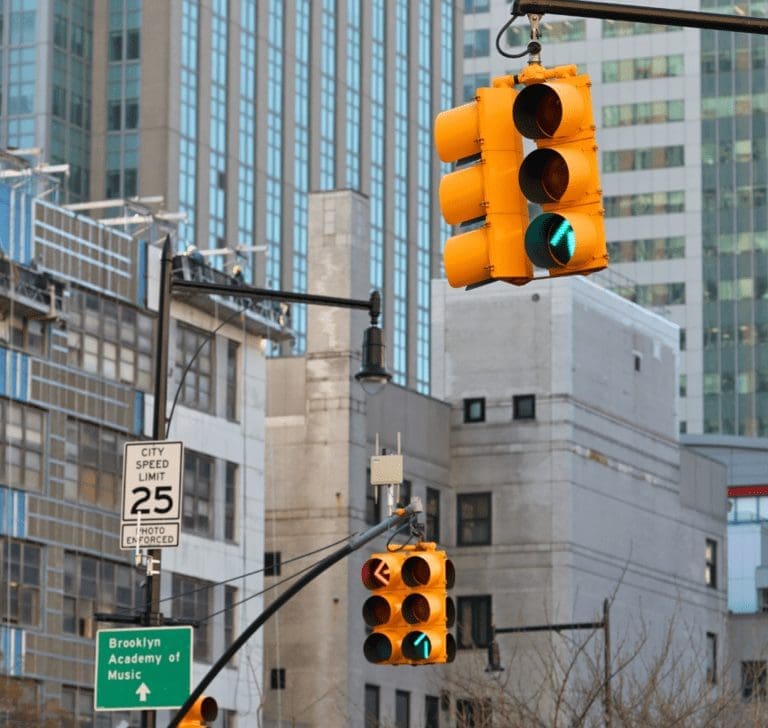
The implementation of a new traffic signal system could be much closer than people think
Transportation is undergoing constant transformation as vehicles become smarter and more autonomous. This evolution also affects other technological aspects of the industry, such as traffic lights, which have been a method of control and safety for over a century.
Researchers are studying how to use features of modern cars, like GPS, to make traffic safer and more efficient. Although it sounds like an advancement for the transportation industry, this could lead to the extinction of traffic lights by handing control over to autonomous vehicles at some point. Henry Liu, a civil engineering professor leading a study at the University of Michigan, states that the implementation of a new traffic signal system could be much closer than people think, due to the rapid advancement of artificial intelligence.
The first municipal traffic control system in Cleveland was recorded in 1914, according to historian Megan Kate Nelson. Powered by the city’s trolley line electricity, it featured red and green lights, and with the help of a police officer sitting in a sidewalk booth, the switch for light change was operated. By 1930, all major US cities and many smaller ones had at least one electric traffic signal. Since then, traffic lights haven’t changed much in the United States over the years.

Automated vehicles and potential changes in road technology
The arrival of connected and automated vehicles has opened up new possibilities for traffic lights. Ali Hajbabaie and his team at North Carolina State University propose adding a fourth signal, possibly white, to indicate when there are enough autonomous vehicles on the road to take control. Though the specific color isn’t crucial, according to Hajbabaie, current lights could be modified to flash red and green simultaneously, signaling that autonomous vehicles are in charge. This approach, which would take years to implement, would require between 40% and 50% of vehicles in circulation to be autonomous.
The University of Michigan is exploring a different approach, using data from General Motors vehicles to adjust the timing of traffic lights in the Detroit suburb of Birmingham. This research, focused on human-driven vehicles, could be closer to widespread implementation. It shows that even with just 6% of vehicles connected to the GM system, traffic lights can be adjusted to improve traffic flow.
Michigan’s approach avoids costly infrastructure upgrades by using data from automakers instead of relying on roadside sensors. Danielle Deneau, from the Oakland County Road Commission, notes that adjusting traffic lights by just a few seconds can reduce congestion, and the newly funded research could introduce even greater changes.

Miles of love: stories of truckers and their four-legged co-pilots
The love between truckers and their pets is a strong bond, and these stories will surely warm your soul. Love manifests itself in many ways,

Cargo theft report 2025: $725 million in losses
Verisk CargoNet reports that cargo theft crime volumes remained stable, with a sharp increase in total losses. Verisk CargoNet’s 2025 report stated that the total

Ground and Air Transportation Brace for a Weekend of Cancellations and Delays
A historic cold wave is set to disrupt ground and air transportation across the United States, bringing cancellations, delays, and operational restrictions to highways, airports, and essential services throughout the weekend. Federal authorities have activated emergency plans in response to a major winter storm expected to deliver snow, ice, and extreme temperatures to large portions of the country.

Geopolitical tensions and the dispute between Trump and the Federal Reserve
The United States is going through a complex geopolitical environment along with internal tensions between President Donald Trump and the Federal Reserve. In the latest

Polar Vortex Puts U.S. Roads on Alert
A powerful polar vortex outbreak is triggering a widespread winter storm across the United States, bringing snow, ice, and extreme cold to major freight corridors. The event poses a serious risk to trucking operations, road safety, delivery schedules, and commercial vehicle insurance exposure.

DOT unveils possible AI strategy to enforce CDL regulations
The DOT is looking to adopt AI and advanced data analytics to improve the accuracy and effectiveness of enforcement measures. On January 14, the 105th