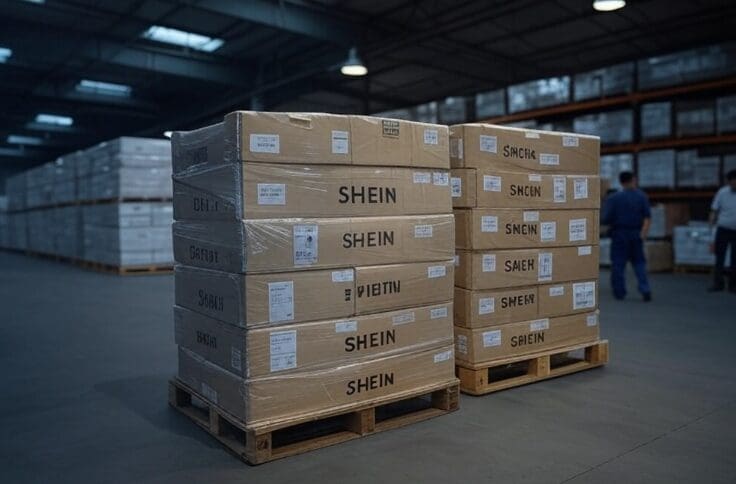
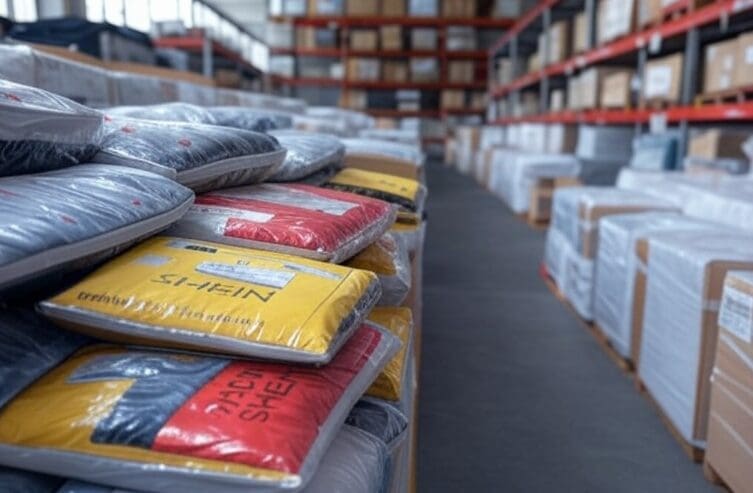
The U.S. Postal Service (USPS) announced that it would temporarily stop accepting parcels from China and Hong Kong, follows recent U.S. government actions targeting imports
Consumers in the U.S. may soon face higher costs when purchasing from popular Chinese e-commerce platforms like Shein and Temu. The U.S. Postal Service (USPS) recently announced that it would temporarily stop accepting parcels from China and Hong Kong, a move that could significantly impact these online retailers and their customers.
Why Did USPS Suspend Deliveries?
The USPS decision follows recent U.S. government actions targeting Chinese imports. Earlier this week, an executive order removed the “de minimis” exemption, which previously allowed small-value packages (under $800) to enter the country without incurring customs duties. Additionally, the U.S. has imposed a 10% tariff on Chinese goods, further increasing costs for importers.
Canada and Mexico have managed to secure a temporary exemption from the full 25% tariffs initially proposed by former U.S. President Donald Trump, but no such relief has been extended to parcels coming from China and Hong Kong.

Who Will Be Affected the Most?
This suspension will primarily impact online retailers like Shein and Temu, both of which rely on affordable and direct shipping from China to offer competitive pricing. However, experts suggest that Shein may feel the effects more acutely.
Jacob Cooke, CEO of WPIC Marketing + Technologies, explains that “Shein depends heavily on USPS for direct-to-consumer shipments from China. Without this option, the company will have to rely more on private carriers, increasing logistics costs and potentially reducing its pricing advantage.”
Temu, on the other hand, may be better positioned to handle the disruption. The platform often ships bulk orders to the U.S. and then fulfills individual orders domestically, which may help it absorb rising logistics expenses.

What Exactly Did USPS Announce?
The USPS stated in an official notice that it would suspend acceptance of inbound parcels from China and Hong Kong until further notice. However, standard mail such as letters and flats (up to 15 inches long or ¾ inches thick) will not be affected by this change.
For U.S. consumers, this move is likely to result in delayed deliveries, higher shipping costs, and potentially increased prices for items purchased from Chinese platforms. The combination of the USPS suspension and the removal of the de minimis exemption could reshape the way these companies operate in the U.S. market.

Possible Workarounds for Retailers
With the USPS suspension in place, Chinese retailers will need to explore alternative shipping methods. Cooke suggests that companies like Shein and Temu will likely turn to private carriers, albeit at a higher cost.
In the long term, Shein may need to accelerate its warehouse expansion within the U.S., while Temu might double down on its semi-consignment model, which involves bulk shipping products to the U.S. before fulfilling orders domestically.
“Bulk shipping and local fulfillment can help reduce logistics costs, but for Shein, this presents a significant shift from its existing model, which is based on rapid production and direct shipping from China,” Cooke noted.
China’s Response
The Chinese government has condemned the move, with Foreign Ministry spokesperson Lin Jian stating that China would take “necessary measures” to protect its companies. He urged the U.S. to cease “politicizing economic and trade issues” and to stop what he described as “unreasonable suppression of Chinese businesses.”
Looking Ahead
While it remains unclear how long the USPS suspension will last, the tightening of trade policies suggests a broader shift in U.S.-China economic relations. For now, consumers shopping from Shein, Temu, and similar platforms should prepare for potential delays and price increases as these companies adjust to the new regulations.

Autonomous Trucks vs. Human Drivers: The Showdown Reshaping U.S. Trucking
The push to deploy driverless trucks without a human operator has reignited a national debate over safety, jobs, and regulation—drawing unions, tech companies, and federal lawmakers into a conflict that could redefine the future of U.S. freight transportation.

Trucking faces continued job losses as 2026 uncertainty looms
The U.S. trucking industry continues to lose jobs and reduce capacity, will this trend continue in 2026? The U.S. trucking industry continues to lose jobs

U.S. Allocates $1.5 Billion for Truck Road Infrastructure
The 2026 BUILD Grants program will invest $1.5 billion in truck road infrastructure across highways, ports, and truck parking facilities, with direct impact on logistics and freight transportation in the United States.

Wall Street Record: Transportation Stocks Boost Confidence in the Economy and Logistics
Transportation stocks in the United States have staged a strong rally so far in 2025, reflecting growing market confidence in the real economic activity behind logistics, freight movement, and mobility services more broadly.

The meaning of Hanukkah and how to celebrate it on the road
Hanukkah is a celebration of resilience and hope, and here are some ways you can take this on the road. December is one of the

Waymo under investigation for potential safety risk in school zones
A recent wave of videos has shown that some Waymo vehicles are not complying with safety regulations in school zones. The autonomous vehicle company Waymo,