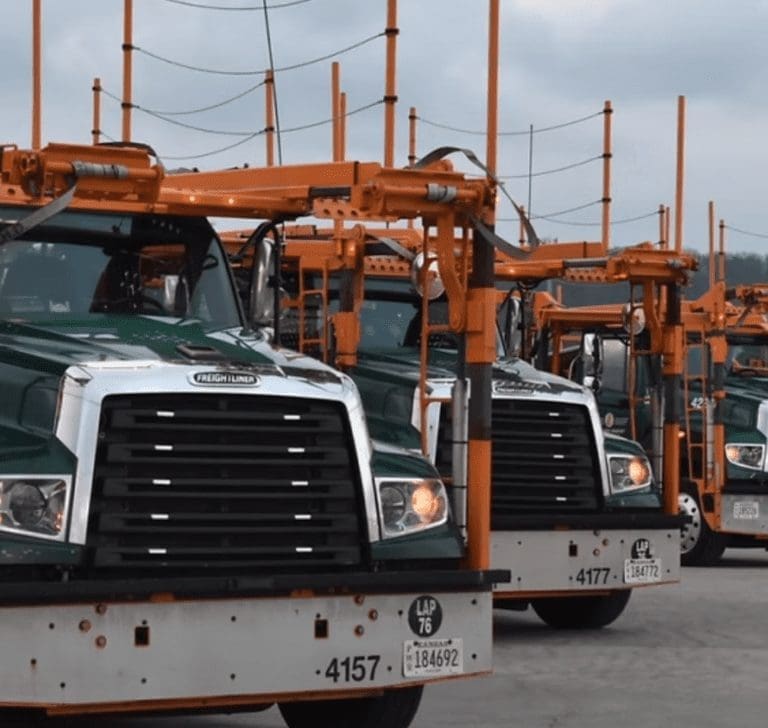
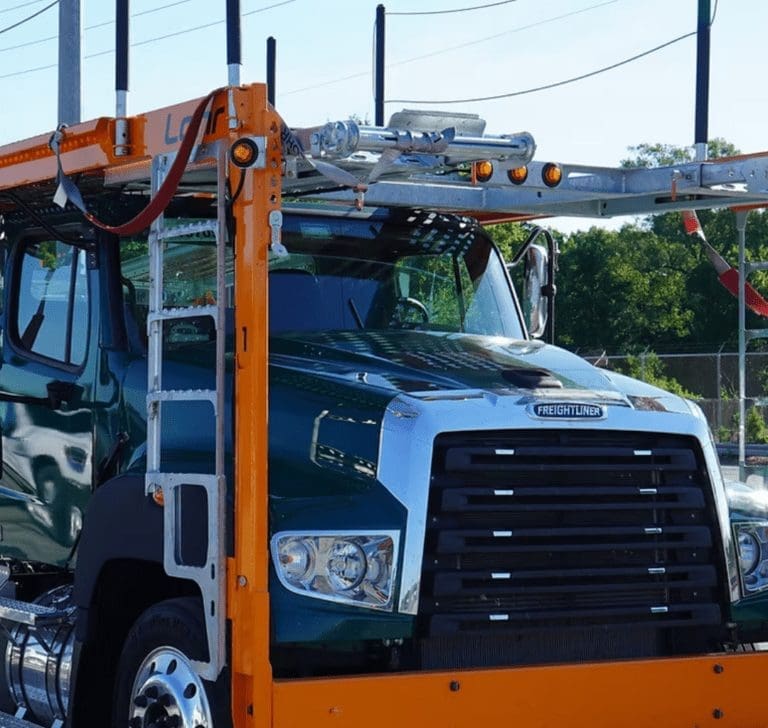
The closure follows the termination of a long commercial relationship with the carrier by Ford Motor Co. and General Motors this year.
Jack Cooper, the giant car transporter, has closed its doors. Harmed by the loss of key clients, the company went through several challenging months leading up to its closure. In just three months, it went from negotiating with General Motors to stabilize its finances to permanently closing after losing two of the largest U.S. car manufacturers.
With nearly 100 years of operation, the company had managed to survive a Chapter 11 process in 2019, but it couldn’t withstand the turmoil of the last few months. Sarah Amico, CEO and main owner of the family business, expressed in an announcement shared on Monday, February 10: “With extraordinary sadness, we write to inform you that after 97 years in business, Jack Cooper will be closing our doors in the near future.”
The closure follows the termination of a long commercial relationship with the carrier by Ford Motor Co. and General Motors this year, as reported on Monday by Jennifer Holdsworth, a spokesperson for Jack Cooper.
The story of Jack Cooper: from beginning to end
Founded in 1928, Jack Cooper became one of the largest private automobile transportation providers and specialized vehicle logistics companies in the U.S. The company started as a transporter of General Motors products from the Leeds assembly plant in Kansas City, Missouri. Later, its success opened doors, enabling the company to establish terminals in the Midwest, the Pacific Northwest, Canada, and Mexico.
The announcement of Jack Cooper’s closure marked the end of a tumultuous period, as the company’s demise began with financial issues. Jack Cooper, owned by the Riggs family and Sarah Amico, discussed a potential capitalization with General Motors (GM), but without GM taking an equity stake. GM demanded that Ford also contribute to strengthening the financial base, but Jack Cooper couldn’t comply due to its contractual agreements with Ford.
When attempts were made for GM to reach out to Ford, the relationship with the latter ended. Although Jack Cooper secured a $200 million investment, GM rejected it due to its veto power in the contract. GM’s concern was ensuring Jack Cooper’s solvency, but the difficulties with Ford and the rejection of private investment impacted that solvency. This process ultimately led to the rupture between the companies, which became the final blow that led to Jack Cooper’s closure.
Goodbyes: 97 years of legacy
The company, which had been transporting vehicles for GM for nearly a century, also maintained a relationship with Ford for several decades. After the failure of the negotiations, the company decided to shut its doors. According to KCTV5 in Kansas City, Missouri, Amico bid farewell to her loyal employees through a letter in which she praised their efforts and loyalty. “We have been proud to hire generations of employees across the country. Each one of you has been a key part of that legacy, and your work is deeply appreciated,” stated Amico.
Jack Cooper had approximately 2,500 employees, of whom around 1,700 were members of the Teamsters. In response to the news, a Teamsters spokesperson shared with KCTV5 that, although the company is liquidating its operations with Ford and GM, “this does not mean that well-paying jobs protected by the Teamsters union are disappearing from the industry.”

In brief: weigh stations, young drivers, and fuel tax reform in the trucking industry
South Carolina debuts virtual weigh stations for trucking, as ATA pushes youth driver program, and states debate fuel policies. South Carolina launches virtual weigh stations

The Wildest Truck Modifications on the Road Today
Truck customization has become a serious industry, with some builds rivaling high-end RV conversions in complexity and cost. From redesigned sleepers to upgraded suspension systems, these modifications do more than change appearance — they alter weight, electrical load, and the technical profile of the truck.

The most dangerous states in the U.S. during winter weather
While winter conditions are hazardous across the country, some states experience significantly higher accident rates during this season. A study by Samsara, a safety and

Winter storm disruptions lead to FMCSA HOS relief in 40 states
Motor carriers and drivers providing direct assistance in relief efforts in the affected states are covered by a hours-of-service (HOS) exemption. Over the weekend, a

Air Quality Alert in California Impacts Transportation
An air quality alert has been issued as high levels of fine particle pollution (PM2.5) trigger health warnings across several parts of California. The situation is affecting visibility, driver health, and logistics operations, forcing transportation professionals to take extra precautions on highways and in urban corridors

Winter Storm Survival on the Road: What Truck Drivers and Fleet Operators Need to Know Now
Winter storm with snow, ice, and extreme cold are creating dangerous highway conditions across multiple states, forcing truckers to make critical safety decisions before turning the key.