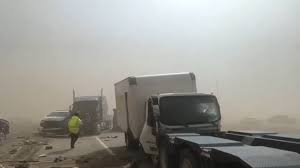
Dust storms have left at least 13 people dead in highway accidents and destroyed 300 homes due to wildfires. These extreme weather events drastically reduce visibility, posing serious risks on the road.
Severe dust storms, like those that recently swept through Kansas, Texas, and Oklahoma, present a major threat to road safety and public health. The combination of strong winds and loose soil significantly reduces visibility, increasing the risk of traffic accidents and worsening air quality.
How to Stay Safe While Driving in a Dust Storm
Roads can become extremely dangerous when a dust storm reduces visibility to critical levels. The dense dust in the air prevents drivers from seeing other vehicles, road signs, and potential hazards. Additionally, strong winds can destabilize vehicles, especially heavy trucks or those with trailers.
Authorities strongly recommend avoiding driving in these conditions whenever possible. However, if you find yourself caught in a dust storm while driving, experts suggest the following safety measures:
- Slow down gradually and turn on your hazard lights.
- Do not stop in a traffic lane, as other vehicles may crash due to low visibility.
- If possible, pull completely off the road and turn off your lights to prevent other drivers from mistakenly following your vehicle.
- Keep windows and air vents closed to prevent dust from entering the vehicle.
Wildfires Worsened by Extreme Conditions
Dust storms not only threaten road safety but also increase the risk of wildfires. In Oklahoma, 130 wildfires were reported across 44 counties, forcing the evacuation of hundreds of residents. The National Weather Service (NWS) stated that strong winds and low humidity contributed to the rapid spread of the flames.
In Texas, the Windmill Fire in Roberts County burned 11,000 acres and was 50% contained by Friday night. Another fire in Gray County led to mandatory evacuations after burning more than 3,000 acres.
The dust bowl never really ended in Amarillo
— Jordan.tsx (@JordanGMassing1) March 14, 2025
🎥: storm chaser Kirk Michaelson pic.twitter.com/CvUNThEbvP
Preventive Measures and Emergency Response
Meteorologists urge residents in dust storm-prone areas to take the following precautions:
- Stay informed by monitoring weather alerts and avoiding outdoor activities during hazardous conditions.
- Use masks or damp cloths to protect your respiratory system if exposed to dust.
- Seal doors and windows at home to minimize dust intrusion.
- Keep an emergency kit with water, flashlights, and essential supplies in case of severe conditions.
The National Weather Service’s Storm Prediction Center has warned of possible extreme weather in the coming days, which could lead to additional wildfires and road hazards.
Dust storms are a dangerous natural phenomenon that require caution and preparedness. Avoiding unnecessary travel, protecting yourself from dust exposure, and following official guidelines can mean the difference between safety and tragedy.

Impact in Kansas and Texas
A severe storm system moving across the eastern United States has resulted in a tragic toll of at least 13 fatalities in car crashes and caused wildfires that destroyed nearly 300 homes and structures in Oklahoma.
In Kansas, a major crash on Interstate 70 near the Colorado border involved more than 50 vehicles and left eight people dead. The Kansas Highway Patrol attributed the accident to poor visibility caused by dust storms in the area.
In Texas’ Panhandle region, four people lost their lives in dust storm-related crashes. Sergeant Cindy Barkley of the Texas Department of Public Safety confirmed that multiple crashes were reported in the northwest part of the state on Friday due to reduced visibility. Authorities issued warnings about the hazardous road conditions.

Truck drivers are at high risk of developing diabetes
About 11% of the adult population meets the criteria for prediabetes, and there is a particular group at high risk: truck drivers. Diabetes rates in

Starting in trucking: required permits, registrations, and compliance
Are you a new carrier? This is what you need to know about permits, registration, and compliance. The trucking industry can be quite challenging for

Alberta Clipper Brings an Early Polar Blast: A Critical Alert for Drivers
The Alberta Clipper is sweeping across the country with fast-moving Arctic air, sharp temperature drops, and dangerous road conditions that demand heightened attention from all professional drivers.

American manufacturers trigger truck “dumping” investigation
Foreign trailer manufacturers under investigation for alleged “dumping” in the U.S. The U.S. truck market is at the center of a trade dispute. After domestic

ATRI Warns: Litigation Is Rising Across the U.S. Trucking Industry
A new report from the American Transportation Research Institute (ATRI) reveals how escalating litigation, higher legal costs, and mounting insurance pressures are reshaping the U.S. trucking industry. The findings mark a critical moment for motor carriers, insurers, and logistics stakeholders who must understand the changing legal environment — and the increasingly strategic role of strong insurance partnerships.

FMCSA says no to hours-of-service exemptions
FMCSA rejects two requests for exemptions to hours-of-service rules for commercial drivers. The Federal Motor Carrier Safety Administration (FMCSA) has denied two exemption requests related