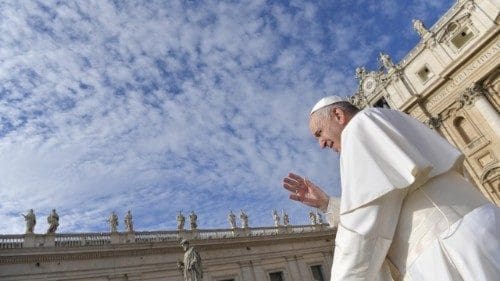
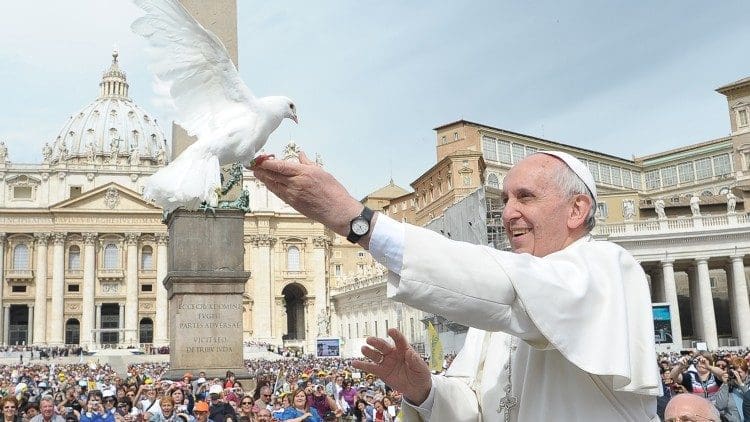
The death of Pope Francis at the age of 88 has triggered a solemn and time-honored sequence of events within the Roman Catholic Church, steeped in centuries of tradition.
As the world mourns the passing of the 266th pontiff, attention now turns to the process of selecting his successor—a new pope who will lead the world’s 1.3 billion Catholics.

The Death of a Pope: Official Steps
The process begins with an official declaration of death, typically made by the Camerlengo (Chamberlain) of the Holy Roman Church. In this case, Cardinal Kevin Farrell, who holds the role, formally announced Pope Francis’s passing on Monday.
One of the camerlengo’s first duties is to verify the pope’s death. Historically, this involved gently calling the pope’s baptismal name three times without response and then pronouncing him deceased. While some of the older rituals have been modernized, the symbolic importance remains.
The camerlengo then takes control of the Vatican’s day-to-day operations, safeguarding the Holy See’s property and sealing the papal apartments. All administrative authority of the pope ceases immediately upon death, and the “Sede Vacante” (Latin for “vacant seat”) period begins.
This was goodbye
— Catholic Arena (@CatholicArena) April 21, 2025
Pope Francis rode through St. Peter's Square on the Popemobile yesterday despite being gravely ill pic.twitter.com/7Qwy7FEUMh
Mourning and Funeral Rites
The Vatican observes nine days of official mourning, known as the novemdiales, during which Masses are celebrated and prayers are offered for the repose of the pope’s soul. Pope Francis’s funeral will be held in St. Peter’s Basilica, likely presided over by the Dean of the College of Cardinals. Tens of thousands of mourners from around the world, including heads of state and religious leaders, are expected to attend.
Following tradition, the pope’s body will be laid in state for public viewing, and he will eventually be buried in the Vatican Grottoes beneath the basilica, where many of his predecessors also rest.
The Conclave: How a New Pope Is Elected
Once the mourning period concludes, preparations begin for the papal conclave, the secretive and sacred process by which a new pope is elected.
The conclave is held in the Sistine Chapel, where all cardinal electors under the age of 80 gather. In the current scenario, around 120 cardinals from around the world will be eligible to vote. No cardinal may communicate with the outside world during the conclave—electors are cut off entirely to preserve secrecy and spiritual focus.
Each day of the conclave begins and ends with solemn prayer. The cardinals cast their ballots in successive rounds, up to four votes per day. To be elected pope, a candidate must receive a two-thirds majority.
After each round of voting, the ballots are burned in a special stove. If no pope is chosen, chemicals are added to produce black smoke (fumata nera), signaling to the public that no decision has been made. When a new pope is finally elected, the smoke turns white (fumata bianca), followed by the ringing of bells—signaling to the world that a new pontiff has been chosen.

“Habemus Papam”: The Announcement
After accepting the position, the new pope chooses a papal name—Francis, in the case of Jorge Mario Bergoglio in 2013—and is then presented to the public from the balcony of St. Peter’s Basilica. The Cardinal Protodeacon steps forward and proclaims:
“Habemus Papam!” (“We have a pope!”)
The new pope then gives his first public blessing, Urbi et Orbi (“to the city and to the world”).
A Legacy of Peace and Justice
Pope Francis’s passing has left a profound impact on the Church and the world. His papacy, marked by compassion, humility, and a fierce advocacy for the poor and marginalized, challenged global norms and urged unity in times of division. His final Easter message, just a day before his death, called for peace in Gaza and Ukraine—a fitting capstone to a life dedicated to justice and mercy.
As the Church enters this moment of transition, the world now awaits the election of the 267th pope—another shepherd for the faithful, chosen from among them to carry on a mission of love, truth, and hope.

U.S. Vice President J.D. Vance Among the Last to See Pope Francis Alive on Easter Sunday
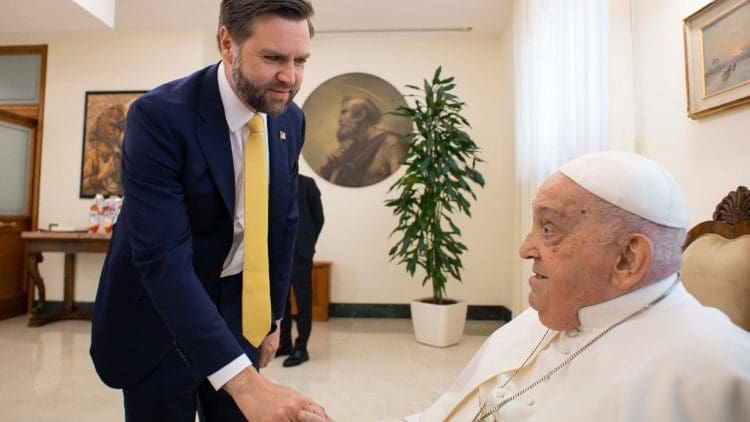
U.S. Vice President J.D. Vance was among the final individuals to meet with Pope Francis, during a private encounter on Easter Sunday—just one day before the pontiff’s unexpected death at the age of 88.
Vance, a Catholic and native of Middletown, Ohio, visited the Vatican with his family during Holy Week, describing the experience as “incredible” in a social media post. His brief Easter Sunday meeting with Pope Francis took place at the Domus Santa Marta, the Vatican guesthouse where the pontiff resided. The vice president later attended Easter Mass at the Basilica of St. Paul Outside the Walls and visited the tomb believed to belong to the apostle Paul.
Despite recent tensions over U.S. immigration policy—a subject on which Pope Francis and Vance had publicly disagreed—the mood of their meeting was warm and respectful. The pope offered gifts to the vice president’s family, including three large chocolate Easter eggs for his children, a Vatican tie, and rosaries. As he departed, Vance expressed his gratitude, telling the pontiff, “I pray for you every day. God bless you.”

World Laughter Day: Can laughter really make you healthier?
World Laughter Day is celebrated to promote joy, mental well-being, and connection among people through something as simple as laughing. Are the effects real?

Operation Safe Driver Week 2026 targets risky driving behaviors
Operation Safe Driver Week, organized by the CVSA, is a safe driving awareness and outreach initiative focused on drivers in the United States, Canada, and Mexico.

How Weather Is Reshaping Risk on U.S. Trucking Routes
Extreme events, emerging risk zones, and a growing impact on operations, costs, and insurance across the freight industry.

U.S. 250th anniversary celebrations take to the rails
Commemorative locomotives take the rails for United States’ 250th anniversary

In brief: rail crossing safety, California autonomous trucks, and CDL laws
From rail crossing safety to autonomous trucks and CDL laws, these are the key U.S. updates in transportation.

USDOT drives logistics hubs through the Regional Infrastructure Accelerators (RIA) program
USDOT strengthens its logistics hubs strategy through the Regional Infrastructure Accelerators (RIA) program, designed to unlock projects, enhance intermodal connectivity, and accelerate critical infrastructure for freight transportation across the United States.