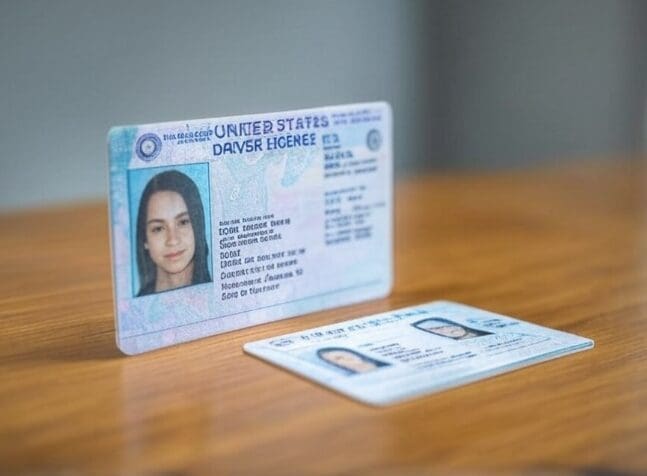
Final Countdown: What It means for truckers and all U.S. travelers
After multiple delays and years of public messaging, the Department of Homeland Security (DHS) has confirmed that May 7, 2025, is the final deadline for full implementation of the REAL ID Act.
On that date, every air traveler aged 18 or older will be required to present a REAL ID-compliant driver’s license or other acceptable identification to board domestic flights or enter certain federal facilities.
This shift has major implications not only for general travelers but also for the nation’s trucking workforce—many of whom travel frequently across state lines and into secure federal zones as part of their job.
What Is REAL ID?
REAL ID is a federal initiative passed by Congress in 2005 following the 9/11 Commission’s recommendation to set stricter standards for issuing sources of identification. The goal is to strengthen the integrity and security of state-issued IDs such as driver’s licenses. REAL ID-compliant cards are marked with a star at the top and require applicants to provide additional documentation proving identity, legal presence, Social Security number, and residency.
Impact on Truckers
For America’s 3.5 million truck drivers, the REAL ID requirement could impact access to military bases, ports, and other federally regulated locations that often demand federally recognized identification. While commercial driver’s licenses (CDLs) are already subject to federal oversight, they must also be REAL ID-compliant for access to these secure areas unless alternative credentials—such as a Transportation Worker Identification Credential (TWIC) or passport—are used.
Industry leaders and associations like the American Trucking Associations (ATA) have urged members to check the status of their licenses and to update them before the deadline to avoid disruption.
“Truckers are essential to the U.S. economy. The last thing we want is a driver turned away from a delivery or facility due to ID issues,” said ATA spokesperson Karen Bennett. “We encourage all carriers to communicate with their drivers and ensure compliance.”
Broader Travel Implications
For the average traveler, the implications are also significant. Starting May 7, 2025, standard driver’s licenses from non-compliant states or licenses without the REAL ID mark will no longer be accepted at TSA checkpoints. Alternative documents such as a U.S. passport, passport card, or DHS Trusted Traveler cards (like Global Entry) will still be accepted.
According to the TSA, an estimated 60% of Americans still do not have a REAL ID-compliant license, prompting a last-minute push in public awareness campaigns. States have ramped up efforts to issue compliant IDs, but some citizens may face delays due to high demand or lack of necessary documents.
How to Prepare
To obtain a REAL ID, individuals must visit a Department of Motor Vehicles (DMV) office in person with the required documents. Most states provide checklists on their DMV websites to help applicants prepare.
Acceptable documents include:
A birth certificate or valid passport
Social Security card or W-2 form
Two proofs of address (such as utility bills or bank statements)
The DHS has emphasized that the REAL ID is not mandatory for driving, voting, or accessing federal benefits, but it will be necessary for certain types of federal identification verification, including domestic air travel.
Final Reminder
With the May 7, 2025 deadline fast approaching, travelers and transportation professionals alike are being urged to act now. Long lines, appointment shortages, and processing delays are expected to intensify as the date nears.
Failure to obtain a REAL ID in time could mean being denied boarding for a domestic flight or being unable to access secure federal facilities—a potentially costly inconvenience for individuals and businesses alike.

In brief: weigh stations, young drivers, and fuel tax reform in the trucking industry
South Carolina debuts virtual weigh stations for trucking, as ATA pushes youth driver program, and states debate fuel policies. South Carolina launches virtual weigh stations

The Wildest Truck Modifications on the Road Today
Truck customization has become a serious industry, with some builds rivaling high-end RV conversions in complexity and cost. From redesigned sleepers to upgraded suspension systems, these modifications do more than change appearance — they alter weight, electrical load, and the technical profile of the truck.

The most dangerous states in the U.S. during winter weather
While winter conditions are hazardous across the country, some states experience significantly higher accident rates during this season. A study by Samsara, a safety and

Winter storm disruptions lead to FMCSA HOS relief in 40 states
Motor carriers and drivers providing direct assistance in relief efforts in the affected states are covered by a hours-of-service (HOS) exemption. Over the weekend, a

Air Quality Alert in California Impacts Transportation
An air quality alert has been issued as high levels of fine particle pollution (PM2.5) trigger health warnings across several parts of California. The situation is affecting visibility, driver health, and logistics operations, forcing transportation professionals to take extra precautions on highways and in urban corridors

Winter Storm Survival on the Road: What Truck Drivers and Fleet Operators Need to Know Now
Winter storm with snow, ice, and extreme cold are creating dangerous highway conditions across multiple states, forcing truckers to make critical safety decisions before turning the key.