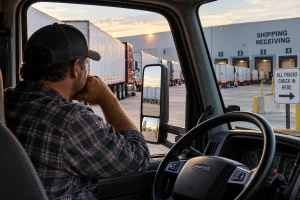
This shortage has significant repercussions, affecting not only driver comfort but also road safety and operational efficiency.
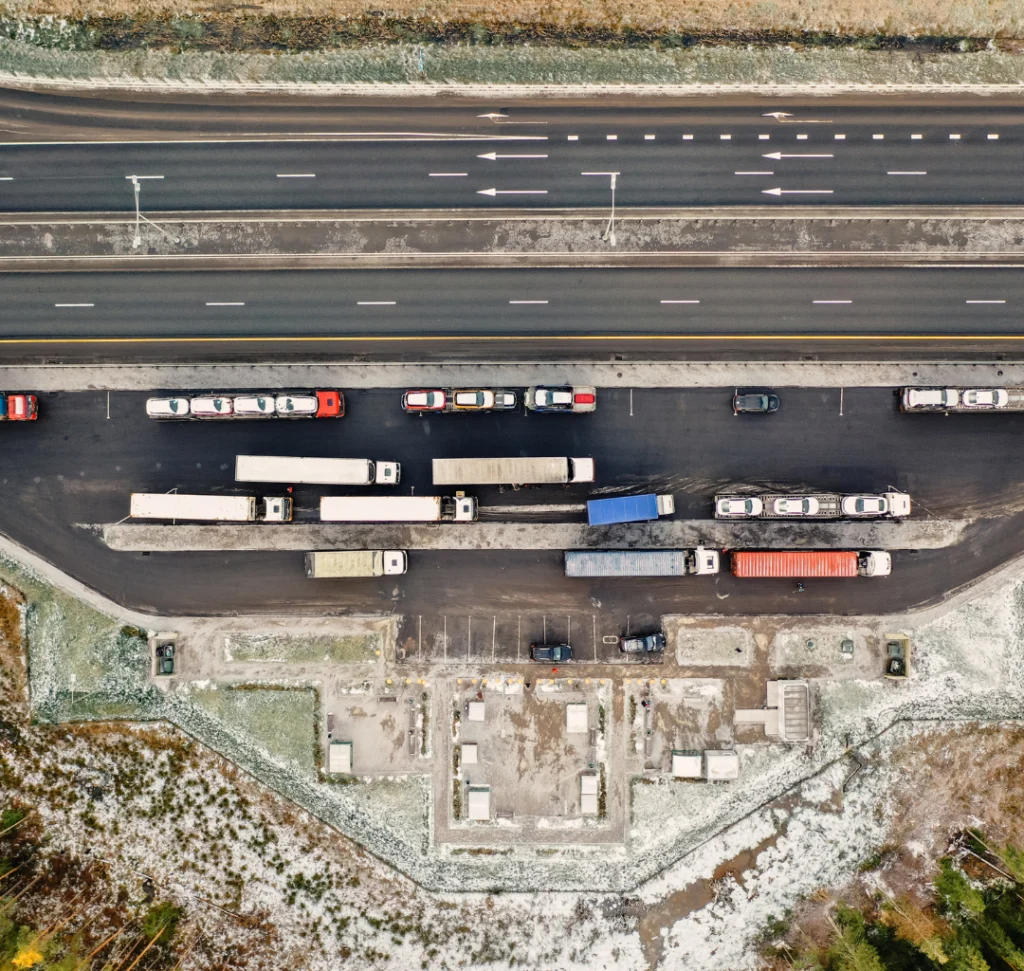
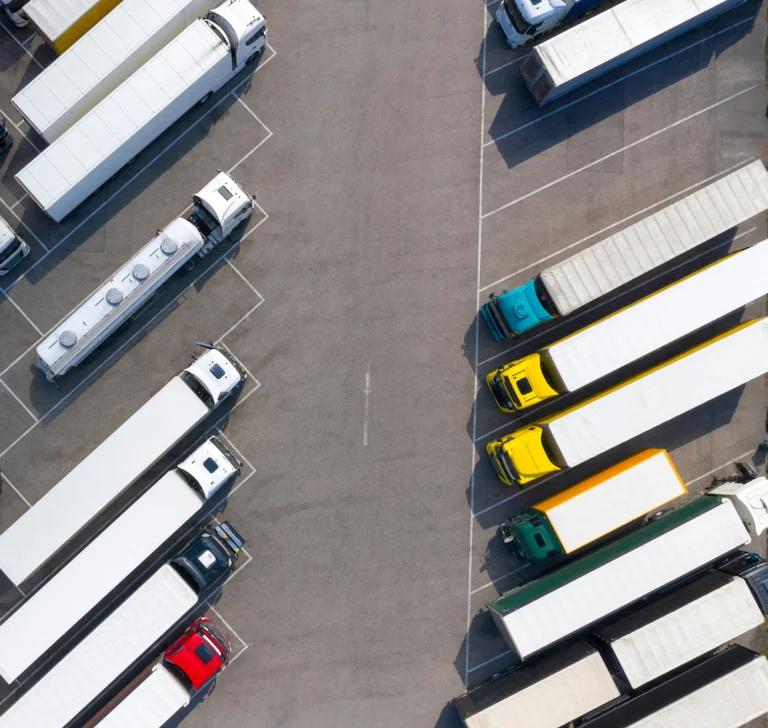
The shortage of truck parking has become one of the most pressing challenges for the road freight sector in the United States. This is highlighted in the latest study by the American Transportation Research Institute (ATRI), which takes an in-depth look at the composition, cost, and funding of parking spaces—particularly at public rest areas.
Although many public rest areas lack the amenities offered by private facilities, they remain essential for truck drivers, especially for short breaks and overnight stays. However, the number of available spaces is alarmingly low. According to 2020 data from the Federal Highway Administration, only 40,000 of the 313,000 documented parking spaces (just 13%) are public, while the remaining 87% are privately owned.

Funding: the primary obstacle for truck parking expansion
This shortage has significant repercussions, affecting not only driver comfort but also road safety and operational efficiency. A 2016 ATRI study found that, on average, drivers lose 56 minutes per day searching for suitable parking before reaching their hours-of-service limit. This time loss translates to approximately 9,300 miles not driven per year per driver, equating to roughly $7,000 in lost annual income. Given the expansion of freight routes and the decline in available parking over the years, it can be assumed these figures have only increased.
The report also highlights stark inequalities among states. While Vermont maintains a balanced ratio of one public space for every 1.5 private spaces, others—such as Louisiana—show disparities as wide as 1 to 42. ATRI classifies the most balanced states as “on target,“ while labeling the most imbalanced as “expansion opportunity states,“ pointing to an urgent need for action in the latter. For more on this data, see our article “Truck Parking: Report Ranks the States.”
Expanding the number of parking spaces is no easy task. The main obstacles identified by states are:
- Funding (36%)
- Community opposition (27%)
- Difficulty in finding suitable land (25%)
The average cost to build a single truck parking space is estimated at $93,500. Regionally, Southern states face the highest costs, with average project budgets reaching up to $6.5 million—compared to $3.7 million in the West and Midwest.

Federal funding: a vital tool
Some states have started addressing these challenges by implementing smart parking systems at rest areas and truck stops. These systems use sensors to monitor real-time parking availability, relaying the information to drivers via mobile apps or digital signage along highways. Additionally, some companies are experimenting with reservable parking spaces at select facilities. Nevertheless, despite these innovations, building more spaces remains the most viable long-term solution.
Government support plays a critical role in funding. Between 2022 and 2026, $752 million in federal grants have been allocated to truck parking projects through programs such as Infrastructure for Rebuilding America (INFRA), RAISE, and the Rural Surface Transportation Grant Program. However, a marked discrepancy persists between public and private parking areas, with truckers often viewing the latter more as a problem than a solution.
The lack of safe and accessible truck parking is not merely an operational nuisance—it is a problem that affects safety, the economy, and the well-being of drivers. Tackling it requires coordinated action from both state and federal governments, as well as the willingness to invest in infrastructure essential to national trade and logistics. In the meantime, thousands of drivers will continue to lose time, income, and peace of mind on the road.

How to Make an Argentine Asado to Celebrate Messi
As Lionel Messi turns 39 during the 2026 World Cup, we take a look at the secrets behind Argentina’s most beloved tradition: a great barbecue shared with friends, soccer, and long conversations around the fire

Why Summer is the Most Dangerous Season for Your Truck
During summer, extreme heat, increased traffic, road construction, and mechanical stress create a combination of risks for your truck and your load.

GHOSTRUCK Act to Curb Foreign Manipulation of Truckers’ ELDs
The new bill aims to close a regulatory loophole involving foreign manipulation of ELDs.

Florida Will Mark Certain Drivers With Code 775.261
Starting in October, Florida will identify certain drivers with the code 775.261 on their licenses. What it means for CDL holders, how it could influence insurance evaluations, and the new requirements affected drivers must follow.

Amazing goals from the World Cup! Soccer moves trucks and brings billions to the US economy
The biggest sporting championship in history is injecting billions of dollars into the economy, driving up demand for heavy freight. More tourists spending, more need for services, and more jobs.

What Are the Most Expensive Trucks in the World?
With the Thor 24 leading the list at more than $13 million, these are the most expensive and exclusive trucks on the planet.