The Commercial Vehicle Safety Alliance (CVSA) conducted a surprise inspection focused on brake safety.
On April 22, the Commercial Vehicle Safety Alliance (CVSA) conducted a surprise inspection focused on brake safety. This initiative, whose date is not announced in advance to ensure its effectiveness, aims to ensure compliance with commercial vehicle safety regulations. During the event, certified inspectors performed roadside checks focused on brake systems and components and provided CVSA with data on inspections and brake-related violations.
On June 17, CVSA released a statement reporting the results of the operation. Inspectors from 45 jurisdictions across Canada, Mexico, and the United States conducted a total of 4,569 commercial vehicle inspections. Of those, 398 vehicles (8.7%) were placed out of service due to brake-related violations.
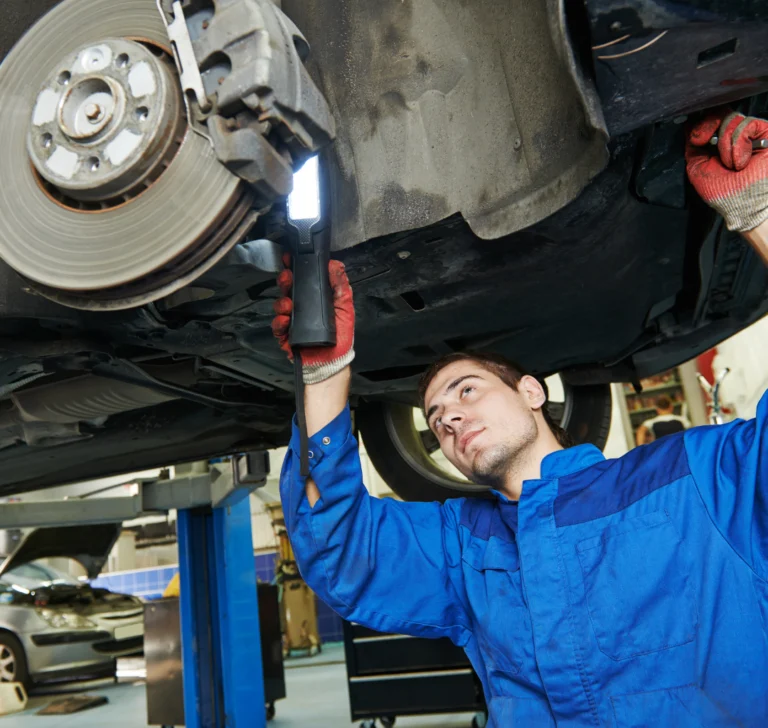
This event, known as Brake Safety Day, focused this year on inspecting brake drums and rotors. As a result, violations related to these components were found in 32 vehicles, 14 of which were taken out of service due to safety concerns.

Brake Safety Day: inspection findings
According to CVSA’s release, these vehicles were immediately restricted from operation until the violations were corrected. The Alliance stated that problems with brake drums and rotors can impact the effectiveness of a commercial vehicle’s braking system and lead to violations or out-of-service conditions, which can affect a carrier’s safety rating. This is the primary reason behind the inspection initiative.
During the general inspections, 237 vehicles (59.5%) were found to meet the 20% defective brake threshold — meaning 20% or more of the vehicle’s (or vehicle combination’s) brakes were out of service, CVSA reported.
Other out-of-service violations identified during the inspection included:
- 77 out-of-service violations related to brake hoses and/or lines; 48 vehicles had steering axle out-of-service violations; 38 vehicles failed an air loss index test.
- 112 brake out-of-service violations, such as worn brake hoses/lines, inoperative tractor protection system, inoperative low air warning device, air leaks, hydraulic fluid leaks, etc.

Overall Brake Safety Day inspection results
In addition to standard inspections, nine U.S. jurisdictions used a Performance-Based Brake Tester (PBBT). The U.S. Federal Motor Carrier Safety Regulations and CVSA’s North American Standard Out-of-Service Criteria require a minimum braking efficiency of 43.5%. 8% of vehicles did not meet the minimum required braking efficiency and were placed out of service.
The overall inspection results across the U.S., Canada, and Mexico were as follows:
- In the United States, 3,819 inspections were carried out and 303 (7.9%) out-of-service violations were found.
- Canada conducted a total of 744 inspections, finding 95 (12.8%) out-of-service violations.
- Finally, in Mexico only 6 inspections were carried out, finding a total of 0 out-of-service violations.
CVSA’s Brake Safety Day is part of Operation Airbrake, a CVSA program dedicated to improving brake safety on commercial motor vehicles throughout North America. The next Brake Safety Week is scheduled for August 24–30.

The Forgotten Document That Could Turn Into a Multi-Million Lawsuit
A forgotten document, an outdated insurance policy, or an improperly registered driver can turn an accident or roadside inspection into a costly legal dispute, exposing a trucking company to millions of dollars in losses.

Washington Found an Unexpected Ally on the Road: Mountain Lions
A five-year study conducted in Washington State found that the presence of mountain lions changes deer behavior and could reduce traffic accidents by as much as 67%.

Truck Theft: It Doesn’t End When the Vehicle Disappears
A truck theft can happen in just a few minutes, but its consequences can impact a transportation company for months.

Can AI Be Used to Blame You or Demand Money After a Truck Accident?
Years ago, a single photograph could help reconstruct a crash. Today, Artificial Intelligence can generate realistic fake images, videos, and documents, making it essential to look far beyond visual evidence alone.

Recall of 6,000 Model Year 2027 Peterbilt and Kenworth Trucks: Affected Models and What to Do in Washington
Paccar is recalling nearly 6,000 Kenworth and Peterbilt trucks, model year 2027, built between June and July, over an electrical fault that can cause loss of driver power, ABS brake failures, and lighting problems. Inspection and repair are free at dealerships. NHTSA recall number: 26V485. Paccar recall number: 26PACD.

Washington’s Port Growth Is Forcing the Trucking Industry to Adapt
As freight volumes continue to rise through Seattle and Tacoma, trucking companies are reshaping their operations, investing in technology, and preparing for a new era of logistics.