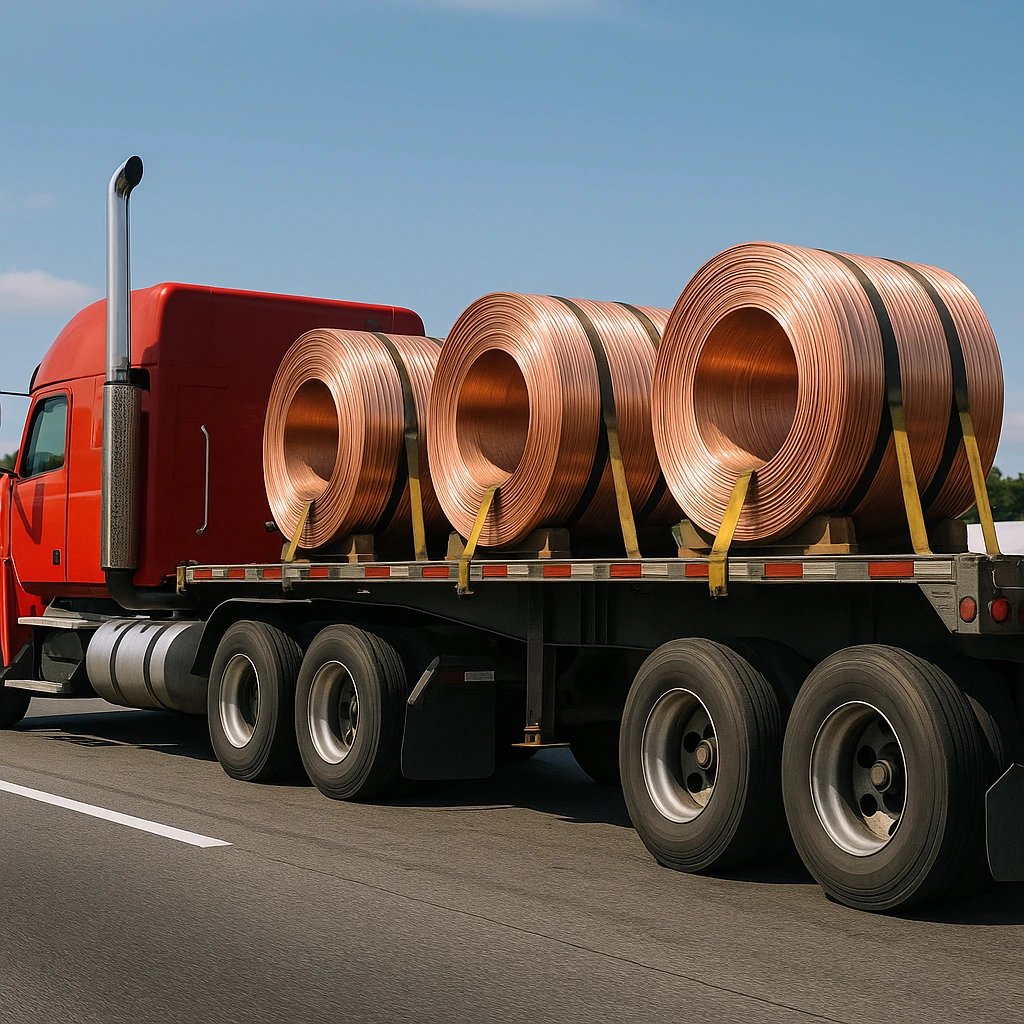
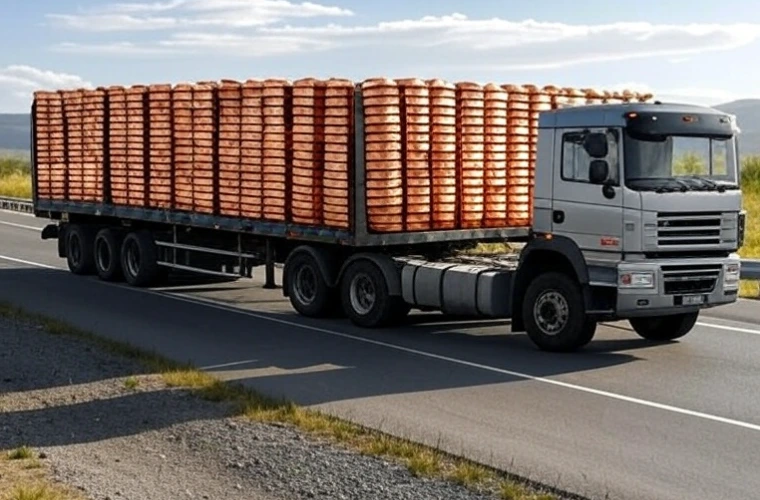
As copper prices soar and global demand increases, organized crime turns its eye to the supply chain.
Copper theft is surging across the United States, and it’s not just a matter of missing wires from construction sites. Today, the logistics industry is facing a sophisticated wave of cargo theft where copper—once a secondary concern—is now front and center. As the price of this industrial metal rises more than 35% in 2025 alone, copper has become a “hot metal” in more ways than one.
The Value of Copper: Why It’s a Prime Target
Copper is a foundational element across multiple industries, including:
Energy: It’s essential for electrical installations, solar panels, wind turbines, and lithium batteries.
Construction: Used in plumbing systems, roofing, and electrical wiring.
Technology and Transportation: A key component in electric vehicles, consumer electronics, and data centers.
With a single truckload of copper coils or cabling worth upwards of $100,000, the incentive for criminal groups is obvious. In fact, some carriers have reported losses of over $1 million in coordinated heists involving multiple shipments.
Modern Tactics: From Fake Drivers to Digital Hijacking
Copper theft has evolved far beyond cutting fences or smashing windows. According to The Wall Street Journal and industry watchdogs, new and more sophisticated schemes are emerging:
Carrier Impersonation: Criminals steal or buy real company credentials and present themselves as legitimate freight carriers.
Digital Manipulation: Using load boards like DAT and TruckStop, fraudsters intercept or reroute legitimate shipments with forged documents.
Ghost Pickups: Once assigned a load, these “phantom drivers” arrive with cloned IDs and DOT numbers to pick up the shipment—then vanish without a trace.
A notable case involved $135,000 in copper cable stolen from a manufacturing facility in Ohio. The perpetrators posed as a trusted carrier using a nearly identical DOT number and company name, bypassing routine checks and vanishing within hours.

How Logistics Companies Can Prevent Copper Theft
Strict Identity Verification
Before loading any valuable cargo, companies should:
Cross-check DOT and MC numbers using the FMCSA’s official portal.
Implement two-step or multi-factor validation for all load assignments.
Never rely solely on documents sent via email—call and confirm credentials through multiple channels.
GPS Tracking and Load Traceability
Hide GPS tracking devices within the cargo itself.
Monitor shipments in real-time from dispatch to final delivery.
Employ 24/7 security operations centers that can alert law enforcement the moment a route is compromised.
Staff Training and Protocols
Train dispatchers, warehouse workers, and drivers to identify red flags—such as mismatched email domains or sudden carrier changes.
Regularly review and update internal procedures for load assignment and verification.
Physical Security Along the Route
Strengthen on-site security at warehouses and loading points.
Use predetermined, secure rest stops and avoid high-theft areas.
Schedule deliveries during business hours—weekend or nighttime runs are more vulnerable.
Cargo Insurance: A New Baseline for Risk Mitigation
As copper theft becomes more prevalent, traditional cargo insurance policies may no longer provide adequate coverage. Logistics firms and shippers must ensure they:
Purchase policies that specifically cover non-ferrous metals such as copper or aluminum.
Include protection against fraud, digital deception, and indirect theft.
Confirm that the insurance extends throughout the entire transport chain, including any intermodal transfers.
Put simply, the right policy can be the difference between catastrophic loss and full recovery.
An Emerging Crisis for U.S. Road Logistics
The rise of copper as a strategic commodity has created a new risk frontier for the U.S. trucking and logistics sector. With record-high prices and a global appetite driven by renewable energy and electric mobility, copper is no longer just another cargo—it’s a magnet for organized crime.
In this context, proactive prevention, rigorous verification, real-time monitoring, and robust insurance are not optional—they’re operational imperatives. Because in today’s digital transport era, the job isn’t just getting the load to its destination… it’s making sure it arrives intact.

I‑205: The Bridge That Moved Over the Weekend
In Oregon, crews used hydraulic jacks to lift a 1,030-foot section of the Abernethy Bridge and slide it about eight feet sideways. Northbound I‑205 reopened Monday, four and a half hours ahead of schedule.

Thanksgiving 2026: Busiest Trucking Routes and Peak Traffic Hours
Nearly 73 million people are expected to travel by road during Thanksgiving. New York, Los Angeles, California, Texas, and Florida will be among the areas facing significant delays.

Made in the USA vs. imports: key points for understanding the price battle
Imported products remain competitive, but tariffs, input costs, logistics, and the costs of disruptions compel U.S. companies to look beyond price.
Texas Considers New Laws to Regulate Truck Weights and Protect Infrastructure
Texas is considering new bills to tighten penalties for overweight trucks, modify transportation routes, and ease load limits.

The Unsung Heroes of Trucking: Technicians to Be Honored in June
National Technician Appreciation Week will be held in June to recognize the professionals who keep trucks safe, prevent mechanical failures, and ensure trucking operations

EPA Submits Final Review of NOx Emissions Rule for Heavy-Duty Trucks
The EPA has submitted its final revisions to the nitrogen oxide (NOx) emissions regulations for heavy-duty vehicles.