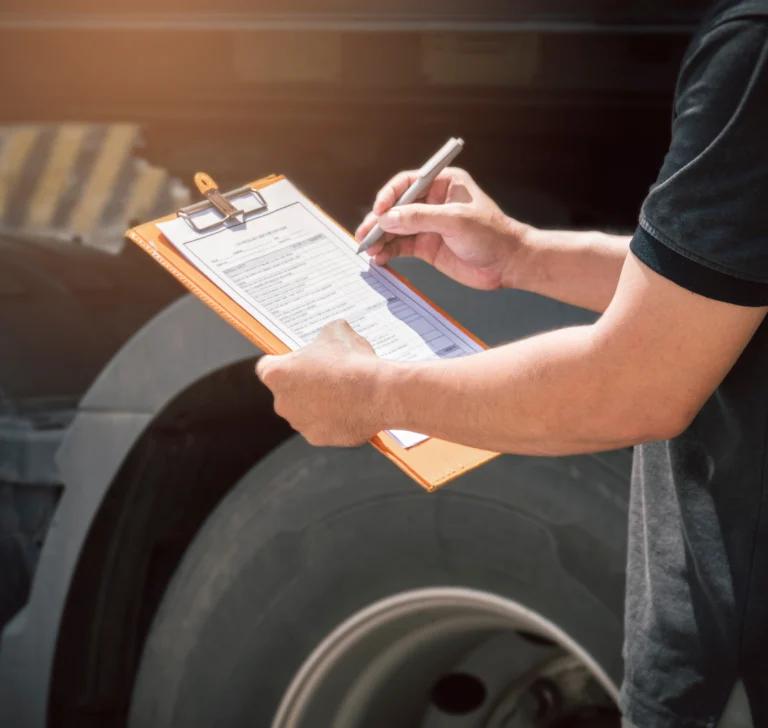
The FMCSA has conducted a total of 8,340 inspections in the United States, detecting more than 50,000 violations.
The Federal Motor Carrier Safety Administration (FMCSA) is responsible for conducting annual inspections, both scheduled and unannounced, of truck drivers and carriers to ensure compliance with safety regulations established for the transportation sector. With three quarters of 2025 already completed, the data collected by the FMCSA throughout this year reveal significant trends regarding carriers’ compliance with the rules.
To date, the FMCSA has conducted a total of 8,340 inspections in the United States, detecting more than 50,000 violations, according to the agency’s data. These inspections evaluate various areas, such as documentation, safety, maintenance, and more. This year, inspections related to English language proficiency have been added, which has increased the number of violations detected. According to data shared by My Safety Manager, an average inspection reveals six violations, with the most common being related to documentation non-compliance.

The 10 most common violations in 2025
The analysis of FMCSA data clearly shows the areas where transportation companies struggle the most to comply with requirements. Here are the 10 most common violations in 2025:
10. Incorrect method of recording hours of service – 1.88%
9. Use of controller before the information exchange center result – 1.89%
8. Carrier not registered in the clearinghouse – 1.94%
7. No maintenance records identifying the vehicle – 2.20%
6. Violation for not wearing the seatbelt – 2.38%
7. Lack of a system showing maintenance expiration dates – 2.72%
8. Falsified service status records – 4.38%
9. No annual inquiry to the information exchange center – 5.12%
10. No pre-employment inquiry to the information exchange center – 5.54%
11. Violation of local laws – 12.38%
A total of 5,746 violations have been recorded related to the violation of local laws, specifically concerning the verification that transport companies enforce safe driving. When the required documentation is missing, the transport company is fined under Article 392.2 for failing to ensure their drivers operate legally. According to FMCSA data, the average fine for this type of violation is $11,172.
The most serious violations are not related to exotic rules, but rather basic compliance measures set by the Department of Transportation that are often overlooked. Poor hiring practices, inadequate driver supervision, and neglecting record-keeping are the main causes of failures in audits.

How to avoid violations?
- Keep your documentation in order and always accessible.
- Perform pre- and post-trip inspections.
- Establish a maintenance routine with your carrier.
- Record your hours correctly.
- Stay calm during any inspection.
Avoiding violations is a team effort between truck drivers and their employers. Make sure to keep your carrier informed about any issues with your truck or documentation, as this will help avoid violations and ensure safer driving.

The best roadside attractions for truckers in the U.S.
America’s highways hide unique places that break up the routine, don’t hesitate to check out these roadside attractions along the way. The road is much

The trucker style: comfort, function, and identity
Truckers’ style is much more than workwear; it’s an identity. These are the most commonly worn garments among truckers. Truckers’ style is much more than

Chaos on Highway 61: Viral Wrong-Way Truck Video Reignites the CDL Debate
An 80-ton tractor-trailer traveling miles in the wrong direction on Missouri’s Highway 61 has reignited a nationwide debate over Commercial Driver’s License (CDL) standards, training

How technology affects driver retention
Friend or foe? 52% of drivers say technology directly influences their decision to stay with or leave a fleet. Fleet telematics company Platform Science published

Dalilah Law seeks to remove non-english speaking commercial drivers
President Donald Trump proposed the “Dalilah Law,” an initiative aimed at prohibiting undocumented immigrants from obtaining commercial driver’s licenses. On February 24, President Donald Trump

FORMULA 1 and the AI That Could Transform Transportation in the U.S.
The artificial intelligence system that Formula 1 implemented to monitor every car on every turn is opening the door to new applications in trucking, logistics,
All content and original artwork, unless otherwise noted, is protected by copyright. Saint George uses certain images under license from various licensing vendors for this purpose. Any unauthorized commercial reproduction or distribution of copyrighted materials is prohibited.