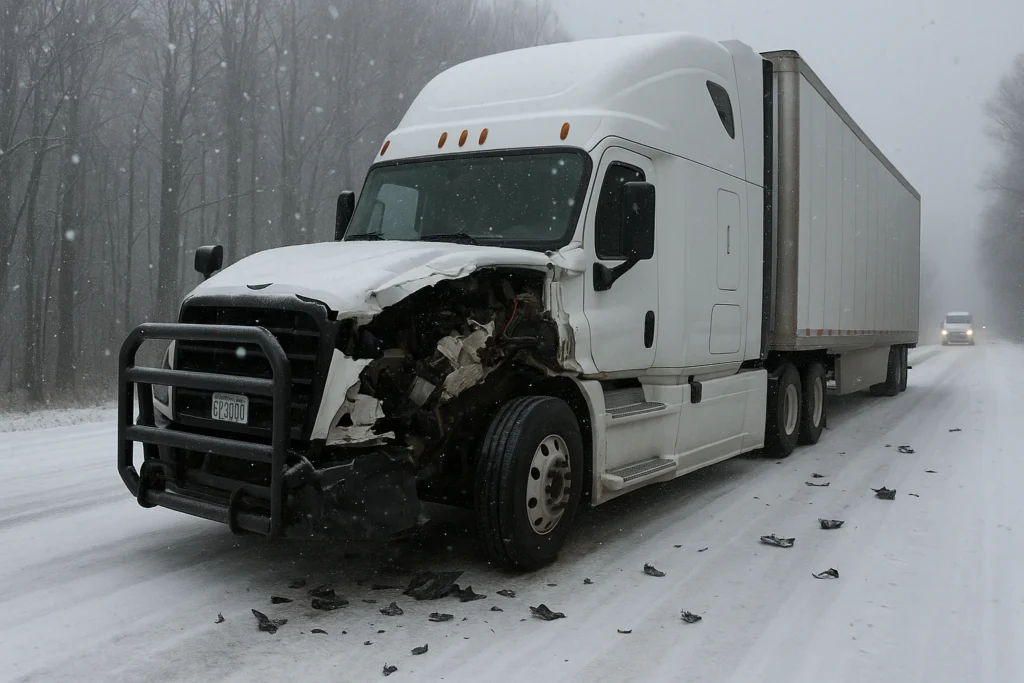
A new Winter Storm is set to slam regions already hit hard over the Thanksgiving weekend—an alarming reminder that it is still technically autumn despite conditions that feel like mid-February.
Winter weather fatigue has arrived early this year in the United States. Although the calendar says autumn, the atmosphere is behaving like deep winter, and a new Winter Storm is barreling from the Plains toward the Northeast.
The system is expected to bring another round of snow, ice, dangerous wind chills, and widespread travel disruptions—just as millions try to return to normal routines after one of the most chaotic post-Thanksgiving travel weekends in years.
Over the holiday weekend, heavy snow clobbered the Midwest and Great Lakes, with Chicago reporting record-breaking November totals. Multiple interstates were shut down for hours, and semi-trucks ended up stranded on iced-over stretches of highway, including dramatic scenes from Iowa City where tractor-trailers became stuck in deep snow. Thousands of flights were delayed or canceled, and many travelers faced gridlock across multiple states.
Now, before crews can fully clear roads and restore normal traffic flow, another storm is forming—and it is already showing signs of becoming a high-impact event.
A New System Takes Shape in the West
The storm began building over the western U.S. over the weekend as a strong low-pressure system funneled Pacific moisture into the Northwest, Great Basin, and Rockies. Higher elevations picked up new layers of snow, while lighter flurries fell across lower valleys.
This spinning energy will intensify as it teams up with deep Gulf moisture, creating a widespread shield of precipitation stretching thousands of miles.
On Monday, snow and a wintry mix will expand across the Central Plains, Mississippi Valley, lower Midwest, and Great Lakes. Cities such as Des Moines, St. Louis, and Chicago are forecast to receive several additional inches—adding to the already difficult road and airport conditions.
Lake-effect snow, still lingering from the holiday weekend system, will keep portions of the Great Lakes region buried in steady snowfall. For trucking companies and long-haul drivers, these combined factors mean slower routes, detours, and the possibility of extended shutdowns on primary freight corridors.
Winter Storm Chan will intensify across the mid-Atlantic and Northeast beginning Monday night. Here's how much rain and snow the East Coast should expect: https://t.co/CCUwnNgm7E pic.twitter.com/iGDwYvOe5I
— The Weather Channel (@weatherchannel) December 1, 2025
Snow, Rain, Ice—and Dangerous Uncertainty
By Monday night and into Tuesday, the Winter Storm will strengthen as it pushes east, bringing widespread rain to the Southeast, Mid-Atlantic, and Gulf Coast. Flash flooding is possible in the South, where saturated ground and heavy rain overlap.
The colder northwest side of the storm will pull snow into the Appalachians and interior Northeast. Just south of the heaviest snow bands, warm air overriding frozen ground could produce freezing rain—a serious hazard for truckers traveling through higher elevations of Virginia and North Carolina. Even a small glaze of ice is enough to cause jackknifed semis, power outages, and multi-mile backups.
One of the biggest uncertainties remains the I-95 corridor, the backbone of the East Coast freight network. New York City, Philadelphia, Washington, D.C., and Boston may start with snow Tuesday morning. But whether that snow sticks or rapidly transitions to rain depends on the precise track of the low-pressure center—just a slight wobble could change travel conditions dramatically.
For truckers, dispatchers, and logistics coordinators, this means planning multiple scenarios and checking real-time data frequently.
Arctic Cold Arrives Next
As the storm exits, colder air will surge in behind it. Much of the central and northern U.S. will remain stuck in the teens and 20s on Monday and Tuesday. Wind chills will make temperatures feel even lower, ensuring that snow and ice from both storms will persist.
Later in the week, a stronger blast of Arctic air is expected to sweep across the central and eastern U.S., driving temperatures toward record lows for early December. Some areas may approach daily cold records on Thursday and Friday.
Meteorologists warn that this could be only the beginning: a potential disruption of the polar vortex suggests more frigid outbreaks are possible deeper into December—again, even though winter has not officially begun.
Key Safety Tips for Truckers During This Winter Storm
1. Allow for extended travel times
Mountain regions and Midwestern corridors will experience the heaviest snow and ice. Add buffers for delivery schedules and avoid strict deadlines where possible.
2. Check state 511 systems frequently
Road conditions may change by the hour. Monitor updates, especially along I-80, I-90, I-70, and the I-95 corridor.
3. Watch for freezing rain risks
Ice is far more dangerous than snow. Reduce speed, avoid sudden braking, and increase following distance.
4. Equip for emergency conditions
Carry chains, warm gear, blankets, nonperishable food, flashlights, and a fully charged power bank.
5. Keep fuel tanks above half
Prevents line freeze and reduces risks if stranded by sudden road closures.
6. Maintain communication with dispatch
Regular check-ins allow planners to adjust routes, avoid dangerous segments, and reassign loads if necessary.
7. Avoid parking on highway shoulders
Snowplows and low visibility can make shoulders extremely dangerous during storms.

I‑205: The Bridge That Moved Over the Weekend
In Oregon, crews used hydraulic jacks to lift a 1,030-foot section of the Abernethy Bridge and slide it about eight feet sideways. Northbound I‑205 reopened Monday, four and a half hours ahead of schedule.

Thanksgiving 2026: Busiest Trucking Routes and Peak Traffic Hours
Nearly 73 million people are expected to travel by road during Thanksgiving. New York, Los Angeles, California, Texas, and Florida will be among the areas facing significant delays.

Made in the USA vs. imports: key points for understanding the price battle
Imported products remain competitive, but tariffs, input costs, logistics, and the costs of disruptions compel U.S. companies to look beyond price.
Texas Considers New Laws to Regulate Truck Weights and Protect Infrastructure
Texas is considering new bills to tighten penalties for overweight trucks, modify transportation routes, and ease load limits.

The Unsung Heroes of Trucking: Technicians to Be Honored in June
National Technician Appreciation Week will be held in June to recognize the professionals who keep trucks safe, prevent mechanical failures, and ensure trucking operations

EPA Submits Final Review of NOx Emissions Rule for Heavy-Duty Trucks
The EPA has submitted its final revisions to the nitrogen oxide (NOx) emissions regulations for heavy-duty vehicles.