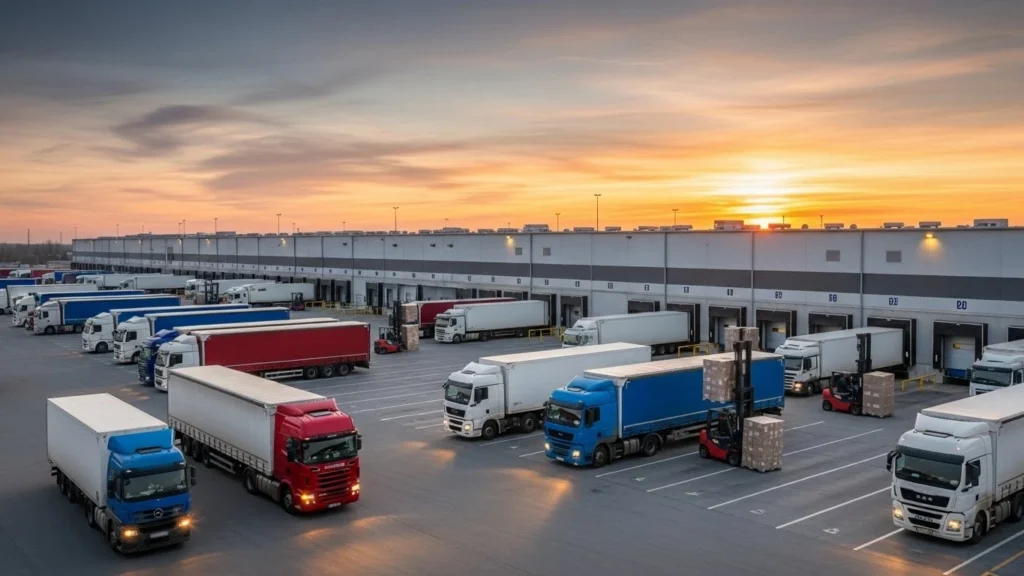
Trucking and logistics in 2026: what to expect from the market becomes a central question for an industry starting the year amid operational adjustments, cost pressures, and mixed economic signals. Freight transportation is entering a scenario in which planning, efficiency, and a careful reading of market dynamics will be decisive.
Within a global economic context marked by uneven recovery after years of disruption, the ground freight transportation and logistics sector faces a pivotal year in 2026. Transportation and Logistics Outlook 2026: Key Insights for Trucking, Supply Chains, and the Moving Economy aims to analyze the main trends in operating costs, market dynamics, technology, security, and strategies that will shape the industry over the coming year, drawing on updated market data and expert projections.
Current State of the Freight Transportation Market
The global road freight market was valued at approximately USD 2.67 trillion in 2025 and is projected to reach nearly USD 2.77 trillion in 2026, driven by the dominant role of trucking in logistics and regional trade, particularly in North America. Expected industry growth through 2035 stands at around a 3.6% compound annual growth rate, pointing to steady but moderate expansion in the years ahead.
In the United States, the industry is at a transition point. After several years of excess capacity and depressed freight rates, analysts anticipate a normalization of the balance between supply and demand during the first half of 2026, along with a gradual improvement in profit margins for trucking companies.
Costs, Rates, and Capacity
Freight rates in the trucking market remain under pressure, although a moderate increase in both spot and contract pricing is expected toward the end of 2026. Spot rates for dry van freight, for example, could rise by as much as 6% year over year in the fourth quarter of 2026, while long-term contracts are likely to see more restrained increases.
This trend is unfolding as truck capacity continues to adjust. Some carriers are exiting the market or downsizing their fleets, contributing to a more balanced supply environment that could support firmer rates. While this consolidation process is necessary, it also creates challenges for shippers, who must plan more carefully to secure capacity and maintain service continuity.
Driver Shortage and Safety
The driver shortage remains one of the most significant structural challenges facing the industry in 2026. Sector projections suggest the deficit could exceed 170,000 drivers by year-end, a situation that puts upward pressure on wages, increases operating costs, and limits the industry’s ability to expand capacity during periods of higher demand.
This labor shortage also has direct implications for road safety. In corridors with heavy truck traffic, there is a higher incidence of accidents linked to driver fatigue, long shifts, and insufficient rotation. The combination of workforce shortages and operational demands continues to represent a material risk for carriers, regulators, and insurers alike.
echnology and Digitalization as Efficiency Drivers
With margins under strain, technology has become a critical lever for improving operational efficiency. Transportation management systems (TMS), artificial intelligence–based route optimization tools, and digital freight matching solutions are gaining traction across fleets of all sizes. The digital freight brokerage market alone exceeds USD 5.2 billion in 2026 and is expected to continue growing steadily in the coming years.
The adoption of artificial intelligence, advanced telematics, and Internet of Vehicles–related technologies enables operators to optimize fuel consumption, reduce idle time, enhance safety, and anticipate maintenance needs. These tools are particularly valuable in an environment where even small efficiency gains can make the difference between profitability and losses.
Risks, Security, and Organized Crime
Another critical factor for trucking and logistics in 2026 is the rise in cargo theft, especially along high-demand corridors and in strategic logistics hubs. The theft of high-value goods exposes vulnerabilities in the supply chain and generates significant economic impacts, including higher insurance premiums, operational delays, and erosion of commercial trust.
The growth of these criminal activities is forcing carriers, shippers, and authorities to strengthen security protocols, invest in monitoring and coordination, and rethink routes and schedules to reduce exposure to risk.
Strategies for 2026
Against this backdrop, transportation and logistics companies will need to adopt more flexible and resilient strategies. Key priorities include improving network and capacity management through hybrid approaches that combine contract freight with spot market exposure, strengthening long-term relationships with carriers to secure capacity during critical periods, and expanding the use of technology to optimize operations.
At the same time, advancing comprehensive security strategies will be essential. A collaborative approach involving operators, insurers, and regulatory agencies will be necessary to mitigate the growing risks associated with organized cargo crime.
The 2026 landscape presents clear challenges for the transportation and logistics sector, particularly in terms of costs, driver shortages, security, and operational pressure. However, it also offers opportunities to consolidate efficiency, professionalization, and technological adoption. Achieving the right balance between capacity, costs, and risk management will be critical to sustaining competitiveness in a market undergoing significant transformation.

$170 billion at stake: 1,500 companies demand tariff refunds
Companies have challenged the global tariffs imposed by President Donald Trump, asking federal courts to reactivate proceedings to begin the refund process. The companies that

In brief: enforcement measures target speeding, CDL training gaps and more
Major enforcement actions across the U.S., including speeding, CDL fraud, and chain violations Colorado launches Speed Enforcement Program The Colorado Department of Transportation (CDOT) has

Chinese Vehicles Raise Espionage and Remote Sabotage Concerns
Investigations into Chinese technology in connected vehicles warn of espionage risks, massive data transmission, and potential remote access vulnerabilities that concern U.S. transportation and security

Between the Court and the Fed: the market redefines its roadmap for 2026
Trade policy in limbo as markets price in 2026 rate cuts and Supreme Court strikes down Trump tariff plan. In the latest episode of the

New 10% U.S. import tariff takes effect amid legal and market uncertainty
The implementation of these new tariffs has generated global uncertainty among exporters, increasing confusion around U.S. trade policy. The United States has implemented a new

Military Trucks That Moved a Base in Syria
Convoys of advanced HEMTT and PLS military trucks carried armored vehicles, prefabricated base structures, mobile workshops and heavy equipment during the U.S. withdrawal from northeastern