Truck drivers’ health is affected by irregular sleep, stress, poor nutrition, and prolonged loneliness. Awareness about health is growing, along with the adoption of habits that prevent disease and improve safety.
The conversation around health within the transportation industry is no longer secondary. For years, the focus was placed almost exclusively on delivery times, operational efficiency, and equipment maintenance. Today, more and more stakeholders recognize that the health of those behind the wheel is a determining factor in the sustainability of the logistics system.
Life on the road presents unique challenges that impact both body and mind. Long shifts, rest at irregular hours, limited access to healthy food options, and extended periods away from family create a demanding environment. When these conditions persist over time, they can translate into concrete medical consequences.
Several industry surveys show that professional drivers experience higher rates of hypertension, excess weight, sleep disorders, and chronic fatigue compared to other workers. Added to this is the psychological pressure linked to deadlines, heavy traffic, adverse weather, and constant responsibility for high-value cargo.
When health affects safety
Talking about health is not only about individual well-being. There is a direct connection between a driver’s physical and mental condition and road safety.
Lack of sleep reduces reaction time. Ongoing stress interferes with decision-making. Poor nutrition affects energy levels. All of this has an impact on performance behind the wheel.
For this reason, health care is increasingly viewed as a strategic investment. Fleets, insurers, and industry organizations are incorporating prevention programs, regular checkups, and awareness campaigns.
The end of the permanent sacrifice culture
For a long time, the prevailing idea was that a good trucker was someone who could endure anything: minimal rest, continuous trips, and improvised meals. However, newer generations are promoting a different perspective.
Today, professionals who understand that staying in optimal condition is part of the job are highly valued. Physical endurance is no longer measured by how much you can withstand, but by how much you can prevent.

Small changes, big results
One of the most interesting developments is the growth of healthy habits adapted to the realities of the highway.
Social media and driver communities are full of recommendations on how to organize movement routines in small spaces, prepare balanced meals, or improve sleep quality inside the cab.
Far from requiring drastic transformations, many of these practices are simple adjustments that, when repeated over time, lead to significant improvements.
The mental dimension of health
Prolonged loneliness is another aspect receiving increasing attention. Spending days or weeks away from family can generate feelings of isolation, anxiety, or discouragement.
To counter this, remote psychological support initiatives, peer discussion groups, and the use of technology to maintain frequent contact with loved ones are becoming more common.
Recognizing the emotional impact of the profession is a key step toward building a more human industry.

The future of transportation is also about health
As logistics becomes more sophisticated and demands greater precision, the driver’s role becomes even more critical. No technological innovation can replace the capacity of a professional who is alert, well-rested, and balanced.
Promoting health, therefore, is not just a personal matter; it is part of the sector’s competitiveness.
Tips for body and mind
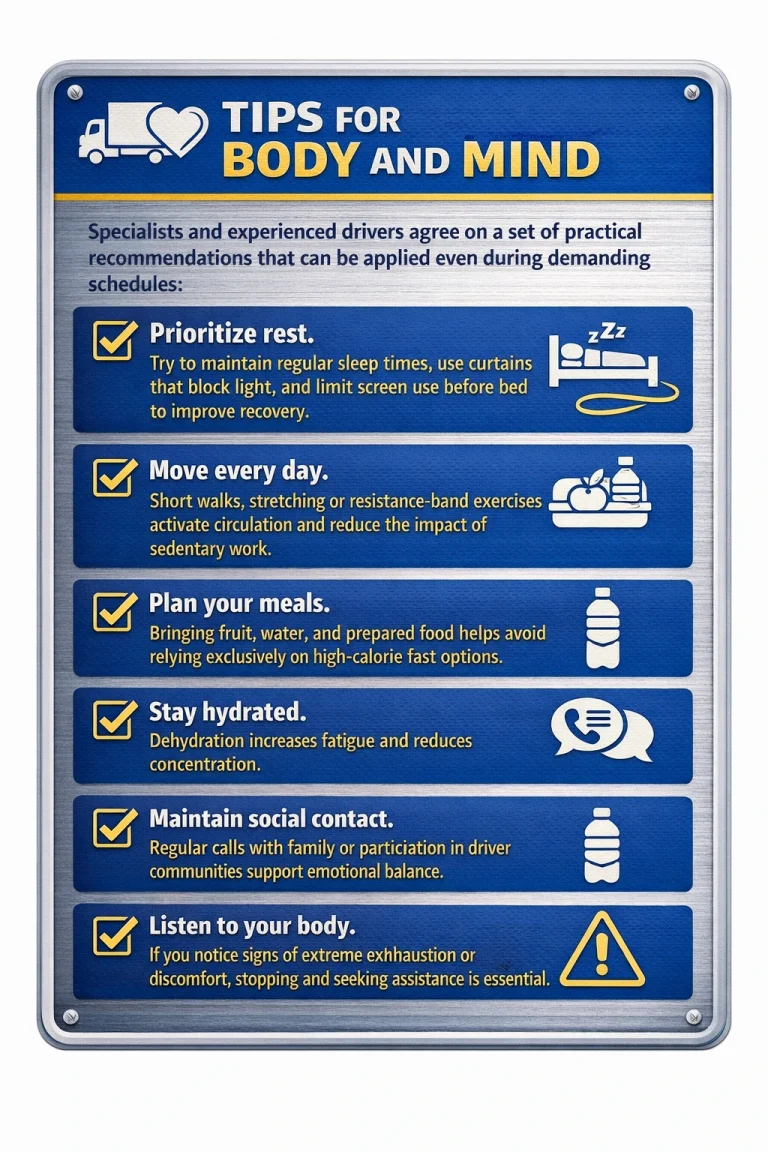
Specialists and experienced drivers agree on a set of practical recommendations that can be applied even during demanding schedules:
Prioritize rest. Try to maintain regular sleep times, use curtains that block light, and limit screen use before bed to improve recovery.
Move every day. Short walks, stretching, or resistance-band exercises activate circulation and reduce the impact of sedentary work.
Plan your meals. Bringing fruit, water, and prepared food helps avoid relying exclusively on high-calorie fast options.
Stay hydrated. Dehydration increases fatigue and reduces concentration.
Maintain social contact. Regular calls with family or participation in driver communities support emotional balance.
Listen to your body. If you notice signs of extreme exhaustion or discomfort, stopping and seeking assistance is essential
The road can be demanding, but the knowledge available today makes it possible to travel it in a healthier way. The change has already begun, and every habit counts.

Why Reefer Is the Most Profitable Segment of 2026
Refrigerated transportation is leading the recovery of the U.S. freight market: higher rates, sustained demand, and key opportunities in Florida and along the Mexico border.

Artemis II and the logistics of space: more like trucking than you think
On Wednesday, April 1, 2026, NASA launched the Artemis II mission, and it made us wonder: what do a truck and a spacecraft have in common?

FMCSA report: HOS violations increase after 2020 rule changes
In a recent report presented to Congress, the Federal Motor Carrier Safety Administration (FMCSA) evaluated the 2020 changes to hours-of-service (HOS) regulations.

How Artificial Intelligence Is Redefining Cargo Theft in the Trucking Industry
The rapid rise of AI-driven fraud schemes—deepfakes, double brokering, and identity theft—is generating multimillion-dollar losses across the freight industry, forcing companies and regulators to rethink security systems.

Wall Street: Transport sector bets on peace and market rebound
Industry leaders predict a significant logistics surge as stabilizing global trade routes and the prospect of peace ignite a much-needed recovery for major transport firms.

Truck Mechanics: The Most In-Demand Job in the United States
The shortage of truck mechanics has become a critical challenge for the transportation industry—but also a high-paying career opportunity.