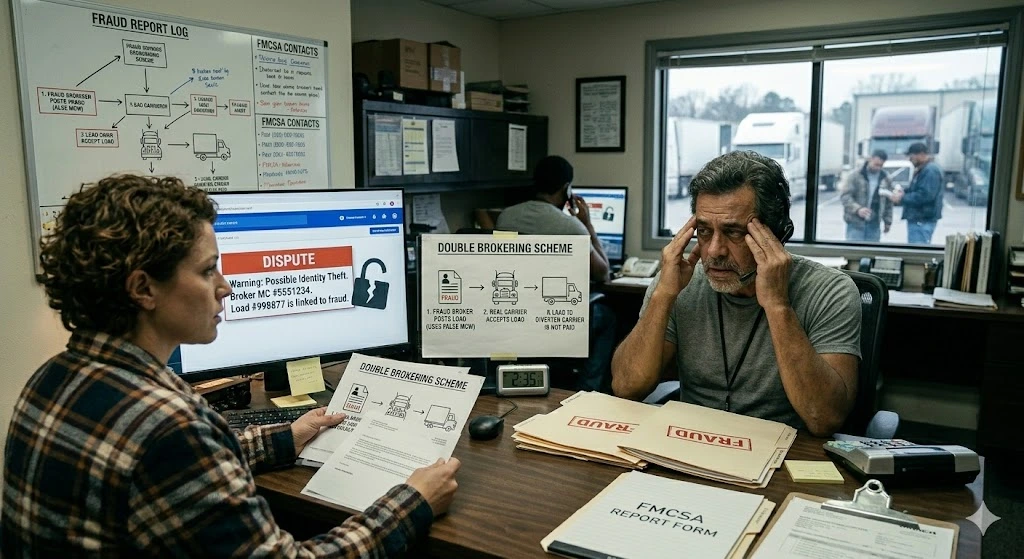
Double brokering fraud is one of the fastest-growing threats in the U.S. trucking industry in 2026. From ghost brokering to email hacking and identity theft, scammers are exploiting FMCSA registration gaps and digital payment systems. Here’s how the scheme works—and how carriers can protect their freight, their trucks, and their revenue with proper broker verification and professional guidance.

Double brokering is no longer an isolated scam. In 2026, it has evolved into a structural risk within the U.S. freight market, impacting shippers, legitimate brokers, and especially independent owner-operators operating on tight margins.
The scheme appears simple. Its execution is highly sophisticated. And its consequences can be devastating: diverted freight, unpaid loads, stolen cargo, damaged reputations, and thousands of dollars lost in hours.
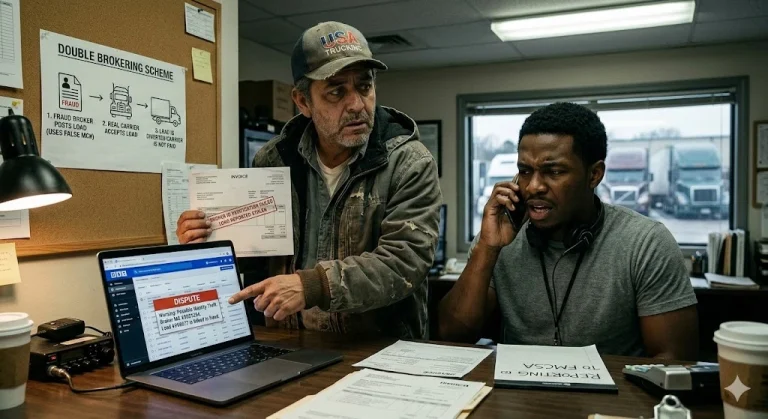
How the Double Brokering Scheme Works
Picture a triangle. At the top is a criminal. At the bottom are two victims: the shipper and the carrier.
1. Identity Theft
The scammer hacks or creates a fake account using the name and MC number of a legitimate broker with a solid reputation. Logos, digital signatures, contracts, and insurance certificates are copied to look authentic.
In more advanced cases, criminals infiltrate real corporate email systems and communicate directly from compromised accounts.
2. Capturing the Load
The fraudster takes a legitimate shipment from a shipper and reposts it on major load boards as if it were their own. Platforms such as:
DAT Freight & Analytics
Truckstop
are used daily by thousands of carriers. Without proper verification, fraudulent postings can blend in seamlessly.
3. The Carrier Trap
A real carrier accepts the load. The fake broker sends rate confirmations and instructions that look legitimate. The driver picks up and delivers the freight.
Payment never arrives.
4. The Fallout
The scammer collects payment from the shipper and disappears. In severe cases, freight is redirected to clandestine warehouses and stolen entirely.
The carrier doesn’t get paid.
The shipper loses cargo.
The real broker’s reputation suffers.
Modern Tactics in 2026
Fraud has become more strategic and patient.
Ghost Brokering
Criminals create shell brokerage companies registered with the Federal Motor Carrier Safety Administration.
They obtain an MC number, maintain minimal activity for months to build “operating history” in the SAFER system, and then execute multiple scams in a single weekend before vanishing.
Industry leaders have criticized how relatively easy it remains to obtain initial authority.
Email Hacking and Quick Pay Diversion
Instead of creating fake companies, scammers intercept communication between brokers and carriers. When Quick Pay is issued, they alter banking details so the funds are redirected to fraudulent accounts.
The broker believes payment was made.
The carrier believes payment is pending.
The money is gone.
Red Flags Every Owner-Operator Must Check
In a high-pressure rate environment, slowing down for verification can mean the difference between profit and loss.
1. Suspicious Email Domains
If someone claims to represent C.H. Robinson but uses a Gmail address or a slightly altered domain (like @chrobinson-logistics.com), it is almost certainly fraud.
Major brokers use official corporate domains only.
2. Rates That Are Too Good to Be True
If the lane average is $2.50 per mile and someone offers $4.00 without a clear reason, that’s likely bait.
Scammers know financial pressure drives fast decisions.
3. Urgency and Pressure
“Confirm now or you lose it.”
“There’s another truck waiting.”
Artificial urgency is designed to prevent you from checking the broker’s authority through the FMCSA portal.
4. Physical Address Verification
Search the company’s headquarters on Google Maps.
If a “national brokerage” operates out of a vacant lot or small apartment, walk away.

The Role of the FMCSA
The Federal Motor Carrier Safety Administration oversees MC registration and the SAFER system.
The industry is pushing for:
Stronger identity verification at registration.
More rigorous audits of new brokers.
Faster suspension of suspicious authorities.
Mandatory multi-factor authentication.
Some digital freight platforms are already implementing biometric identity checks and enhanced verification protocols.
However, as long as registration loopholes remain accessible, criminals will exploit them.
Why Working With a Trusted Broker Matters
In today’s environment, choosing the right broker is not just about rates—it’s about risk management.
Established firms like Saint George Insurance Brokers advise carriers to:
Vet brokers beyond surface-level authority checks.
Confirm banking information through verified channels.
Maintain updated Certificates of Insurance.
Document every transaction.
Use written contracts and standardized rate confirmations.
Avoid new or unknown brokers without reference validation.
A reputable broker or insurance advisor can help carriers implement verification protocols, review contractual exposure, and reduce financial vulnerability.
Professional guidance is not an expense—it is protection against operational collapse.
What To Do If You Suspect Fraud
Verify the MC number directly through the official FMCSA SAFER system.
Call the broker using the phone number listed on their official website—not the number in the suspicious email.
Confirm banking details through a second communication channel.
Keep written documentation of all communications.
In 2026, cybersecurity is as critical as vehicle safety.
Double brokering is not just an administrative inconvenience. It is an operational and financial threat that can jeopardize the survival of small carriers.
The best defense remains simple: verify before you roll—and work only with brokers and advisors who prioritize transparency, compliance, and long-term trust.

U.S. traffic deaths drop 12% despite increase in miles traveled
The National Safety Council (NSC) recently released a report showing a nationwide decline in traffic fatalities, despite an increase in miles traveled. The National Safety

Double Brokering in 2026: How the Scam Works and How to Protect Your Freight
Double brokering fraud is one of the fastest-growing threats in the U.S. trucking industry in 2026. From ghost brokering to email hacking and identity theft,

Middle East Conflict: Impact on Diesel Prices and What U.S. Truckers Should Expect
The escalation of conflict in the Middle East has pushed crude oil prices toward $80 per barrel, reigniting global energy volatility. For the U.S. trucking

The best roadside attractions for truckers in the U.S.
America’s highways hide unique places that break up the routine, don’t hesitate to check out these roadside attractions along the way. The road is much

The trucker style: comfort, function, and identity
Truckers’ style is much more than workwear; it’s an identity. These are the most commonly worn garments among truckers. Truckers’ style is much more than

Chaos on Highway 61: Viral Wrong-Way Truck Video Reignites the CDL Debate
An 80-ton tractor-trailer traveling miles in the wrong direction on Missouri’s Highway 61 has reignited a nationwide debate over Commercial Driver’s License (CDL) standards, training