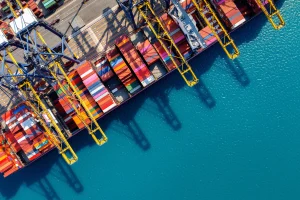
The maritime corridor is expected to remain crucial in global cereal trade.
Ukraine has successfully increased its grain exports from the Black Sea to levels not seen since before the Russian invasion. Despite the crisis in maritime transport in the Red Sea, Ukraine’s success in replacing a UN-backed agreement with its own maritime transport plan has been a relief for farmers and importing countries.
This shift in exports has contributed to stabilizing the Ukrainian economy. In December, Ukraine shipped around 4.8 million metric tons of food, primarily cereals, from its Black Sea ports, surpassing volumes from the previous UN-sponsored corridor.
However, the situation in the Red Sea raises concerns for the agricultural industry. Attacks on navigation in the Red Sea by the Houthi rebels, aligned with Iran, have disrupted trade between Europe and Asia. Ukrainian grain exports by sea could decrease by approximately 20% in January due to the crisis in the Red Sea.
Following its new export plan, Ukraine has also started supplying grain to Pakistan for the first time since the Russian invasion. Analysts and traders note that grain vessels are increasingly diverting from the route between the Suez Canal and the Red Sea, and the situation in the Red Sea could complicate long-distance shipments from Ukraine.

Ukraine’s food exports to the Black Sea remain substantial, with 1.9 million tons shipped in January so far and the prospect of an additional 1.7 million tons for the rest of the month. Ukrainian producers view the maritime route favorably as an improvement over improvised routes through the European Union and the previously UN-backed corridor, which involved prolonged inspections with Russia, increasing shipping costs.
With the new corridor, corn export prices have risen by around $30 per ton. Ukraine aims to solidify the role of its Black Sea corridor, serving three ports in the Odesa region, seeking recognition from the UN International Maritime Organization, which could send a mission in February to alleviate concerns about the Russian military threat at sea.
Ukraine plans to increase cargo shipments, including metallurgical products, from Black Sea and Danube ports to 8 million tons per month. Despite fragile export security due to intermittent Russian attacks and mines in the Black Sea, the disruption in the Red Sea route to Asia could lead to increased Ukrainian grain entering the European Union.
Despite concerns, the maritime corridor is expected to remain crucial in global cereal trade, with buyers attracted by competitive Ukrainian prices.

Trucking faces continued job losses as 2026 uncertainty looms
The U.S. trucking industry continues to lose jobs and reduce capacity, will this trend continue in 2026? The U.S. trucking industry continues to lose jobs

U.S. Allocates $1.5 Billion for Truck Road Infrastructure
The 2026 BUILD Grants program will invest $1.5 billion in truck road infrastructure across highways, ports, and truck parking facilities, with direct impact on logistics and freight transportation in the United States.

Wall Street Record: Transportation Stocks Boost Confidence in the Economy and Logistics
Transportation stocks in the United States have staged a strong rally so far in 2025, reflecting growing market confidence in the real economic activity behind logistics, freight movement, and mobility services more broadly.

The meaning of Hanukkah and how to celebrate it on the road
Hanukkah is a celebration of resilience and hope, and here are some ways you can take this on the road. December is one of the

Waymo under investigation for potential safety risk in school zones
A recent wave of videos has shown that some Waymo vehicles are not complying with safety regulations in school zones. The autonomous vehicle company Waymo,

Don’t Blame the Snow: The Real Causes Behind Winter Truck Accidents
Don’t Blame the Snow: Why Most Winter Truck Accidents Are Preventable