Stax Engineering has implemented this anti-pollution technology in the ports of Los Angeles, Long Beach, and Oakland
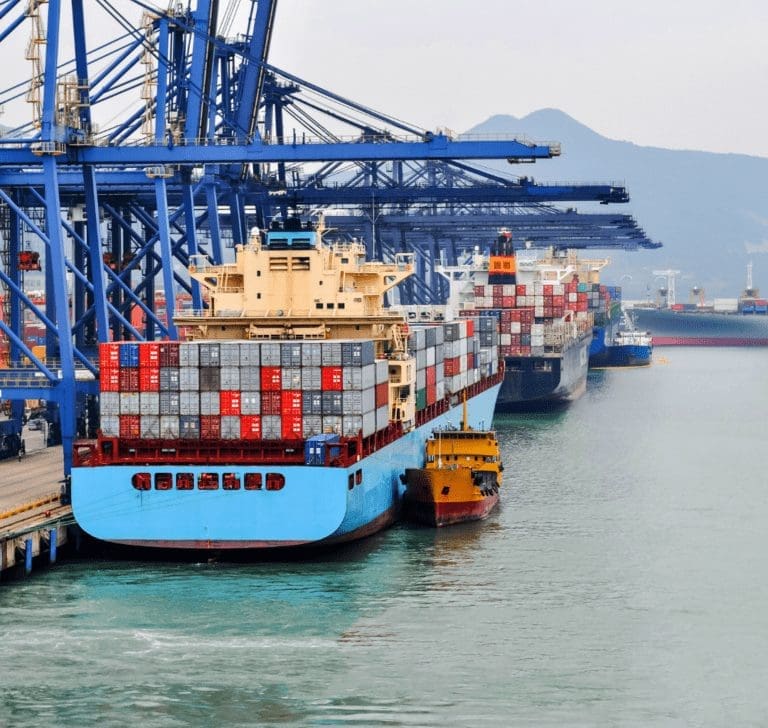
The ports of Los Angeles and Long Beach share similarities, being among the busiest ports. Currently, in the port of Los Angeles, a barge with a 270-foot flexible arm has been installed, hovering over the chimney of a container ship and holding a system of hoses, filters, and pumps that collect exhaust gasses.
Maritime transport plays a crucial role in the global market but is also a significant source of CO2 emissions and air pollution, affecting those living near ports. The eco-barge in the port of Los Angeles is an effort by an emerging company to address this issue at its source.
Stax Engineering, based in Long Beach, has implemented this anti-pollution technology in the ports of Los Angeles, Long Beach, and Oakland, California. Their system uses renewable diesel to capture and filter ship exhaust gasses, removing up to 99% of diesel particles and 95% of nitrogen oxides. However, it emits a pollutant mixture including CO2 and water vapor.

Despite efforts, port-related air pollution disproportionately affects disadvantaged communities. To address this, the California Air Resources Board (CARB) has established regulations requiring an 80% reduction in ship emissions during docking. Connecting ships to shore power is one way to achieve this, significantly reducing pollution and cancer risk for nearby communities.
Stax’s system serves as an alternative for ships without shore power or unable to modernize. The barges in the ports of Los Angeles and Long Beach can accommodate 146 ships per year, a minimal number compared to the nearly 4,000 ships calling annually at these ports.
CARB regulations will extend to car carriers in 2025 and tankers in 2027. The installation of shore power equipment on ships depends on their frequency of port calls in California. Capture and control technology may be ideal for ships making occasional visits.
Given the high cost of shore power infrastructure, alternatives are being sought. Both shore power and capture and control are temporary solutions as the maritime sector transitions to cleaner fuels. However, this transition will take time, and in the meantime, carriers need to reduce their ship emissions.
Stax aims to modify its system to capture CO2 alongside atmospheric pollutants, supported by a CARB grant for carbon capture trials and tanker safety tests. Controlling emissions in ports is crucial as they could significantly increase if not properly managed.

The strangest Black Friday purchases: from funny to nothing
Fueled by the adrenaline of the moment and the excitement of scoring big discounts, many shoppers have ended up buying unusual items during Black Friday.

Young drivers wanted, older drivers needed: the industry’s biggest dilemma
The road transportation industry remains at a crossroads in its efforts to recruit young drivers, but the workforce keeps aging and seeking retirement. The road

Thanksgiving, Black Friday and the Long Weekend: America Moves Because Trucks Never Stop

Thankful for the Drivers Who Keep America Moving This Thanksgiving
Thankful for the Drivers Who Keep America Moving: The Invisible Work Behind One of the Busiest Thanksgiving Seasons

Preparing for Thanksgiving travel: best and worst times to travel
Whether you are a truck driver, a traveler, or simply someone who needs to move around during these days, we share essential information to help

Cargo theft spikes during Thanksgiving: how to stay safe
Every year during Thanksgiving, cargo theft poses a serious threat to the trucking industry, and this year will be no exception. Every year during Thanksgiving,