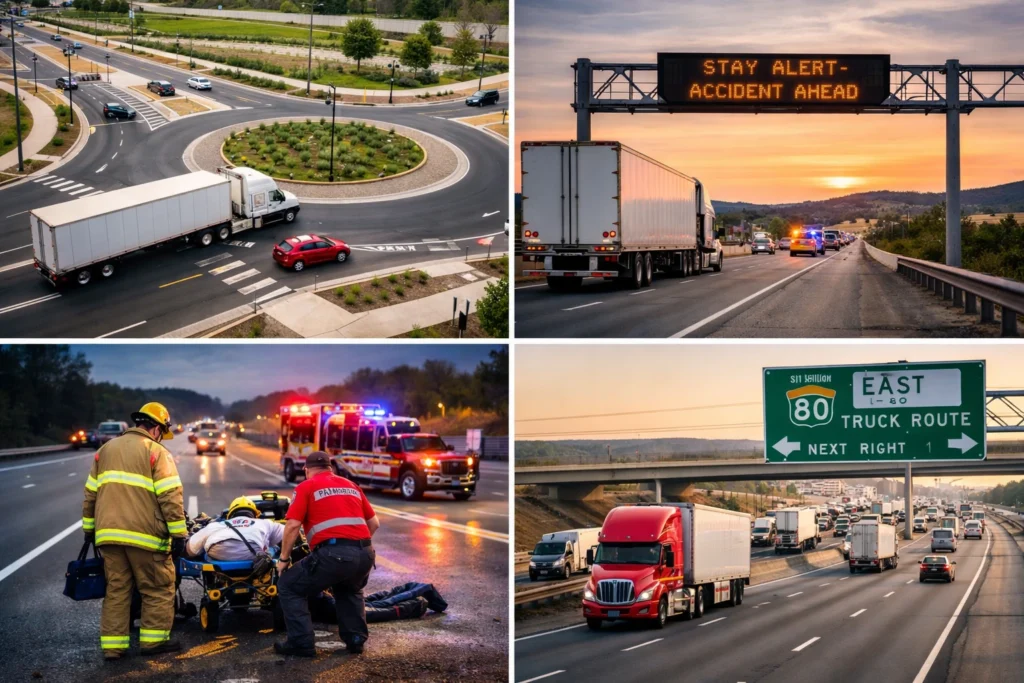
A $1 billion U.S. road safety plan is reshaping key freight routes nationwide, directing federal investment into highways, intersections, and emergency-response systems to reduce accidents, improve freight efficiency, and deliver safer corridors for truck drivers and local traffic.
The United States has launched one of its most extensive road safety investment rounds in recent years, directing almost $1 billion in federal funding toward upgrading transportation infrastructure across the country. The initiative is designed to improve roadway safety, modernize critical intersections, strengthen emergency response, and reduce fatalities involving motorists, pedestrians, transit users, and truck drivers.
Rather than focusing on political leadership, the core of this program lies in its structure, scale, and practical impact on roads and freight corridors—key issues for the transportation and logistics industry.
A Nationwide Safety-Driven Infrastructure Plan
The funding—totaling $982,231,998—will be distributed among 521 projects spanning 48 U.S. states, 18 Tribal communities, and Puerto Rico. The investments are being delivered through the Safe Streets and Roads for All (SS4A) competitive grant program, administered by the U.S. Department of Transportation.
The SS4A program is structured to address one central challenge: reducing serious injuries and fatalities on American roads. While passenger vehicles account for most traffic, the program explicitly includes safety improvements that affect commercial trucking operations, especially at intersections, urban access points, and high-risk rural corridors.
For the freight sector, this matters. Intersections, poorly designed crossings, limited visibility, and delayed emergency response remain major contributors to crashes involving heavy vehicles.

What Types of Projects Are Being Funded?
The plan prioritizes practical, construction-focused upgrades rather than long-term studies or policy experiments. Among the most common project types funded are:
Intersection redesigns, including modern roundabouts that reduce severe collision angles.
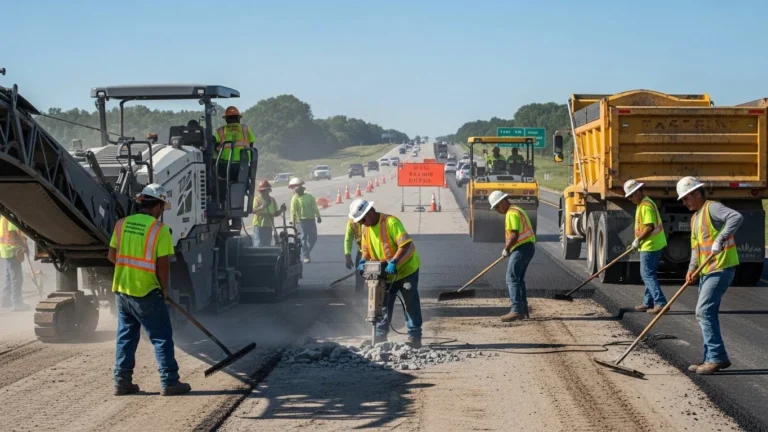
Road geometry improvements that enhance visibility and traffic flow.
Sidewalk and pedestrian infrastructure upgrades, particularly in urban freight zones.
Emergency response enhancements, improving crash detection, response time, and coordination.
Training facilities for traffic incident management, aimed at safer on-scene operations.
These projects are especially relevant for truck drivers operating in mixed-use corridors, where local traffic, pedestrians, and freight vehicles converge.
Two Grant Paths: Planning vs. Implementation
The SS4A program operates through two distinct grant categories, which together form a pipeline from planning to construction:
Planning and Demonstration Grants
These grants support the creation or enhancement of roadway safety action plans. They help local and state authorities identify high-risk corridors, crash patterns, and infrastructure gaps.Implementation Grants
These fund on-the-ground construction and upgrades, but only for projects aligned with an existing, approved safety plan. For transportation professionals, these grants are where tangible changes—new roundabouts, upgraded crossings, and safer freight routes—actually materialize.
This structure is intended to ensure that funding flows to ready-to-build projects, reducing delays and accelerating delivery.
Examples of Targeted Safety Investments
While hundreds of projects are included nationwide, several examples illustrate the program’s scope:
Memphis, Tennessee received funding to build a traffic incident management training facility, aimed at improving how first responders and roadway personnel operate around active traffic—critical for reducing secondary crashes involving trucks.
Shawnee County, Kansas secured investment to upgrade 911 and emergency communication systems, improving crash detection and response across rural corridors often used by long-haul freight.
Huntsville, Alabama is constructing a cable-suspended pedestrian and bicycle bridge over major arterial routes, separating vulnerable users from high-speed traffic and improving traffic flow below.
Each of these projects addresses a known safety bottleneck rather than pursuing experimental infrastructure.
How Projects Are Selected
Grant recipients are chosen through a multi-agency technical review process involving experts from:
the Federal Highway Administration,
the National Highway Traffic Safety Administration, and
the Federal Transit Administration.
This collaborative approach emphasizes data-driven safety outcomes, including crash history, traffic volume, and risk exposure, rather than political or demographic criteria.
Implications for Trucking and Freight
For the trucking industry, the relevance of this investment goes beyond safety statistics. Better-designed intersections, clearer road geometry, and faster emergency response directly translate into:
fewer crash-related delays,
reduced insurance and liability costs,
safer urban deliveries,
and improved reliability along key freight corridors.
Modern roundabouts, for example, have been shown to reduce severe crashes, particularly T-bone collisions that are especially dangerous for heavy vehicles.
A Shift Toward Execution
One notable aspect of the current SS4A rollout is its emphasis on execution over procedural complexity. By streamlining application requirements and focusing on implementation-ready projects, the program aims to move funding faster into construction phases—where drivers and carriers experience real-world benefits.
At a time when inflation has increased construction costs and strained public budgets, this approach prioritizes impact per dollar spent.
Looking Ahead
With 521 projects now funded, the SS4A program represents a broad, safety-centered infrastructure push that will reshape road conditions across much of the United States over the coming years. For transportation professionals, especially in trucking and logistics, the true measure of success will be whether these investments deliver safer routes, fewer disruptions, and more predictable travel times.
As projects break ground across states and freight corridors, the industry will be watching closely—not the politics behind the funding, but the performance of the roads themselves.

Human Trafficking: A Nationwide Call to Action on America’s Roads
Human trafficking is the focus of a nationwide awareness week aimed at educating truck drivers, motor carriers, law enforcement, and the public about human trafficking, how to spot the warning signs, and what to do if someone may be in danger.

TAA Compliance: When Safety Complaints Turn Into Six-Figure Losses
STAA compliance is no longer a technical detail for fleet owners—it is a financial, legal, and insurance exposure. A recent enforcement action in Texas shows how mishandling safety complaints can lead to termination claims, retaliation findings, and six-figure penalties, and what carriers must do to avoid becoming the next case

U.S. labor market raises red flags on Wall Street
The U.S. labor market closed 2025 with clear signs of weakening, as evidenced by the latest employment data released in December. In the latest episode

DOT finds half of North Carolina CDLs were issued illegally
The DOT warns that half of North Carolina’s CDL licenses are irregular after a federal audit uncovered serious compliance failures. The findings directly affect truckers, fleets, and transportation companies, raising urgent questions about road safety, legal operations, and the future of the trucking industry.

California’s Unhealthy Air: Impacts on Trucking and Freight
Unhealthy Air Quality in California: What Repeated Pollution Alerts Mean for Trucking and Freight Operations

Global Road Freight on Track to Hit USD 5 Trillion by 2033
Global Road Freight on Track to Hit USD 5 Trillion by 2033 as e-commerce growth, supply chain restructuring, and technology adoption accelerate demand for road-based cargo transport worldwide.