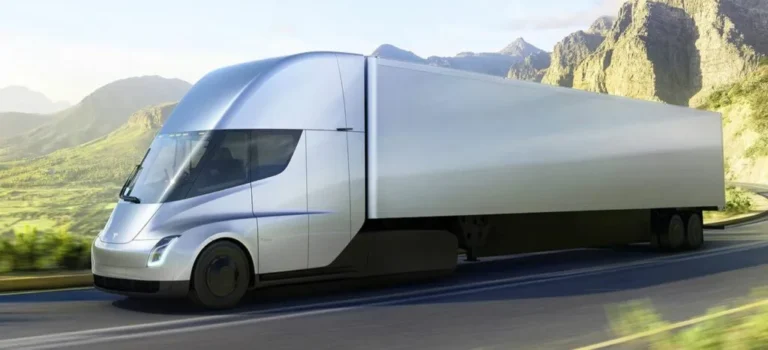
The Tesla Semi test included highway and regional routes in Reno and Sacramento, as well as operations in the Bay Area.
ArcBest’s freight transportation company, ABF Freight, carried out a three-week pilot program using a battery-electric Tesla Semi. The test included highway and regional routes in Reno and Sacramento, as well as operations in the Bay Area to assess rail shuttle performance.
ABF Freight covered 4,494 miles with the electric Tesla Semi, averaging 321 miles per day, and reported an overall energy efficiency of 1.55 kilowatt-hours (kWh) per mile. According to the company, the vehicle performed well across routes, including the 2,000-meter climb over Donner Pass, and matched the performance of its diesel counterparts.

ABF Freight seeks EVs that surpass performance targets: is Tesla Semi the one?
Overall, drivers who participated in the pilot program shared positive feedback, highlighting the vehicle’s comfort, safety, and ease of use. Features such as the central seating position, wide visibility, and intuitive controls significantly contributed to a better driving experience, according to the company.
In terms of efficiency, ABF’s energy consumption per mile was slightly higher than that reported by companies such as Pepsi and DHL. It’s worth noting that for battery-electric vehicles, lower kWh-per-mile figures indicate higher efficiency.
ABF Freight president Matt Godfrey stated that the company is not just looking for a truck that’s “good for an EV,” but one that meets, or even exceeds, the performance and total cost of ownership targets of the most efficient diesel units. “This pilot gives us great insight into the potential of electric semis in our operations,” Godfrey said.
Although the Tesla Semi met performance expectations and was well received by drivers during the trial, a major challenge remains in the industry: the continued need for charging infrastructure development. Over the past decade, efforts have been made to increase the adoption of electric vehicles in the transportation sector. However, the charging infrastructure has not progressed at the same pace as vehicle deployment. As a result, many freight companies remain hesitant to transition to electric vehicles.

Sustainable logistics solutions that create value for customers
This pilot project is part of ArcBest’s broader efforts to explore electric vehicles across its operations. The company currently operates nine electric yard tractors, two electric forklifts, and two Class 6 electric trucks.
ArcBest stated that it will continue to assess the long-term viability of Class 8 electric vehicles within its fleet, focusing on leveraging innovation to improve efficiency, reduce emissions, and deliver sustainable logistics solutions that create value for its customers.

Freedom 250 Grand Prix Set to Make History in America’s Capital
Organized by INDYCAR in collaboration with the White House, the “Freedom 250 Grand Prix” will combine high-speed racing with a celebration of American patriotism.

Safe Driver Week 2026 Begins: Stay Prepared
The Safe Driver Week by the Commercial Vehicle Safety Alliance (CVSA), officially began on July 12.

ICE Expands Inspections for Truck Drivers: Required Documents
ICE agents have joined commercial vehicle inspections at selected U.S. weigh stations. Drivers should be prepared to present a valid CDL, vehicle documents, proof of legal work authorization, and meet the federal English proficiency requirement.

Common DOT Violations and How to Avoid Them
Common Department of Transportation (DOT) violations for truck drivers in Texas and California and how to avoid them.

New World Screwworm Cases Rise in Texas as Origin Remains Unknown
Uncertainty surrounds the spread of the New World screwworm in Texas; experts still don’t know how it entered the U.S.

Cyclospora Outbreak: How to Protect Your Health on the Road
The Cyclospora outbreak has already sickened more than 1,400 people in states including Michigan, Ohio, Illinois, Indiana, New York, North Carolina, and Texas. For truck drivers, recognizing the symptoms and preventing dehydration could make the difference between a safe trip and an unexpected stop.