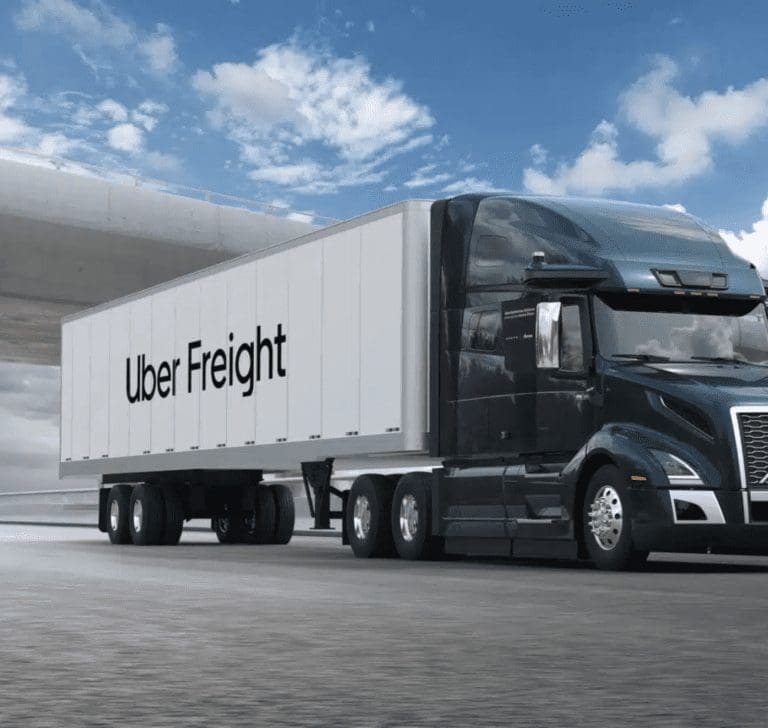
This program will help carriers improve utilization and business efficiency
Premier Autonomy, a program by Aurora Innovation offering Uber Freight carriers early access to over one billion autonomous miles by Aurora through 2030, has been launched in a new collaboration by both companies. This program will integrate autonomous trucks into Uber Freight’s network to help carriers improve utilization and business efficiency.
Uber Freight will be one of the first customers for Aurora’s freight route from Dallas to Houston, with driverless transport expected by late 2024. Lior Ron, CEO of Uber Freight, argues that this program aims to democratize autonomous trucks for carriers of all sizes, easing the adoption of this technology and heralding a new era in logistics.

Premier Autonomy: How will it work?
Uber Freight and Aurora began their partnership to test autonomous technologies in early 2020. Based on insights gained since then, they launched the Premier Autonomy program. The program offers carriers a clear, streamlined path to acquire and utilize Aurora Driver, including: subscription to Aurora Driver for autonomous freight transport, early access to over one billion driverless miles through 2030, and high utilization of autonomous trucks through seamless integration of Aurora Driver into the Uber Freight platform.
Ossa Fisher, President of Aurora, highlighted the collaboration with Uber Freight to provide autonomous truck capacity to a wide range of Premier Autonomy carriers. This partnership aims to transform the industry by enabling access to advanced technology, anticipating a significant increase in driverless trucks on the roads. Uber Freight’s long-term commitment to Aurora’s capabilities for its customers is seen as an exciting and validating endorsement for both companies.

Since launching pilot projects in 2020, Uber Freight and Aurora have autonomously transported millions of kilograms of cargo efficiently. Premier Autonomy allows carriers of all sizes to leverage technology to enhance their logistics operations. According to Aurora, a traditional truck takes two to three days to transport goods from Dallas to Los Angeles, whereas with Aurora Driver, this journey could potentially be completed in just one day.
Aurora’s research suggests that autonomous trucks could be 32% more energy efficient than human-driven vehicles, thanks to optimized highway speeds, reduced empty miles and idling, increased vehicle utilization, off-peak driving, and eco-driving scheduling.

Pythons Spread to New Areas of Florida, Posing a Challenge for Trucking
The discovery of a new breeding population in Charlotte County, near I-75 and US-41, raises potential concerns for truck drivers, trailers, and logistics facilities across Florida. How these invasive snakes could hitch a ride in commercial vehicles.

Nevada’s Runaway Ramps Save Lives
Runaway ramps on highways help stop vehicles experiencing brake failure, saving lives on the road.

California Highway Patrol Inspections: What They Check on Commercial Trucks and How to Prepare
Learn what the California Highway Patrol checks on commercial trucks in California, including brakes, tires, documents, hours of service, and safety.

Indiana, the RV Capital of the World: The Business Behind America’s RV Industry
Indiana accounts for the vast majority of RV manufacturing in the United States. But behind the factories is a lesser-known business: delivering brand-new recreational vehicles to dealerships across the country. Who are the drivers making these trips, how does the delivery business work, and when is a commercial driver’s license (CDL) required?

Texas Warns of Flooded Roads as El Niño Approaches
The Texas Department of Transportation (TxDOT) is warning drivers about hidden dangers beneath floodwaters, penalties for ignoring road closures, and precautions truckers should take ahead of a potentially wetter and stormier 2026–2027 winter.

The United States is growing, but sustaining that growth is becoming increasingly difficult
The country continues its economic expansion, but debt, interest rates, and inflation are driving up the cost of financing for businesses, households, and even the government itself.