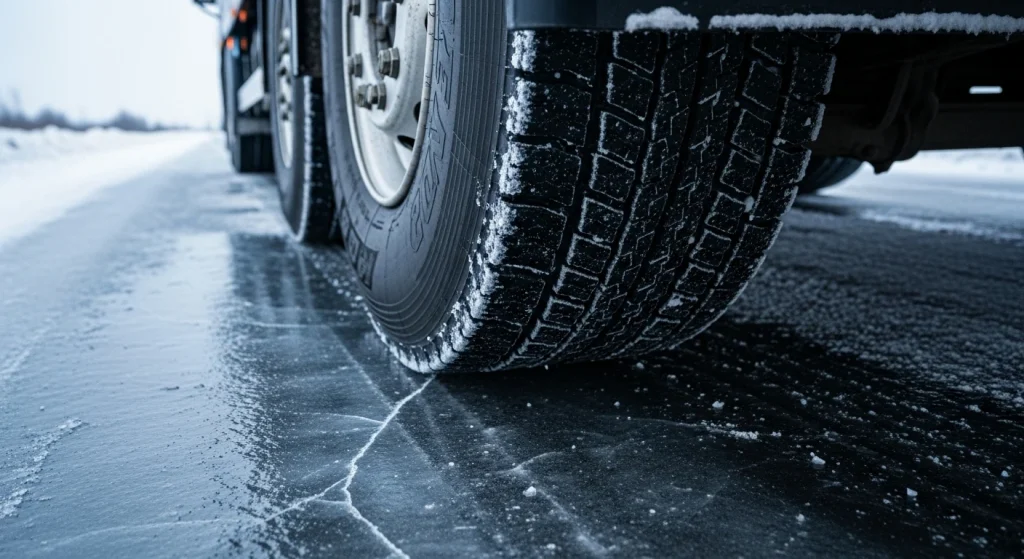
Black ice is one of the most dangerous road conditions during winter because it forms a nearly invisible layer over the pavement. It eliminates traction and can cause a total loss of vehicle control in seconds.
Black ice is silent, almost impossible to see, and responsible for a large number of roadway crashes every year. The layer is so thin and transparent that it often catches drivers completely off guard. For truck drivers, the risk is even greater due to the vehicle’s weight, extended stopping distance, and the way a trailer behaves on slick surfaces.
Understanding how black ice forms, where it tends to appear, and how to respond when it’s present is essential for preventing serious incidents, protecting cargo, and avoiding injuries and costly damage.
What Black Ice Is and Why It’s So Hard to Detect
Black ice is a thin, transparent sheet of ice that forms directly on the roadway. Unlike cloudy or white ice, or packed snow, it contains no air bubbles, which allows the dark pavement to show through. As a result, the road may look simply wet when it is actually frozen solid.
That deceptive appearance is what makes it so dangerous. Drivers often don’t realize there is a problem until the vehicle suddenly loses traction. In a commercial truck, that loss of grip can lead to extended skids, locked axles, trailer slide, or even a jackknife situation.
Why Black Ice Is More Dangerous for Trucks
Heavy vehicles face added challenges when black ice is present. A fully loaded truck requires significantly more distance to stop than a passenger car. When friction disappears, that stopping distance can increase dramatically, making it impossible to slow down in time for traffic, curves, or obstacles.
In addition, the trailer can react independently from the tractor. If the drive wheels lose traction or braking is applied too aggressively, the trailer may swing sideways, causing a loss of control. On curves or highway ramps, the high center of gravity and heavy load increase the risk of rollover.
There is also a greater chance of cargo shift on slippery roads, which can further destabilize the vehicle.
How Black Ice Forms
Black ice does not require a winter storm to develop. It can form even on clear days when temperatures drop quickly.
It occurs when moisture on the road surface freezes as pavement temperatures fall below the freezing point. That moisture may come from light rain, melting snow that refreezes overnight, fog, frost, or even dew.
The most dangerous conditions happen when air temperatures hover around 32°F (0°C). During the day, roads may be wet, but after sunset the pavement cools faster than the air, causing moisture to freeze into a thin, nearly invisible layer.
Areas Where Black Ice Forms Most Often
Certain parts of the road are more likely to develop black ice and hold it longer. Bridges and overpasses are especially vulnerable because cold air circulates above and below the structure, cooling the surface faster than regular pavement.
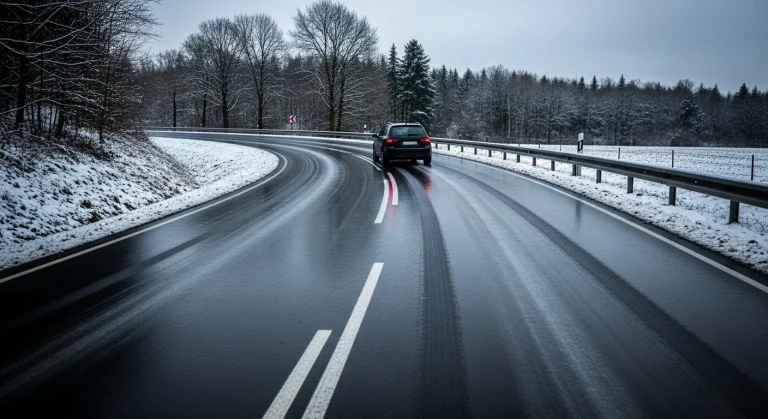
Black ice is also common in mountainous regions, permanently shaded roadways, tree-lined stretches, low-lying valleys where moisture collects, and entrance or exit ramps where curves combined with ice increase the risk of losing control.
The danger is greatest overnight and in the early morning hours, when temperatures are typically at their lowest.
Signs That May Indicate Black Ice
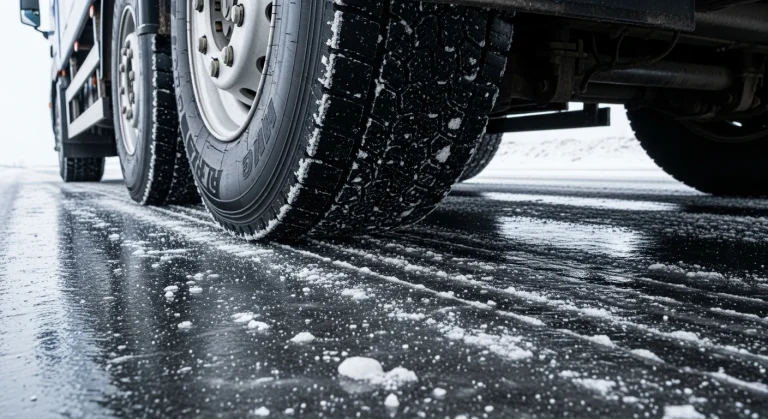
Although black ice is difficult to see, there are subtle warning signs drivers can watch for. The pavement may appear darker and shinier than usual, almost like a glossy film reflecting headlights. Steering may feel lighter, or the truck may respond less firmly to small inputs.
If other vehicles suddenly slow down or there is no visible spray coming from tires on a wet-looking road, it’s wise to assume black ice may be present — even if it can’t be seen.
How to Drive Safely When Black Ice Is Possible
Safe winter driving depends on smooth, controlled actions and anticipation. Reducing speed before reaching potentially icy areas gives drivers more time to react. Increasing following distance is critical, since braking effectiveness may be greatly reduced.
Sudden movements should be avoided. Rapid acceleration, sharp steering, or hard braking can instantly cause loss of traction. Engine brakes should be used carefully, as they can cause the drive wheels to lock on icy surfaces.
If the truck begins to slide, the most important thing is to stay calm, avoid jerking the steering wheel, and gently ease off the accelerator. In many cases, the vehicle will regain traction once it passes over the icy patch, as long as the driver does not overcorrect.
The Importance of Prevention
Preparation also plays a key role in winter safety. Checking tire condition, brake performance, and lighting before hitting the road can significantly reduce risk. Planning trips with weather conditions in mind and allowing extra travel time helps eliminate the pressure to rush.
Black ice is dangerous precisely because it doesn’t look dangerous. It can appear without warning and turn an ordinary roadway into an extremely slick surface.
For truck drivers, the best defense is anticipation, smooth driving, and respect for road conditions. At SG, we know safety starts before the wheels begin to turn, and prevention remains the most effective tool for managing the hidden risks of winter driving.

Black Ice: The Invisible Danger on Winter Roads
Black ice is one of the most dangerous road conditions during winter because it forms a nearly invisible layer over the pavement. It eliminates traction and can cause a total loss of vehicle control in seconds.

United States Numbered Highway System: how does it work?
The U.S. Numbered Highway System provides an integrated national network of roads designed to facilitate long-distance travel. The numbering of U.S. highways follows a structured

In brief: weigh stations, young drivers, and fuel tax reform in the trucking industry
South Carolina debuts virtual weigh stations for trucking, as ATA pushes youth driver program, and states debate fuel policies. South Carolina launches virtual weigh stations

The Wildest Truck Modifications on the Road Today
Truck customization has become a serious industry, with some builds rivaling high-end RV conversions in complexity and cost. From redesigned sleepers to upgraded suspension systems, these modifications do more than change appearance — they alter weight, electrical load, and the technical profile of the truck.

The most dangerous states in the U.S. during winter weather
While winter conditions are hazardous across the country, some states experience significantly higher accident rates during this season. A study by Samsara, a safety and

Winter storm disruptions lead to FMCSA HOS relief in 40 states
Motor carriers and drivers providing direct assistance in relief efforts in the affected states are covered by a hours-of-service (HOS) exemption. Over the weekend, a