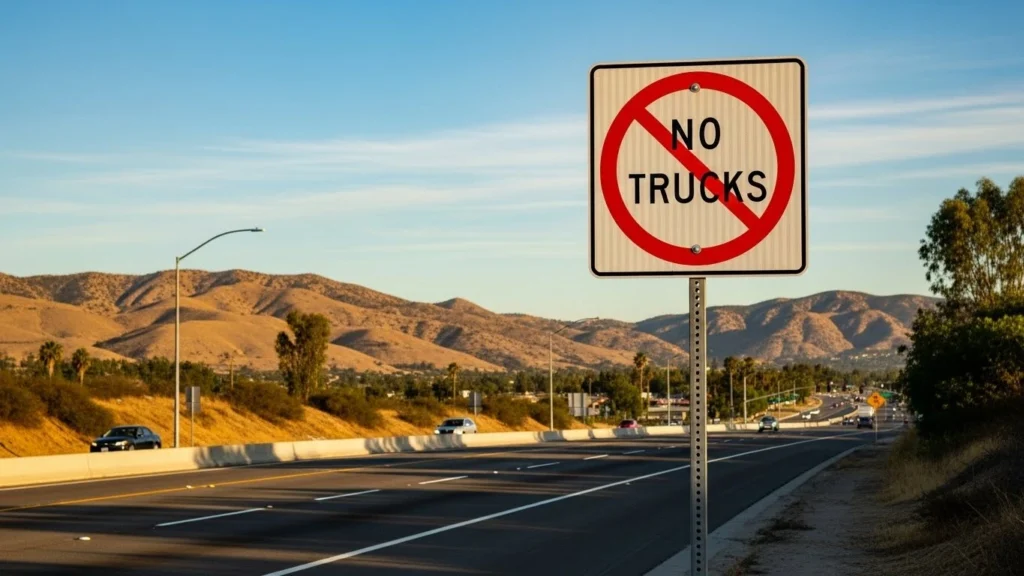
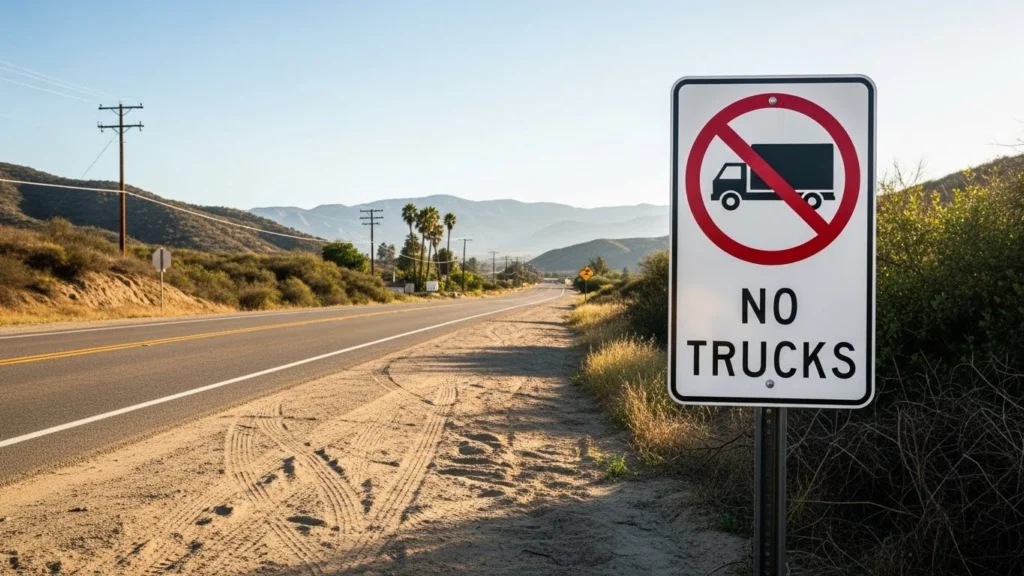
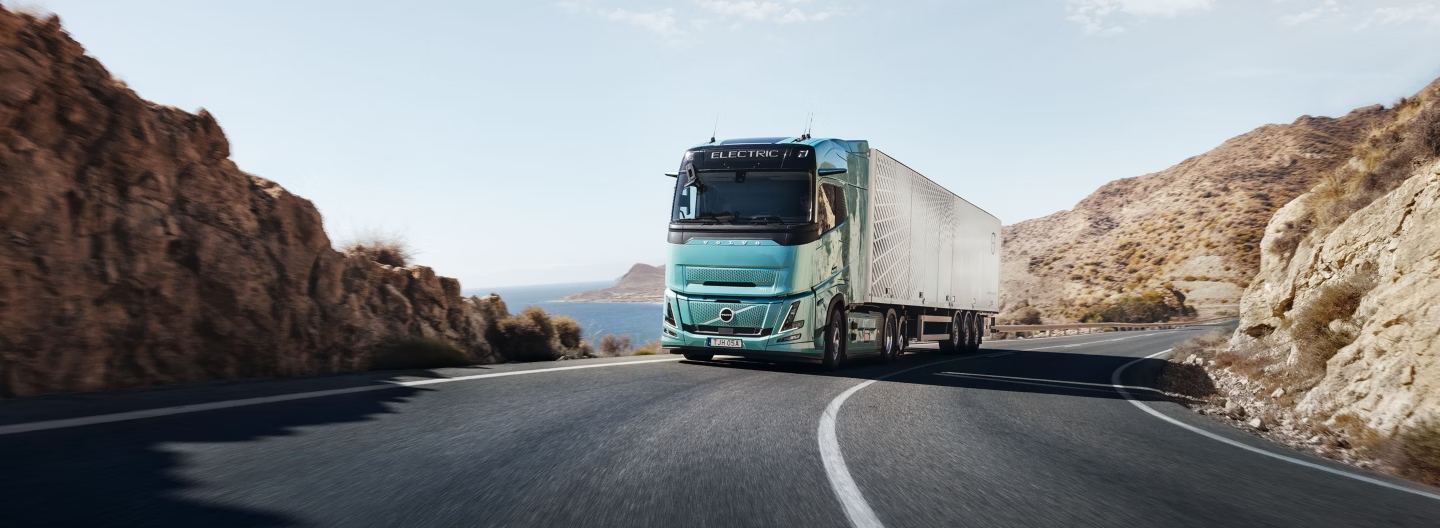
California’s new rule restricting truck traffic on residential streets in the Inland Empire starting in 2026 will force logistics operators to redesign routes, reshaping freight transportation, urban planning, and the regional supply chain.
Beginning January 1, 2026, the state of California will enforce a new law restricting truck traffic on residential streets across the Inland Empire, one of the most dynamic and strategically important logistics regions in the United States. The measure, reported by The Sun, aims to reduce congestion, environmental impacts, and conflicts between heavy freight movement and local communities. At the same time, it presents significant operational challenges for ground transportation and urban freight distribution.
A key logistics hub under growing pressure
The Inland Empire—primarily encompassing San Bernardino and Riverside counties—has, over the past two decades, evolved into a core distribution and warehousing hub for Southern California and the broader U.S. market. Its proximity to the ports of Los Angeles and Long Beach, combined with historically lower land costs and access to major interstates, fueled rapid growth in fulfillment centers, logistics parks, and last-mile operations.
That expansion, however, has come with mounting externalities. Residential neighborhoods have experienced higher volumes of heavy truck traffic, increased noise levels, accelerated wear on local streets, and growing concerns about road safety. Community groups have long argued that logistics growth has outpaced urban planning, prompting state and local authorities to seek new regulatory tools.
What the truck restriction includes
Under the new framework, freight trucks will be prohibited or significantly limited from using residential streets, except in clearly defined circumstances. Reported exemptions include:
direct access to warehouses or loading facilities,
essential local deliveries where no alternative route exists,
emergencies or officially authorized detours.
The core objective is to channel heavy freight traffic onto designated freight corridors, highways, and arterial roads engineered to handle high truck volumes, rather than allowing residential streets to function as informal shortcuts.
Direct impact on logistics routes and operating costs
For transportation and logistics operators, the implications are substantial. The restriction will require route reconfiguration, adjustments to delivery schedules, and, in many cases, longer driving distances. These changes may result in:
higher fuel consumption and operating costs,
revised driver shift and hour-of-service planning,
added pressure on major highways and arterial roads,
potential delays in last-mile deliveries.
In a region where efficiency is central to competitiveness, even incremental increases in distance or time can have a meaningful effect on margins and service levels.


More Tariffs? New U.S. Trade Measures Target 60 Countries
President Donald Trump is set to launch a new round of double-digit tariffs on imports from 60 countries.

New Bill Would Make Staged Commercial Truck Accidents a Federal Crime
Florida Senator Ashley Moody pushes federal crackdown on staged truck accidents.

How Much Does It Cost to Maintain a Truck Each Year?
How much does it really cost to run a commercial truck? Fuel, tires, maintenance, insurance, and repairs make a commercial truck one of the most expensive tools.

Snowbound: Truckers Stranded on One of the World’s Toughest Roads
More than 600 truck drivers are waiting in the Andes for the reopening of the corridor linking the Atlantic and Pacific oceans—one of the most challenging mountain routes on Earth.

From those beloved historic routes to the power of the new interstate highways
The harshness of the old Route 66 gave way to the efficiency of today’s superhighways. With greater efficiency, technology, and services, the asphalt and the transportation business in the U.S. were transformed.

Florida Truck Weight Limits: What You Need to Know
In Florida, truck weight limits include some exceptions, but it is essential to comply with state regulations to avoid penalties.
A potential precedent for other metro areas
The Inland Empire is not an isolated case. Other U.S. metropolitan areas—such as parts of the San Francisco Bay Area, New York City, and Chicago—already enforce time-based, weight-based, or access restrictions for trucks in residential zones. What sets this case apart is the Inland Empire’s role as one of the largest logistics hubs in the country.
As a result, California’s decision is being closely watched by carriers, industrial real-estate developers, and transportation authorities nationwide. Industry analysts warn that the policy could set a precedent for similar regulations in regions where logistics growth has outpaced urban planning.
Environment, public health, and community pressure
From an environmental and social perspective, the law seeks to cut local emissions, improve road safety, and reduce noise in residential neighborhoods. Communities across the Inland Empire have long raised concerns about the concentration of heavy truck traffic, particularly near large distribution centers.
The restriction aligns with California’s broader policies on air quality, public health, and the transition toward cleaner transportation, even though it does not fully resolve the underlying challenge of moving large volumes of goods through densely populated regions.
Industry adaptation: technology and planning
In response, freight carriers and logistics operators are already evaluating adaptation strategies, including:
expanded use of advanced routing and optimization software,
closer coordination with local and regional authorities,
partial relocation or redesign of cross-docking facilities,
gradual adoption of smaller vehicles for urban and last-mile deliveries,
revised pickup and delivery time windows.
The critical factor will be early preparation ahead of the 2026 implementation date, minimizing the risk of abrupt operational disruptions.
A delicate balance between logistics and livability
California’s decision underscores a central dilemma of modern transportation: how to maintain efficient supply chains while creating more livable cities. The Inland Empire has effectively become a testing ground for that balance and, starting in 2026, a real-world case study on whether truck traffic restrictions can improve quality of life without undermining logistics competitiveness.
For the U.S. trucking and freight sector, the message is clear: urban planning and local regulations will play an increasingly decisive role in route design, cost structures, and operational strategy. The Inland Empire is charting a path—and igniting a debate—that is likely to extend far beyond California.