Governor Newsom signed an executive order aimed at strengthening California’s efforts to move away from fossil fuels.
The battle over vehicle emission standards in California enters a new chapter. On the same day the federal government overturned emission standards, California Governor Gavin Newsom reaffirmed his commitment to advancing the use of zero-emission vehicles in the Golden State.
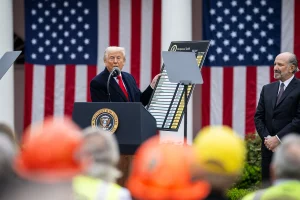
Newsom signed an executive order aimed at strengthening California’s efforts to move away from fossil fuels. The measure applies to all types of vehicles, including passenger cars and heavy-duty trucks. The governor called President Donald Trump’s decision an “illegal action” and stated that he would not allow it to derail his policies to clean the air, protect the health of Californians, and maintain global competitiveness. “I’m going to sign an executive order to keep California on the path of our world-leading transition toward cleaner vehicles,” Newsom declared.

Advanced Clean Cars III: Newsom’s backup plan
California’s Advanced Clean Trucks (ACT) rule mandated that 100% of new passenger car sales be zero-emission by 2035, and 40% of new class 8 trucks meet that standard by 2032.
Since the beginning of his term, Donald Trump has worked to dismantle these regulations. His latest move involves using the Congressional Review Act, a mechanism that makes it more difficult for future administrations to reinstate eliminated rules. If a regulation is overturned through this process, it cannot be reissued in a substantially similar form unless Congress passes a new law. However, California still retains the authority to develop new regulations—as long as they are not essentially the same as those repealed.
In response, Governor Newsom signed a new executive order aimed at accelerating the development and adoption of zero-emission technologies for all vehicle types. The order directs the California Air Resources Board (CARB) to draft a new regulation, called Advanced Clean Cars III, focused on reducing emissions from both passenger vehicles and heavy-duty trucks. This proposal would serve as a backup in case federal rollbacks are not overturned in court.
Meanwhile, California hopes manufacturers will continue to voluntarily follow the state’s emission standards, according to Land Line. The state plans to encourage this compliance by prioritizing vehicle purchases from manufacturers that honor the regulations—even if they have been repealed at the federal level.

California will keep fighting for its zero-emission standards
Companies such as Daimler Truck North America, Navistar, Paccar, Volvo, Cummins, and the Truck and Engine Manufacturers Association signed the Clean Truck Partnership with California. In this agreement, they pledged to comply with the Advanced Clean Trucks and Omnibus Low-NOx rules, regardless of legal challenges or the status of CARB’s authority. However, although 10 other states have adopted the Advanced Clean Trucks rule, this particular agreement applies only to California.
Following the rollback of California’s emission standards, some manufacturers have expressed caution. In the meantime, the state has filed a lawsuit against the U.S. Environmental Protection Agency and Donald Trump, claiming the repeals are unlawful—potentially paving the way for California to regain its regulatory authority.

U.S. labor market raises red flags on Wall Street
The U.S. labor market closed 2025 with clear signs of weakening, as evidenced by the latest employment data released in December. In the latest episode

DOT finds half of North Carolina CDLs were issued illegally
The DOT warns that half of North Carolina’s CDL licenses are irregular after a federal audit uncovered serious compliance failures. The findings directly affect truckers, fleets, and transportation companies, raising urgent questions about road safety, legal operations, and the future of the trucking industry.

California’s Unhealthy Air: Impacts on Trucking and Freight
Unhealthy Air Quality in California: What Repeated Pollution Alerts Mean for Trucking and Freight Operations

Global Road Freight on Track to Hit USD 5 Trillion by 2033
Global Road Freight on Track to Hit USD 5 Trillion by 2033 as e-commerce growth, supply chain restructuring, and technology adoption accelerate demand for road-based cargo transport worldwide.

California misses DOT deadline risking $160 million in federal funding
The state of California has reached the deadline set by the DOT to take action regarding the situation involving the number of non-domiciled CDLs issued

Health on Wheels: How to Prevent the Most Common Conditions on the Road
Health on wheels matters for anyone who spends long hours on the road. How to prevent the most common physical and mental conditions and maintain healthier routines while working behind the wheel.