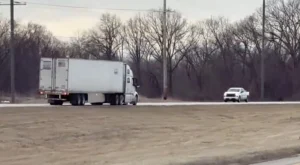
Thirty-eight percent of drivers misuse personal transportation time, according to data compiled by CVSA.
The Commercial Vehicle Safety Alliance (CVSA) plans to formally request that the Federal Motor Carrier Safety Administration (FMCSA) impose a two-hour limit on the use of personal conveyance by truck drivers, following the discovery of increasing misuse of this provision.
Based on data collected from more than 41,000 roadside inspections, the CVSA found that 38% of the drivers analyzed were incorrectly using personal conveyance time. This time is intended for non-work-related travel, such as going to get food, finding lodging, or running personal errands. However, many drivers are using it to extend their driving time and bypass Hours of Service (HOS) regulations, thereby increasing roadway risks.
Jeremy Disbrow, a roadside inspection specialist with the CVSA, explained that the misuse by nearly 40% of drivers is not only alarming but also results in non-compliant behavior that creates confusion within the industry.

CVSA prepares petition to limit use of personal conveyance
CVSA Deputy Executive Director Adrienne Gildea noted that FMCSA’s current guidelines lack clarity, which makes it difficult for inspectors to identify misuse. Moreover, it allows some drivers to operate beyond their legal limits, increasing the risk of fatigue and accidents. In fact, according to federal data, drivers who abuse the provision are four times more likely to be involved in a crash and show higher rates of out-of-service violations.
In this context, the CVSA is preparing to submit a new petition to the FMCSA in the coming weeks that would limit the use of personal conveyance to two hours per day. This would mark the alliance’s third attempt in the past four years to persuade federal regulators to tighten the rules around this issue.
Appropriate uses of personal conveyance include travel for food, lodging, or recreational activities, as well as travel to a terminal or safe location after loading or unloading. In contrast, inappropriate uses include advancing a delivery, returning home for work purposes, transporting cargo, or enhancing a vehicle’s operational readiness.

The CVSA will request that the FMCSA, in addition to imposing the two-hour daily limit, also consider prohibiting personal conveyance time from being counted as “off-duty,” issuing written guidance on its use after service limits have been reached, clarifying terms like “enhancing operational availability,” defining “yard move,” and clearly distinguishing between personal use and personal conveyance.
The CVSA hopes that the new data and gathered evidence will finally convince regulators of the need to strengthen the rules and close this loophole that affects road safety.

The strangest Black Friday purchases: from funny to nothing
Fueled by the adrenaline of the moment and the excitement of scoring big discounts, many shoppers have ended up buying unusual items during Black Friday.

Young drivers wanted, older drivers needed: the industry’s biggest dilemma
The road transportation industry remains at a crossroads in its efforts to recruit young drivers, but the workforce keeps aging and seeking retirement. The road

Thanksgiving, Black Friday and the Long Weekend: America Moves Because Trucks Never Stop

Thankful for the Drivers Who Keep America Moving This Thanksgiving
Thankful for the Drivers Who Keep America Moving: The Invisible Work Behind One of the Busiest Thanksgiving Seasons

Preparing for Thanksgiving travel: best and worst times to travel
Whether you are a truck driver, a traveler, or simply someone who needs to move around during these days, we share essential information to help

Cargo theft spikes during Thanksgiving: how to stay safe
Every year during Thanksgiving, cargo theft poses a serious threat to the trucking industry, and this year will be no exception. Every year during Thanksgiving,