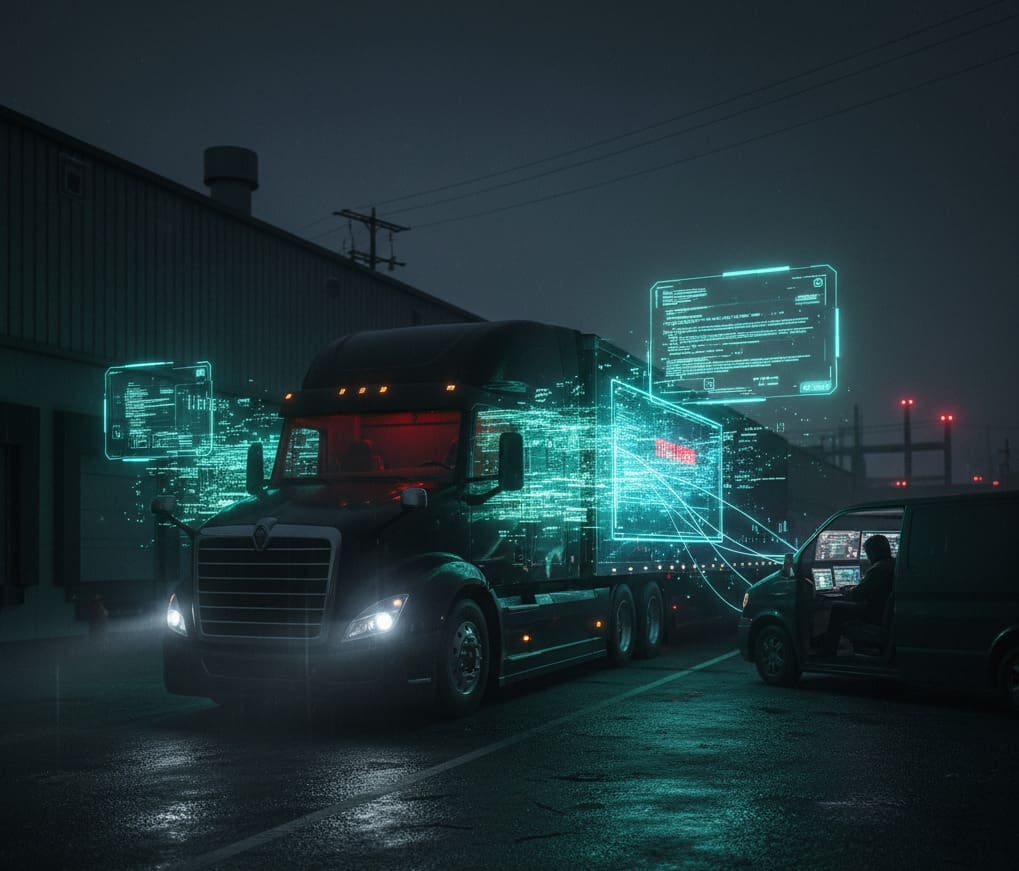
According to a report by the Chartered Institute of Procurement and Supply (CIPS), nearly one in three executives has reported a significant rise in cyberattacks on their supply chains over the past six months—warning of a growing threat to the stability of transportation, international trade, and the economic security of the United States.
A New Frontline Risk for Global Trade
Globalization and digitalization have made supply chains more interconnected, efficient—and fragile. In that context, cyberattacks have become one of the leading threats to modern logistics.
The CIPS study found that 32% of executives surveyed admitted to having experienced some form of cyberattack or intrusion attempt in the digital systems supporting their operations. Incidents range from ransomware—where data is locked until a ransom is paid—to silent infiltrations that manipulate inventory, routing, or dispatch information.
This problem now extends far beyond tech or financial firms: ports, airlines, trucking fleets, rail operators, and warehouses are all at risk, as they increasingly rely on digital platforms to coordinate freight movements and customs documentation.
“A well-targeted cyberattack can shut down an entire fleet, paralyze a port, or cause millions of dollars in daily losses,” the report warns.
From Software to the Physical World: Real-World Consequences
Unlike many digital threats, attacks on logistics systems have immediate physical impacts. The Guardian recently reported several incidents where port management systems and satellite tracking platforms for trucking fleets were compromised—forcing operations to shut down for hours or even days.
These attacks don’t just target IT systems; they can disrupt physical transportation, shut down port terminals, halt cargo at airports, or desynchronize inventory control between warehouses.
A recent case involved a U.S. trucking software provider used by thousands of carriers, whose tracking platforms were taken offline for over 24 hours. The fallout was instant: delayed critical deliveries, congested distribution hubs, and multimillion-dollar losses for retailers.
Experts note that the logistics sector has become a prime target because it combines high digitalization with low cyber-resilience, especially among small and medium-sized operators who rely on third-party software for fleet or warehouse management.
The “Perfect Storm”: Rapid Digitalization and Structural Gaps
During the pandemic and its aftermath, thousands of companies shifted their operations to cloud-based platforms to improve traceability and cut costs. However, many failed to invest proportionally in cybersecurity.
This structural gap—between digital adoption and protection capacity—has become the weak link of global commerce.
“International trade now depends heavily on real-time data. But if that data is altered, stolen, or blocked, the entire chain collapses,” noted The Guardian.
The risk goes far beyond data loss: a successful cyberattack can tamper with IoT sensors in refrigerated containers, alter GPS coordinates, or forge shipping documents, directly affecting food, pharmaceutical, and energy safety.

From Threat to Breakdown: Disruption Scenarios
Analysts now compare the risk of a massive cyberattack on supply chains to that of a natural disaster or nationwide strike. A single breach can cause port bottlenecks, highway congestion, and temporary shortages of essential goods.
The U.S. Department of Homeland Security (DHS) has issued 2025 alerts urging logistics operators to strengthen defenses against “hybrid risks”—threats that combine digital sabotage with real-world disruption.
The most vulnerable sectors include:
Food and pharmaceutical transport, where an attack can compromise safety traceability.
Ports and intermodal terminals, heavily reliant on coordination software.
Autonomous or semi-automated trucking fleets, exposed to remote interference.
E-commerce and retail logistics, where even brief delays can mean massive financial losses.
The Urgent Need for a Coordinated Response
The CIPS report concludes that cybersecurity can no longer be treated as an isolated IT concern—it must become a core strategic policy, supported by continuous investment, employee training, and public-private cooperation.
Some U.S. companies have already introduced digital contingency drills, redundant backup systems, and rapid-response protocols. Still, the challenge remains global: supply chains cross borders, and a single weak link in one country can compromise logistics worldwide.
Meanwhile, federal agencies are considering mandatory cybersecurity standards for transportation contractors and software vendors, particularly those managing critical infrastructure.
A Structural Risk of the 21st Century
In today’s world, where nearly every shipment, container, and delivery relies on a digital platform, cybersecurity is as vital as fuel or physical infrastructure.
The warning is clear: a data breach can cause a disruption as severe as a hurricane or a port strike—impacting routes, trade, and jobs alike.
If supply chains are the arteries of global commerce, cyberattacks are the new form of heart attack—invisible, fast, and capable of halting the economic pulse of the world in mere hours.

Teton Pass bridge will be closed to traffic for 10 days
Teton Pass is one of the most heavily traveled routes for truck drivers in Wyoming, serving as a vital corridor for the trucking industry. The

Terrifying Experiences of Truck Drivers Sleeping on the Road at Night

Cargo theft numbers drop for the third quarter of 2025
The cargo theft tracking company Verisk CargoNet released its report for the third quarter of 2025. The cargo theft tracking company Verisk CargoNet released its

40 major U.S. airports to see flight reductions due to government shutdown
40 U.S. airports, including those in New York, Los Angeles, and Chicago, will see flight reductions starting November 7 due to the government shutdown. 40

DOT Medical Card: Keeping Medical Certification Up to Date
Keeping your DOT Medical Card current is essential for both drivers and fleet operations.
Brake Safety Week 2025 results: almost 85% of commercial vehicles had no violations
Results of Brake Safety Week, organized jointly by the Commercial Vehicle Safety Alliance (CVSA) and the Department of Transportation, have been published. Results of Brake