U.S. Department of Labor plans to repeal 2024 independent contractor rule.
The United States Department of Labor (DOL) has announced its intention to repeal the independent contractor rule enacted in 2024 as part of its regulatory agenda. This rule, which went into effect in March of that year, replaced a previous version from 2021 and has sparked controversy across various sectors, particularly in the trucking industry.
The key difference between the two regulations lies in the criteria used to determine whether a worker should be classified as an employee or an independent contractor. The 2021 rule was based on a weighted-factor approach, emphasizing two main factors: the degree of control exercised by the employer and the opportunity for profit or loss. In contrast, the 2024 rule adopted a “totality-of-the-circumstances” analysis, which some sectors considered more restrictive for businesses.

2024 independent contractor rule: industry controversy
The controversy in the industry arose from the labor and economic implications of worker classification. If a contractor is reclassified as an employee, companies must comply with requirements such as paying overtime, providing employee benefits, and other legal rights, while independent contractors would also be subject to certain company rules.
This reclassification raised concerns among stakeholders such as the American Trucking Associations (ATA) and the Owner-Operator Independent Drivers Association (OOIDA), both of which defend the owner-operator model and expressed fears over the potential restriction of independent workers’ autonomy.
The 2024 rule has faced multiple lawsuits since its introduction. Various trucking groups, including the ATA, attempted to block its implementation, arguing that it negatively affected commercial agreements between owners and operators. In fact, in April, the U.S. Chamber of Commerce reported that the DOL had decided to temporarily suspend the enforcement of this regulation amid ongoing legal challenges.
Beyond the debate over worker classification, one of the central concerns has been the potential imposition of speed limiters on trucks. The 2021 rule explicitly allowed employers to require these devices, while the 2024 rule did not clearly address the issue. OOIDA has strongly warned that any new rule should not open the door for large companies to force owner-operators to install such devices, which they consider dangerous and unnecessary.

ATA urged to listen to true industry contractors
OOIDA President Todd Spencer voiced support for efforts to protect independent contractors but criticized what he described as a “covert attempt” by the ATA to impose regulations disguised as safety measures. Spencer also urged the Department of Labor to listen to real independent contractors in the industry rather than favor large transportation companies that, according to him, seek to exploit these workers.
The DOL is expected to publish a Notice of Proposed Rulemaking later this month to repeal the 2024 rule. Worker classification remains a hot-button issue across the country, especially in states like California, where state legislation has made it more difficult to hire independent contractors. The new attempt to redefine classification criteria is expected to reignite the debate between labor protections and business freedom in the transportation sector and beyond.

The best roadside attractions for truckers in the U.S.
America’s highways hide unique places that break up the routine, don’t hesitate to check out these roadside attractions along the way. The road is much

The trucker style: comfort, function, and identity
Truckers’ style is much more than workwear; it’s an identity. These are the most commonly worn garments among truckers. Truckers’ style is much more than

Chaos on Highway 61: Viral Wrong-Way Truck Video Reignites the CDL Debate
An 80-ton tractor-trailer traveling miles in the wrong direction on Missouri’s Highway 61 has reignited a nationwide debate over Commercial Driver’s License (CDL) standards, training

How technology affects driver retention
Friend or foe? 52% of drivers say technology directly influences their decision to stay with or leave a fleet. Fleet telematics company Platform Science published

Dalilah Law seeks to remove non-english speaking commercial drivers
President Donald Trump proposed the “Dalilah Law,” an initiative aimed at prohibiting undocumented immigrants from obtaining commercial driver’s licenses. On February 24, President Donald Trump
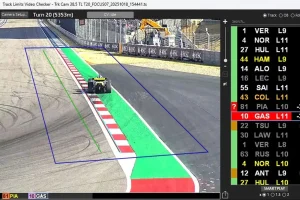
FORMULA 1 and the AI That Could Transform Transportation in the U.S.
The artificial intelligence system that Formula 1 implemented to monitor every car on every turn is opening the door to new applications in trucking, logistics,