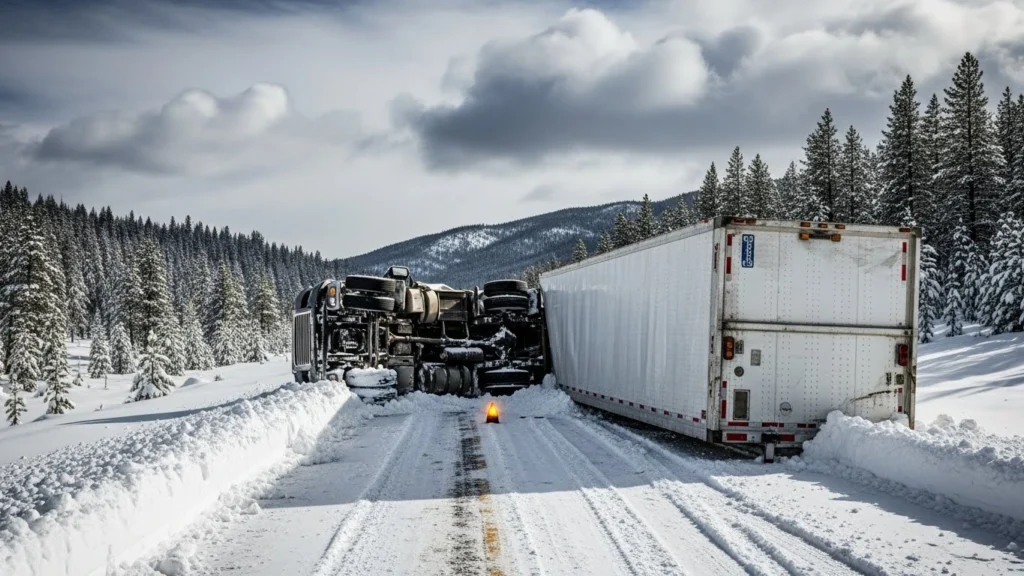
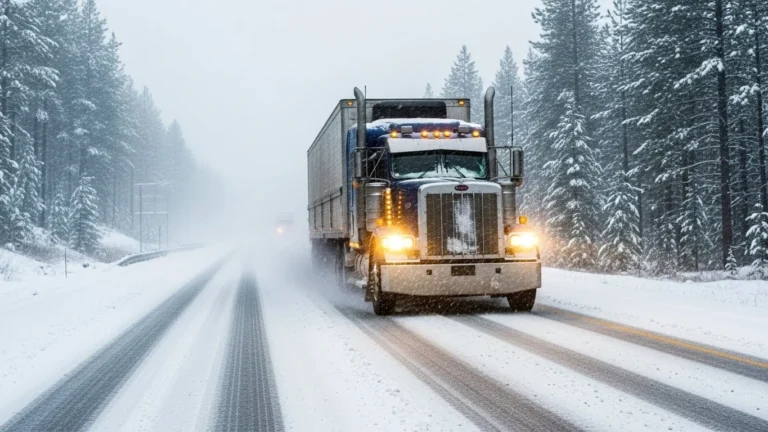
Every winter, truck accidents in winter rise across the United States, but snow and ice are not always to blame. Pressure to meet delivery deadlines, driver fatigue, poor maintenance, and overconfidence explain why many truck accidents in winter are caused by preventable operational errors.
When a truck crash happens during winter, the explanation often comes quickly and conveniently: snow, ice, bad weather. While winter conditions certainly make roads more demanding, they rarely tell the full story. A closer look at truck accidents in winter reveals a less comfortable truth for the industry: in most cases, weather is not the root cause. It is the factor that exposes underlying human and operational failures.
Winter does not create new problems. It magnifies existing ones.
Weather Is the Context, Not the Cause
Snow-covered roads, freezing temperatures, and reduced visibility are part of the operating reality in large parts of the U.S. Yet winter conditions are not unpredictable. They arrive every year, follow familiar patterns, and affect the same corridors repeatedly.
Despite this, truck accidents in winter continue to follow consistent trends. This suggests that the issue lies not only in environmental conditions, but in how decisions are made when those conditions become more demanding. Slightly excessive speed, misjudged braking distance, or a routine maneuver performed without adjustment may go unnoticed in summer. In winter, those same mistakes can quickly turn serious.
Delivery Pressure: The Silent Risk Factor
Winter coincides with peak freight demand, tight schedules, and high expectations from shippers and receivers. Loads labeled as “urgent” multiply, while flexibility shrinks. For many drivers, the pressure to stay on schedule becomes constant.
This pressure is often subtle rather than explicit. It appears in unrealistic delivery windows, routes that leave no margin for weather delays, and dispatch decisions that prioritize deadlines over conditions. In this environment, slowing down, stopping early, or requesting a reschedule can feel like failure—even when it is the safest option.
In many truck accidents in winter, the driver was fully aware of the risk but felt there was no operational room to adjust.
Fatigue: The Risk You Can’t See
Cold weather affects more than equipment. It affects drivers physically and mentally. Shorter daylight hours, longer driving days, disrupted sleep, and the physical stress of cold cabins all contribute to fatigue that is often underestimated.
Fatigue does not always mean falling asleep at the wheel. More often, it shows up as reduced focus, slower reaction times, or overreliance on routine. In winter, these subtle cognitive lapses carry greater consequences.
A significant number of truck accidents in winter occur on familiar routes driven hundreds of times before. The issue is not lack of experience, but accumulated exhaustion combined with conditions that leave little room for error

Maintenance: When “Minor” Issues Become Critical
Winter is unforgiving when it comes to equipment condition. Tires near minimum tread depth, brakes slightly out of adjustment, weak batteries, or malfunctioning lights stop being minor inconveniences and become safety hazards.
In many cases, trucks enter winter already carrying deferred maintenance from earlier in the year. Cold temperatures, road salt, and constant moisture accelerate wear and expose weaknesses quickly.
Post-accident investigations into truck accidents in winter frequently identify basic mechanical issues that could have been caught through routine inspections. The problem is rarely technical complexity—it is delayed attention.
Overconfidence: “I’ve Driven Through Winters Before”
Experience is essential in trucking, but it can also become a liability. Veteran drivers may rely on instinct and past success, assuming current conditions will behave like previous winters.
This mindset leads to maintaining normal speeds, reducing following distance, or underestimating surface conditions. Every winter is different, every load behaves differently, and every road changes over time.
Many truck accidents in winter involve highly experienced drivers who did not adapt their driving approach to conditions that demanded extra caution.
Small Errors, Big Consequences
Winter crashes are rarely the result of a single mistake. More often, they emerge from a chain of small decisions: a tight delivery window, insufficient rest, marginal equipment condition, and a routine maneuver executed without adjustment.
Winter does not tolerate accumulated errors. What might be corrected easily in summer becomes loss of control, lane departure, or collision when temperatures drop and traction disappears.
Shared Responsibility, Not Blame
Discussing operational errors is not about assigning blame to drivers. Truck accidents in winter reflect decisions made throughout the freight system—by planners, dispatchers, maintenance teams, and management, as well as drivers.
Reducing winter accidents does not require futuristic technology or radical change. It requires acknowledging that weather is not the primary enemy. The real challenge lies in adjusting expectations, building operational flexibility, and accepting that in winter, arriving late is always better than not arriving at all.

Canada Wildfire Smoke Reaches New York Ahead of World Cup Final
Smoke from hundreds of active wildfires across Canada has significantly reduced air quality in New York and New Jersey just days before the 2026 FIFA World Cup Final between Argentina and Spain. The conditions are also creating new challenges for truck drivers and freight carriers operating throughout the Northeast.

What Regulations Have Changed for Truck Drivers in the U.S. in 2026?
Learn about the new trucking regulations in the United States for 2026, upcoming FMCSA changes, and how they will affect drivers and trucking companies.

Apocalyptic-Looking Sky in Ontario Goes Viral Amid Wildfires
Wildfires swept across Ontario, Canada and smoke spread as far as the U.S. border.

The Biggest Match of the World Cup Was Played Off the Field
More than 453 metric tons of equipment, around 5,000 trucks and support vehicles, and simultaneous operations across 16 host cities kept the largest FIFA World Cup in history running.

DEF Act: 10 Years of Legal Protection for EPA Diesel Emissions Guidance
The Diesel Engine Flexibility (DEF) Act would protect agricultural and transportation businesses by building on the diesel emissions guidance by the EPA.

License Plate Readers Raise Privacy Concerns for Truck Drivers
Concerns are growing over the impact license plate readers could have on the privacy and security of truck drivers.