The ship, named Morning Midas, was carrying more than 3,000 electric and semi-electric vehicles to Mexico.
On Tuesday, June 3, a ship carrying more than 3,000 electric and semi-electric vehicles to Mexico was abandoned in the Pacific Ocean after catching fire. The incident has sparked a wave of commentary regarding the growing risks associated with transporting electric vehicles, highlighting both their volatility and the safety challenges faced by shipping companies.
The ship, named Morning Midas, began to burn approximately 300 miles south of Adak Island, Alaska, according to the U.S. Coast Guard. The ship’s management company, Zodiac Maritime, stated in a press release that smoke began to appear on the deck where around 800 electric vehicles were being transported.
Morning Midas had a crew of 22 members who initiated fire suppression procedures as soon as they were alerted to the situation. However, the crew was unable to control the fire, prompting Zodiac to deploy an emergency response team for salvage operations. Once the rescue team reached the vessel, all 22 crew members were evacuated by the Coast Guard and transferred to a nearby ship, according to USCG Alaska.

Morning Midas: A fire at sea
The Morning Midas was en route to Mexico after departing the port of Yantai on May 26, according to Bloomberg data. Built in 2006 by Chinese company Xiamen Shipbuilding Industry Co., the vessel has a gross weight of 46,800 tons. Prior to the fire near Adak, it had made stops in Nansha and Shanghai, China, without any reported incidents.
Ships like the Morning Midas are designed to transport thousands of vehicles across the oceans, playing a crucial role in the global supply chain. However, in recent years, growing concerns have emerged around this type of transport, as incidents can have serious consequences for manufacturers, shipping companies, insurers, and logistics operators.
The June 3 incident is not an isolated case. In 2022, a similar event occurred in the Atlantic Ocean when the ship Felicity Ace, traveling from Germany to a port in Rhode Island, sent out distress signals after a fire broke out on one of its cargo decks.

Are electric vehicles a safety hazard?
In a recent report, insurance company Allianz noted that the rising demand for lithium-ion batteries—including those used in electric vehicles—poses a new risk to the global maritime shipping industry, especially considering the high value of the vehicles carried aboard major car transport vessels.
It has been shown that fires involving electric vehicles are significantly harder to control due to the lithium batteries they use. On a transport vessel, specific conditions such as limited ventilation contribute to rapid heat intensification. The typical overcrowding on these cargo ships further restricts airflow, helping the fire spread more quickly. Moreover, the enclosed, steel-lined environment of these vessels greatly complicates firefighting and rescue operations, increasing risks for the crew and emergency teams.
Fires caused by electric vehicles not only spread more rapidly but also burn much longer and at extremely high temperatures. Extinguishing a blaze of this magnitude can require up to 8,000 gallons of water just to cool down the lithium-ion batteries.
In response to this situation, electric vehicle manufacturers are continuing to seek solutions to manage the safety risks associated with transportation. However, as of now, those risks remain significantly high.

The best roadside attractions for truckers in the U.S.
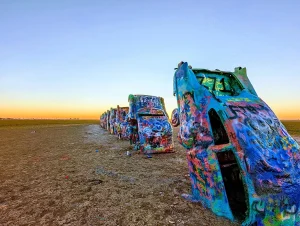
America’s highways hide unique places that break up the routine, don’t hesitate to check out these roadside attractions along the way. The road is much
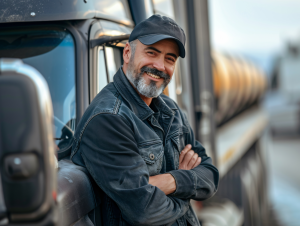
The trucker style: comfort, function, and identity
Truckers’ style is much more than workwear; it’s an identity. These are the most commonly worn garments among truckers. Truckers’ style is much more than
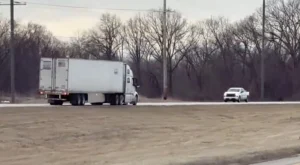
Chaos on Highway 61: Viral Wrong-Way Truck Video Reignites the CDL Debate
An 80-ton tractor-trailer traveling miles in the wrong direction on Missouri’s Highway 61 has reignited a nationwide debate over Commercial Driver’s License (CDL) standards, training
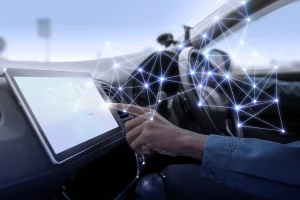
How technology affects driver retention
Friend or foe? 52% of drivers say technology directly influences their decision to stay with or leave a fleet. Fleet telematics company Platform Science published

Dalilah Law seeks to remove non-english speaking commercial drivers
President Donald Trump proposed the “Dalilah Law,” an initiative aimed at prohibiting undocumented immigrants from obtaining commercial driver’s licenses. On February 24, President Donald Trump
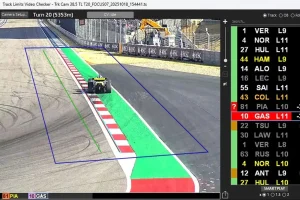
FORMULA 1 and the AI That Could Transform Transportation in the U.S.
The artificial intelligence system that Formula 1 implemented to monitor every car on every turn is opening the door to new applications in trucking, logistics,