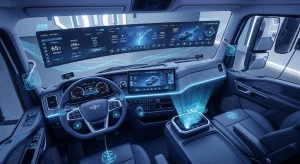
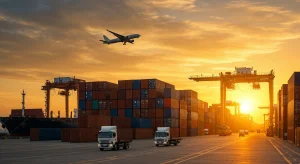
The artificial intelligence system that Formula 1 implemented to monitor every car on every turn is opening the door to new applications in trucking, logistics, and traffic management across U.S. highways.
En el GP de Austria se detectaron más de 1.000 infracciones

he artificial intelligence system that Formula 1 implemented to monitor every car on every turn is opening the door to new applications in trucking, logistics, and traffic management across U.S. highways.

When we think about Formula 1, speed, precision, and cutting-edge technology immediately come to mind. Yet behind the spectacle of elite racing, a technological innovation is emerging that could have a direct impact on freight transportation, regulatory compliance, and fleet safety in the United States.

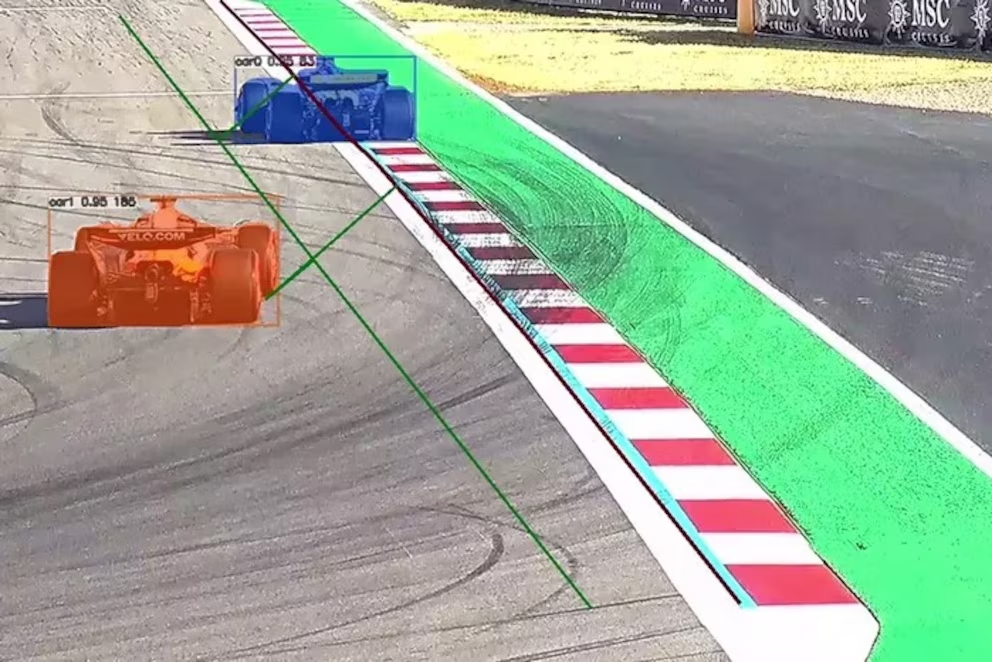
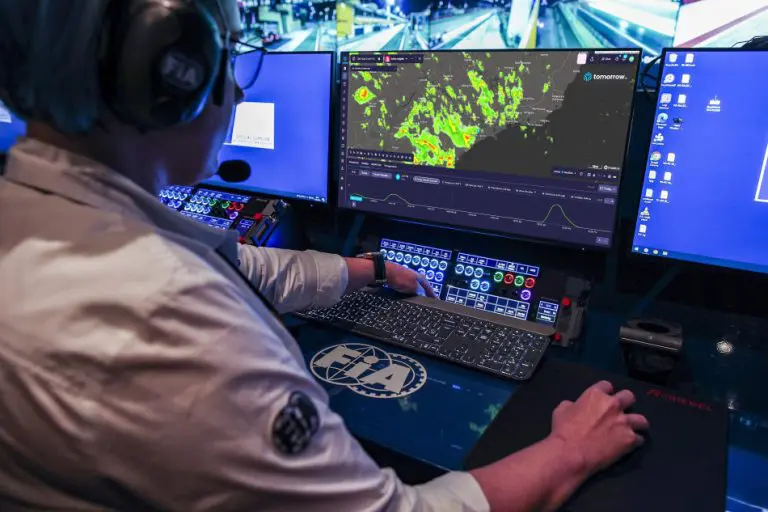
The International Automobile Federation (FIA) recently implemented an artificial intelligence-based system known as ECAT, short for Every Car, All Turns. The platform was designed to monitor track limits in real time during races.

Its purpose was simple but urgent: eliminate the growing burden of manual race reviews.

During the 2023 Austrian Grand Prix, more than 1,000 possible track limit violations were reviewed in a single race. The traditional monitoring model was no longer sustainable. The solution was to automate detection using computer vision, strategically positioned cameras, real-time data processing, and geofencing — the creation of virtual boundaries that automatically trigger alerts when crossed by a vehicle.

The result was dramatic: a 95 percent reduction in incidents requiring manual review.

Although designed for elite motorsport, the technological architecture behind ECAT has far broader implications, particularly for heavy-duty trucking and logistics operations in the United States.

From Race Circuits to Interstate Highways

American highways such as I-10, I-80, I-95, and I-5 carry millions of freight miles every day. Today, monitoring lane discipline, restricted zones, weight limits, and route compliance depends largely on roadside inspections, telematics logs, and post-incident investigations.

A system similar to ECAT could allow fleets and regulators to:

  • Detect lane departures in real time

  • Identify unauthorized entry into restricted urban areas

  • Alert operators when crossing bridges with structural weight limits

  • Monitor mandatory routing for hazardous materials

  • Automatically generate auditable digital compliance records

The key transformation would be shifting from a reactive enforcement model to a preventive, real-time oversight system.

Instead of discovering violations after the fact, fleets could address them instantly.

Geofencing: A Game-Changer for Compliance

One of the most powerful components of the Formula 1 system is geofencing.

In commercial trucking, virtual boundaries could be established around:

  • Mandatory HAZMAT corridors

  • Metropolitan areas with tonnage restrictions

  • Port access zones and distribution terminals

  • High-risk weather or mountainous regions

If a truck crossed those virtual limits, the system could immediately notify the fleet operator or compliance department.

This does more than improve regulatory adherence. It directly reduces operational risk, insurance exposure, and litigation vulnerability.

In an industry where violations can lead to major fines, safety rating impacts, and multimillion-dollar lawsuits, real-time alerts represent a significant layer of protection.

The Digital Twin of America’s Freight Network

Another key innovation in the FIA system is the creation of a digital twin of the circuit — a virtual replica that models ideal trajectories and compares actual vehicle behavior against optimal performance parameters.

Applied to U.S. highways, this concept could be used to:

  • Model dangerous curves in mountainous corridors

  • Analyze braking patterns on extended downhill grades

  • Detect erratic steering linked to driver fatigue

  • Identify unusual deviations in high-traffic freight routes

Considering the financial impact of truck-related accidents — including nuclear verdicts in the tens of millions — predictive AI safety systems could dramatically improve fleet risk management.

Instead of reviewing dashcam footage after a collision, fleets could receive alerts before a situation escalates into an accident.

Less Manual Review, Greater Operational Efficiency

The 95 percent reduction in manual review within Formula 1 represents more than a technical milestone. It signals efficiency gains that are directly applicable to trucking.

Fleet safety and compliance teams dedicate countless hours to reviewing:

  • Dashcam recordings

  • GPS route logs

  • Electronic Logging Device data

  • Driver performance reports

An AI-driven monitoring model could automatically flag anomalies while allowing human teams to focus only on cases that require judgment or intervention.

This approach does not remove human oversight.
It refines and strengthens it.

FIA Press

Is the U.S. Trucking Industry Ready?

Much of the required infrastructure already exists:

  • Integrated telematics systems

  • Satellite fleet tracking

  • Advanced driver assistance systems in commercial vehicles

  • Cloud-based fleet management platforms

What Formula 1 demonstrates is not just technological feasibility, but operational reliability under extreme conditions — high speed, high volume, real-time data processing.

If artificial intelligence can monitor every single-seater traveling at more than 180 miles per hour through every turn of a circuit, adapting the model to commercial highway speeds is not science fiction. It is a logical next step.

Beyond Motorsport: The Future of Highway Oversight

The implementation of ECAT proves that artificial intelligence can transform a complex, labor-intensive monitoring process into an automated, precise, and transparent system.

For U.S. freight transportation — where safety compliance, insurance costs, and litigation remain constant challenges — this raises a critical question:

When will AI become a standard layer of interstate fleet oversight?

Formula 1 seeks to gain fractions of a second.
Logistics seeks to gain safety, efficiency, and predictability.

Both are now powered by the same force:
real-time artificial intelligence.

Facebook
Twitter
LinkedIn

Leave a Reply

Your email address will not be published. Required fields are marked *

Business hours: Monday to Friday from 8:00 AM to 5:00 PM. California time
Leave your number and a member of our company will contact you
Horario de atención: Lunes a viernes de 8.00 AM a 5.00 PM. Hora california

Deje su número y un miembro de nuestra empresa se pondrá en contacto con usted

Privacy summary

This website uses cookies so that we can offer you the best possible user experience. Cookie information is stored in your browser and performs functions such as recognizing you when you return to our website or helping our team understand which sections of the website you find most interesting and useful.

More information about the privacy policy: Privacy Policy

More information about the terms of use: Terms of use 

More information about the disclaimer: Disclaimer 

More information on acceptable use policies: Acceptable Use Policies