The U.S. House of Representatives approved two resolutions revoking key exemptions granted by the Environmental Protection Agency (EPA) to California.
With a vote of 231 in favor and 191 against, the House voted on Wednesday, April 30, to overturn the exemption that allowed California to implement the Advanced Clean Trucks (ACT) rule, aimed at promoting the use of zero-emission vehicles (ZEVs). In a separate vote (225-196), it also revoked the exemption enabling the Low NOx Omnibus rule, which imposes stricter limits on nitrogen oxide emissions from heavy-duty trucks.
The measure now moves to the Senate, where, if passed, it could trigger a fierce legal battle. California has already prepared for this possibility and has a special fund in place to defend its regulatory autonomy on environmental matters—a fight the state has been engaged in for years.

Industry Debate: Can Congress Revoke an Exemption?
Despite the final vote, the Government Accountability Office (GAO) has questioned the legality of Congress’s decision, issuing an opinion stating that Congress does not have the authority to revoke exemptions already granted by the EPA. The debate centers on whether Congress can repeal an exemption, rather than a regulation directly.
However, the issue has national significance, as its impact reaches beyond California’s borders. Ten states—including New York, Oregon, and Colorado—have already adopted the ACT rule, following California’s lead. This expansion has created tension, particularly among trucking groups concerned about the economic and operational impact of these regulations.
Moreover, the debate complicates the future of the Clean Truck Partnership, an agreement reached in July 2023 between California and engine manufacturers, under which they agreed to federal NOx standards in exchange for implementing the ACT rule. The validity of this agreement is in question if ACT loses its exemption.
In response to the House’s decision, the transportation industry reacted strongly. Groups like the American Trucking Associations (ATA) and the Clean Freight Coalition (CFC) praised the House’s move. Chris Spear, ATA President, stated that “California should never hold the keys to policies that affect our interstate supply chains.”

Visible Effects of the Repeal of the Advanced Clean Trucks Rule
One of the already visible effects is the uncertainty among heavy-duty truck dealers, many of whom are canceling new vehicle orders due to regulatory ambiguity.
Meanwhile, California recently withdrew its request for an exemption to enforce the Advanced Clean Fleets (ACF) rule, which would require manufacturers to sell a percentage of ZEV trucks and companies to maintain those vehicles in their fleets over the next two decades. Although the state has stated the rule is not off the table, its implementation is currently on hold.
Despite the lack of a mandate, the number of ZEV trucks continues to grow, especially in ports like Long Beach, suggesting that the transition to a cleaner fleet is still underway—albeit entangled in increasing legal and political complexity.

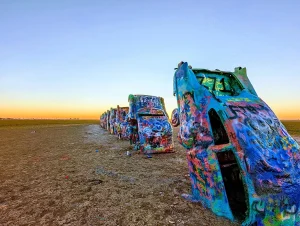
The best roadside attractions for truckers in the U.S.
America’s highways hide unique places that break up the routine, don’t hesitate to check out these roadside attractions along the way. The road is much
The trucker style: comfort, function, and identity
Truckers’ style is much more than workwear; it’s an identity. These are the most commonly worn garments among truckers. Truckers’ style is much more than
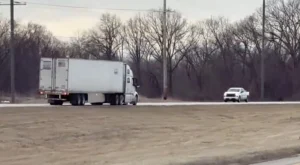
Chaos on Highway 61: Viral Wrong-Way Truck Video Reignites the CDL Debate
An 80-ton tractor-trailer traveling miles in the wrong direction on Missouri’s Highway 61 has reignited a nationwide debate over Commercial Driver’s License (CDL) standards, training
How technology affects driver retention
Friend or foe? 52% of drivers say technology directly influences their decision to stay with or leave a fleet. Fleet telematics company Platform Science published
Dalilah Law seeks to remove non-english speaking commercial drivers
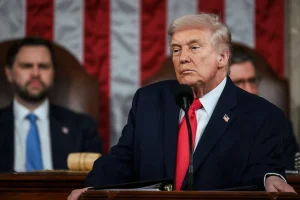
President Donald Trump proposed the “Dalilah Law,” an initiative aimed at prohibiting undocumented immigrants from obtaining commercial driver’s licenses. On February 24, President Donald Trump
FORMULA 1 and the AI That Could Transform Transportation in the U.S.
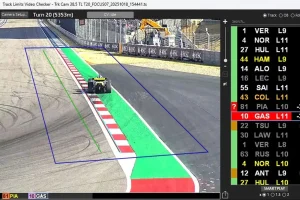
The artificial intelligence system that Formula 1 implemented to monitor every car on every turn is opening the door to new applications in trucking, logistics,