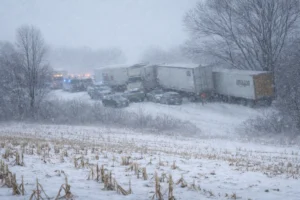
Violations of transportation regulations are a crucial factor in determining responsibility for accidents.
The Federal Motor Carrier Safety Administration (FMCSA) is responsible for overseeing the transportation system in the United States, which relies on strict regulations designed to ensure road safety. These rules cover crucial aspects such as driver qualifications, hours of service, and vehicle maintenance, and their compliance is essential not only for preventing accidents but also for resolving insurance claims in the event of incidents.
Failure to comply with these regulations can impact liability in insurance claims. Additionally, drivers must meet qualification requirements, such as having a valid commercial driver’s license and a clean driving record. If a driver fails to meet these conditions, it may strengthen a negligence claim.

The impact of regulatory violations on accident claims
In addition to federal regulations, each state in the U.S. has its own rules, which may vary in areas such as load capacity or road conditions. These differences can affect the development of an accident case and, consequently, the resolution of insurance claims. Understanding local regulations is critical for lawyers and insurance professionals, as state rules can play a key role in determining liability and compensation.
Violations of transportation regulations are a crucial factor in determining responsibility for accidents. Lawyers specializing in such cases often rely on regulatory violations to strengthen their arguments and secure more favorable compensation.
Operator errors are a leading cause of a large percentage of commercial truck accidents. Secondary contributing factors include hazardous weather conditions and defective vehicles. According to the National Highway Traffic Safety Administration (NHTSA), the causes of truck accidents include:
- Driver fatigue
- Drugs and alcohol
- Speeding for road conditions
- Distracted driving
- Overloaded vehicles
- Inadequate vehicle maintenance

Legal representation in truck accident claims
Legal representation is vital in truck accident claims, especially due to the complex federal regulations governing cargo transportation. Additionally, evidence collection is crucial for success in these cases. Elements such as maintenance reports, driver logs, witness statements, and accident scene photographs, along with a thorough understanding of applicable regulations, are essential for building a strong case. Ultimately, correctly understanding and applying federal regulations not only determines liability but also the amount of compensation that can be obtained in these claims.

In summary, the regulations governing road transportation have a direct impact on how insurance claims are handled after an accident. Driver fatigue, qualifications, vehicle maintenance, and local regulations are key factors that can determine liability and compensation in these cases. Therefore, understanding and properly applying these regulations is crucial for achieving favorable results in any insurance claim related to road transportation.

Truck drivers are at high risk of developing diabetes
About 11% of the adult population meets the criteria for prediabetes, and there is a particular group at high risk: truck drivers. Diabetes rates in

Starting in trucking: required permits, registrations, and compliance
Are you a new carrier? This is what you need to know about permits, registration, and compliance. The trucking industry can be quite challenging for

Alberta Clipper Brings an Early Polar Blast: A Critical Alert for Drivers
The Alberta Clipper is sweeping across the country with fast-moving Arctic air, sharp temperature drops, and dangerous road conditions that demand heightened attention from all professional drivers.

American manufacturers trigger truck “dumping” investigation
Foreign trailer manufacturers under investigation for alleged “dumping” in the U.S. The U.S. truck market is at the center of a trade dispute. After domestic

ATRI Warns: Litigation Is Rising Across the U.S. Trucking Industry
A new report from the American Transportation Research Institute (ATRI) reveals how escalating litigation, higher legal costs, and mounting insurance pressures are reshaping the U.S. trucking industry. The findings mark a critical moment for motor carriers, insurers, and logistics stakeholders who must understand the changing legal environment — and the increasingly strategic role of strong insurance partnerships.

FMCSA says no to hours-of-service exemptions
FMCSA rejects two requests for exemptions to hours-of-service rules for commercial drivers. The Federal Motor Carrier Safety Administration (FMCSA) has denied two exemption requests related