Aurora Innovation decided to place a human driver back behind the wheel of its heavy-duty trucks in Texas.
In recent years, Aurora Innovation has positioned itself as one of the leading developers of autonomous vehicles. With its Aurora Driver system, the company began testing autonomous heavy-duty trucks, which later started operating on public roads under specific guidelines. However, in recent months, the industry has faced new challenges.
Recently, Aurora Innovation decided to place a human driver back behind the wheel of its heavy-duty trucks in Texas, reversing course less than three weeks after launching commercial autonomous service in the state.

The “safety driver” returns to the cab
Aurora deployed its autonomous driving technology in Texas on April 27. However, operations have so far been extremely limited. During a May 8 conference, Aurora CEO Chris Urmson revealed that the initial deployment on Interstate 45 between Dallas and Houston included only two driverless trucks. These operated exclusively during daytime hours and were taken off the road even in light rain. Together, the trucks traveled approximately 6,000 kilometers (about 3,700 miles), averaging around 250 miles per day each.
Although the operation was promoted as “driverless,” some of the trucks still had a human occupant to comply with federal regulations, such as the requirement to place warning devices around the truck in case of a stop. These initial limitations highlight the significant technical and regulatory hurdles Aurora still faces.
The recent decision to move the “safety driver” from the rear of the cab to the driver’s seat was made at the request of Paccar Inc., the truck manufacturer, according to a statement from Aurora CEO Chris Urmson released on May 16. While the Aurora Driver system will continue to control the vehicle, the person onboard will be able to intervene if necessary.
Urmson stated that after conducting more than 2.7 million tests and meeting over 10,000 requirements, Aurora is confident there is no need for a safety driver in the cab. However, given that Paccar is a long-standing partner, the company decided to honor their request.

Potential disagreements between Aurora and Paccar
The May 16 statement suggests that Aurora and Paccar may have disagreed on the need for a human operator during the early stages of the commercial autonomous service. According to Urmson, Paccar requested the change due to the use of prototype components in the trucks.
Furthermore, a short-seller report by Bleecker Street Research published on May 14 claimed that Aurora had not yet received formal approval from Paccar to commercialize its autonomous trucks. The report also stated that the truck manufacturer believes the technology will take more time before it’s truly ready for large-scale deployment.

Middle East Conflict: Impact on Diesel Prices and What U.S. Truckers Should Expect
The escalation of conflict in the Middle East has pushed crude oil prices toward $80 per barrel, reigniting global energy volatility. For the U.S. trucking
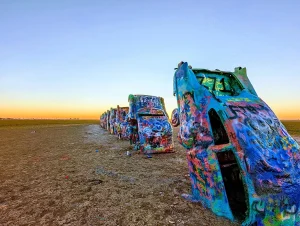
The best roadside attractions for truckers in the U.S.
America’s highways hide unique places that break up the routine, don’t hesitate to check out these roadside attractions along the way. The road is much
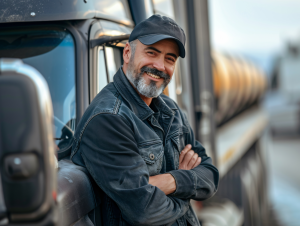
The trucker style: comfort, function, and identity
Truckers’ style is much more than workwear; it’s an identity. These are the most commonly worn garments among truckers. Truckers’ style is much more than
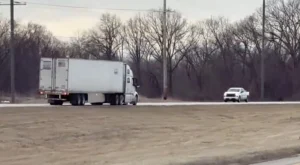
Chaos on Highway 61: Viral Wrong-Way Truck Video Reignites the CDL Debate
An 80-ton tractor-trailer traveling miles in the wrong direction on Missouri’s Highway 61 has reignited a nationwide debate over Commercial Driver’s License (CDL) standards, training
How technology affects driver retention
Friend or foe? 52% of drivers say technology directly influences their decision to stay with or leave a fleet. Fleet telematics company Platform Science published

Dalilah Law seeks to remove non-english speaking commercial drivers
President Donald Trump proposed the “Dalilah Law,” an initiative aimed at prohibiting undocumented immigrants from obtaining commercial driver’s licenses. On February 24, President Donald Trump