In this edition of brief news: truckers could receive overtime pay, fuel producers sue over California emissions rules, and axle weight limits may be modified.
GOT Truckers Act: Truckers Could Receive Overtime Pay
A bill introduced in the Senate in March by Senator Josh Hawley aims to eliminate taxes on overtime wages. However, this measure would not benefit salaried truck drivers.
The Owner-Operator Independent Drivers Association (OOIDA) supports the idea of eliminating taxes on overtime pay but warns that the current legislation excludes truckers. For this reason, the organization backs the GOT Truckers Act (HR1962), reintroduced on March 6 by Representatives Jeff Van Drew and Mark Takano. This law would amend the Fair Labor Standards Act of 1938 to ensure salaried truck drivers receive overtime pay.
Todd Spencer, president of OOIDA, noted that although truckers are essential to the economy, they remain one of the few professions without guaranteed overtime pay. The bill also has support from the International Brotherhood of Teamsters, the Truck Safety Coalition, and the Institute for Safer Trucking.
If both Hawley’s bill and the GOT Truckers Act are approved, truckers could receive overtime pay and benefit from the tax exemption promoted by Hawley and supported by Donald Trump as part of his campaign promise to prioritize American workers.

Fuel Producers Group Sues Over California Vehicle Emissions Rules
The U.S. Supreme Court has allowed a group of fuel producers to move forward with a lawsuit against California’s vehicle emissions rules, known as Advanced Clean Cars I. The decision, passed by a 7-2 vote, overturns a previous ruling that dismissed the case due to lack of legal standing, according to Land Line.
The lawsuit challenges the EPA’s 2012 waiver that allowed California to enforce stricter vehicle emissions regulations and promote the sale of zero-emission vehicles through 2025. Seventeen other states and the District of Columbia also adopted these rules. Fuel producers argue that the regulation aims to fight global climate change rather than improve local air quality, and thus exceeds the scope of the Clean Air Act.
The Supreme Court did not rule on the merits of the case but indicated that fuel producers could be economically impacted by the regulation, giving them the right to sue.
California argued that manufacturers would continue producing electric vehicles due to market demand, even without regulation. But the Court responded that if the rule changes nothing, there’s no reason for the state to insist on defending it.
This decision reignites the debate over California’s authority to set its own environmental standards, especially amid political shifts. The Advanced Clean Cars I mandate expires in 2025, but the legal battle could affect future regulations like Advanced Clean Cars III or Advanced Clean Trucks. Meanwhile, Congress and a restrictive judiciary present additional obstacles to the state’s environmental policies.

VARIANCE Act: Axle Weight Variation for Trucks
A new Senate bill seeks to allow a 10% axle weight variance for trucks hauling dry bulk goods, without exceeding the federal weight limit of 80,000 pounds per vehicle.
Introduced on June 18 by Senator Pete Ricketts and co-sponsored by Senator Adam Schiff, the VARIANCE Act (Vehicle Axle Redistribution Increases Allow New Capacities for Efficiency, S.2108) would increase the tandem axle weight limit from 34,000 to 37,400 pounds for trucks carrying products such as flour, plastic pellets, aggregates, and other dry materials that tend to shift during transport.
According to Ricketts, this “common-sense” measure would improve efficiency and safety, especially in the agricultural industry. The proposed variance does not increase the total allowed weight, but seeks flexibility to accommodate the natural movement of such loads.
The bill has support from transportation and agricultural organizations such as the American Trucking Associations, the National Grain and Feed Association, and the Fertilizer Institute. They argue this modification would allow safer and more cost-effective operations without damaging infrastructure or exceeding federal weight limits.


The best roadside attractions for truckers in the U.S.
America’s highways hide unique places that break up the routine, don’t hesitate to check out these roadside attractions along the way. The road is much
The trucker style: comfort, function, and identity
Truckers’ style is much more than workwear; it’s an identity. These are the most commonly worn garments among truckers. Truckers’ style is much more than
Chaos on Highway 61: Viral Wrong-Way Truck Video Reignites the CDL Debate
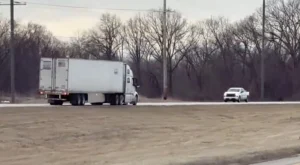
An 80-ton tractor-trailer traveling miles in the wrong direction on Missouri’s Highway 61 has reignited a nationwide debate over Commercial Driver’s License (CDL) standards, training

How technology affects driver retention
Friend or foe? 52% of drivers say technology directly influences their decision to stay with or leave a fleet. Fleet telematics company Platform Science published

Dalilah Law seeks to remove non-english speaking commercial drivers
President Donald Trump proposed the “Dalilah Law,” an initiative aimed at prohibiting undocumented immigrants from obtaining commercial driver’s licenses. On February 24, President Donald Trump
FORMULA 1 and the AI That Could Transform Transportation in the U.S.
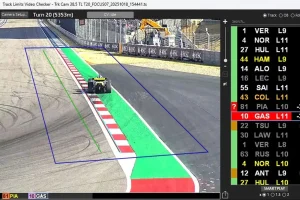
The artificial intelligence system that Formula 1 implemented to monitor every car on every turn is opening the door to new applications in trucking, logistics,