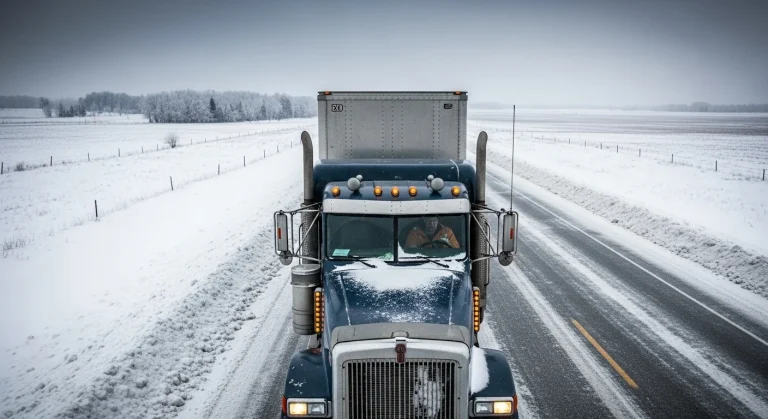
Becoming a truck driver in the United States means access to competitive pay and strong labor demand, but it also requires accepting time away from family, physical strain, and a lifestyle that isn’t for everyone.

Being a truck driver in the United States remains, in 2026, one of the most sought-after career paths within the transportation industry. The promise of solid wages, steady employment, and room for advancement attracts new drivers every month. Yet the life of a truck driver combines financial opportunity with personal demands that require preparation, adaptability, and realistic expectations.
The real question is not only how much the job pays. The question is whether the lifestyle that comes with it fits the person behind the wheel.
Truck driver salary: how much can you make?
A truck driver’s income depends on experience, employer, freight type, and operating model. Long-haul drivers typically spend more time away from home, but they often benefit from higher per-mile rates and greater bonus potential.
In general, many truck drivers earn more per year than workers in positions that do not require a college degree. Beyond base pay, incentives may include safety bonuses, on-time delivery rewards, or premiums for hauling specialized freight.
For those thinking mid-term, the industry also offers pathways toward greater independence, including lease programs or eventually purchasing a truck and operating as an owner-operator.
Job availability: an industry that needs drivers
The U.S. logistics system runs on highways. Grocery stores, hospitals, construction sites, and distribution centers all rely on constant freight movement.
Because of that, a truck driver with a valid commercial license, a clean record, and a reputation for reliability can usually find work quickly. Turnover remains high, and companies compete aggressively to keep dependable drivers.
The advantages drivers talk about most
Many truck drivers point to autonomy as the profession’s greatest benefit. There is no traditional office and no manager standing nearby all day. Much of the shift happens on the road, where drivers make decisions within safety and regulatory limits.
Travel is another attraction. Seeing different states, landscapes, and climates breaks routine and offers a sense of movement that some personalities find energizing.
There is also professional pride. Truck drivers understand that without them, shelves would be empty and supply chains would stall.
Truck Driver Pay Overview – United States (2026 Estimates)
| Category / Type of Driver | Approx. Annual Pay (USD) | Details / Source |
|---|---|---|
| Overall average (Glassdoor) | ~$71,784 / year | Average reported by U.S. workers; middle 25–75% typically ranges from ~$58,040 to ~$89,349. |
| Heavy truck median (BLS) | ~$57,440 / year | Median wage according to the Bureau of Labor Statistics (latest available data). |
| Typical per-mile range (ZipRecruiter) | ~$39,500 – ~$66,000; up to ~$83,500 | Estimated annual equivalent from per-mile compensation; varies widely by state and experience. |
| Weekly average (Indeed) | ~$1,721 / week (~$89,492 / year) | Based on wages self-reported on Indeed. |
| Estimated mean (Prosfy) | ~$58,240 / year | Typical spread: ~$47,445 (25th percentile) to ~$73,840 (75th), up to ~$88,400 (90th). |
| Experience variation | ~$45,000 – ~$107,000 | Real-world examples reported across different cities depending on seniority. |
| Company per-mile pay | Up to $0.44–$0.51 per mile (~$50,000–$70,000 est.) | Reflects common industry pay practices. |
| High-paying employers | ~$90,000 – $140,000+ | Reported by drivers at top-tier companies. |
The hard side: what drivers give up
Income and independence come with tradeoffs. The biggest one is time.
A truck driver may miss birthdays, school events, or family gatherings. Partners and children must adapt to long absences and changing schedules. Maintaining strong relationships requires deliberate effort and communication.
Add to that cumulative fatigue, heavy traffic, difficult weather, and the constant pressure of delivery appointments, and the job becomes as demanding as it is essential.

Health impact
Long hours behind the wheel, irregular sleep, and limited food options on the road can affect well-being over time. Back problems, stress, and chronic exhaustion are common concerns.
In response, many professionals develop coping strategies: cooking in the truck, walking during breaks, or keeping regular medical checkups. Longevity in the industry often depends on how seriously drivers take self-care.
More than a job: a way of life
Veteran drivers frequently say that being a truck driver doesn’t end when the engine shuts off. The profession shapes routines, relationships, and future plans.
Some people discover they thrive in that independence. Others eventually look for roles that allow more consistent time at home.
So, is it worth it?
The answer depends on individual priorities.
For someone seeking strong earning potential, constant demand, and career mobility without years of formal education, trucking can be an outstanding option.
For someone whose top priority is being home every evening with predictable hours, the challenge may outweigh the benefits.
In 2026, the truck driver remains a fundamental link in the American economy. Real opportunities for financial progress exist, but they come with sacrifices that deserve honest evaluation.
Before choosing the road, it may be wise to look beyond the paycheck and ask a deeper question: what kind of life do you want to build while covering thousands of miles?

The top truck bottlenecks in the U.S. 2026
The American Transportation Research Institute has released its annual report on freight bottlenecks in the United States. The American Transportation Research Institute (ATRI) published its

US Climate Records 2026: Extreme Weather Is Already Reshaping Transportation Across the Country
US Climate Records 2026 are already redefining risk patterns for the transportation industry. Historic flooding and a deadly avalanche in California, unusual winter heat in Colorado, extreme snowfall in Alaska and rare January tornadoes in Oklahoma mark a start to the year of extraordinary intensity. In just two months, US Climate Records 2026 have broken long-standing benchmarks across multiple states.

What are Grabovoi numbers and what can be manifested with them
Grabovoi numbers: a list of numerical sequences intended to activate certain areas of daily life in order to enhance, improve, and develop them. Manifestation and

CVSA’s 2026 international inspection to target ELD manipulation
The 2026 inspection will focus on drivers who falsify or manipulate their electronic logging devices (ELDs) to alter their hours of service. Each year, the

Illinois CDL Audit: 20% Under Federal Review
A federal audit found that nearly 20% of Illinois’ non-domiciled CDLs may not comply with federal standards. The state has 30 days to correct the issues or risk losing $128 million in highway funding.