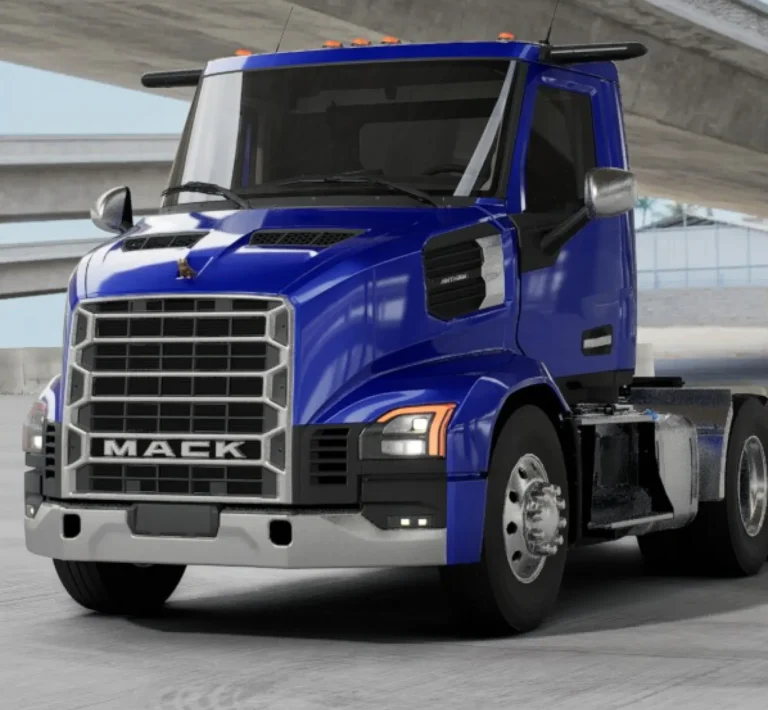
The Anthem’s upgrades include a 10% increase in fuel efficiency, enhanced comfort, and improved maneuverability.
On June 24, Mack Trucks unveiled an updated version of its Anthem tractor unit. This refresh repositions the model as a maneuverable specialist for regional transport, thereby strengthening the Volvo Group’s presence in that market segment. Previously, Mack had launched the Pioneer model, designed to solidify its position in the long-haul transport sector.
According to the company, the main goal of these two new tractor units is to help the manufacturer achieve a 25% share of the North American heavy-duty truck market by 2030. The Anthem update is a key part of this strategy.

Anthem enhancements: greater efficiency, improved maneuverability
The Anthem’s upgrades include a 10% increase in fuel efficiency, enhanced comfort, and improved maneuverability, according to Jonathan Randall, President of Mack Trucks North America. Mack Trucks President Stephen Roy described the refresh as a “significant improvement in all the areas that matter to your business,” as reported by Transport Topics.
The Anthem originally joined Mack’s on-highway Class 8 lineup in September 2017, gaining considerable popularity in the market. The company chose to preserve that strong reputation by retaining the successful aspects of the original model.
According to Randall, the updated version is aimed at the food delivery, tanker, and bulk transport segments. It will offer engine options including the MP13 Variable Geometry Turbo and the MP13 HE, with up to 515 horsepower available. The redesign will also feature six wheelbase options, along with three axle configurations: 6×4, 6×2, and 4×2.
Approximately 80%–90% of the updated Anthem shares components with the Pioneer; however, the Anthem surpasses it in terms of maneuverability. This is evidenced by the redesign, which shortened the bumper-to-back-of-cab (BBC) measurement to 113.5 inches, allowing for a 50-degree turning angle. Additionally, forward bumper visibility was increased by 12%, according to Mack Trucks.

Anthem to hit the market in 2026
Production of the new Anthem is scheduled to begin in January 2026, with order books opening in August of the same year. The vehicle will make its public debut at the 2025 American Trucking Associations Management Conference & Exhibition, which will be held in San Diego from October 25 to 28.
With the launch of the refreshed Anthem, the Volvo Group will complete the update of its tractor lineup for North America, for both its Volvo and Mack brands. This update is part of a broader strategy focused on modernization and adapting to new technologies. Less than a month before the Pioneer launch, Volvo Trucks North America introduced a major revision of the VNR model, targeting regional transport with enhancements to turning radius and fuel efficiency.

Guide to Cab Card: What Is It, What It’s Used For, and Why You Should Carry It in Washington
The Cab Card is a registration card or document that identifies a commercial vehicle and provides information related to its authorization to operate.

Port of Tacoma: How to Pick Up Containers Faster in 2026
RFID mandatory also at domestic terminals, new shift dashboard, and updated eModal rules: the 2026 guide to picking up containers faster at the Port of Tacoma.

Bridges in Washington with Restrictions for Commercial Vehicles
The state of Washington has several bridge restrictions that every truck driver should know.

How the SR 167 is progressing and what will change for truckers
WSDOT began the final stage of SR 167 in July 2026, the highway that will directly connect the Port of Tacoma with I-5.

The Busiest Freight Corridors in Texas
Learn about the main freight corridors in Texas and the most important routes for truck drivers transporting goods.

When Is a Truck Too Old to Insure in the United States? Age Isn’t the Real Problem
An older truck is not necessarily an obsolete truck. In the United States, the real problem begins when age translates into mechanical deficiencies, inadequate maintenance, safety violations, or an inability to meet the requirements applicable to the carrier’s operation. Brakes, tires, lights, inspections, maintenance, cargo, and type of operation can matter far more than the year printed on the title.