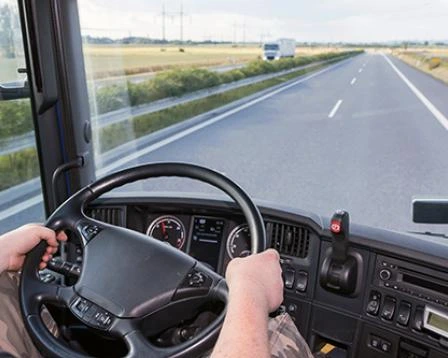
The U.S. Department of Transportation (DOT) offers the Military Skills Test Waiver Program to help eligible veterans and active-duty service members obtain a Commercial Driver’s License (CDL) without taking the skills test, using their military driving experience to qualify.
As part of an ongoing effort to support U.S. veterans and active-duty military personnel in their transition to civilian employment, the U.S. Department of Transportation (DOT) has implemented the Military Skills Test Waiver Program. This initiative allows qualified service members to obtain a Commercial Driver’s License (CDL) without having to take the traditional skills test, provided they have prior experience operating heavy military vehicles.
This program is available in every U.S. state and has already helped more than 40,000 veterans secure employment in the trucking and logistics sector—a critical area of the American economy currently facing a nationwide driver shortage.
How to Apply
The application process for the Military Skills Test Waiver is straightforward and designed to be accessible to all eligible military personnel.
Download and Complete the Official Waiver Form
The waiver form can be downloaded directly from the official Department of Transportation website. The form must be filled out in detail, including information about your military service and vehicle operation history.Attach to CDL Application
Once completed, the waiver form should be submitted along with the standard Commercial Driver’s License application required by your state.Submit to Your State Driver Licensing Agency (SDLA)
Both forms—the waiver and the CDL application—must be submitted to the appropriate State Driver Licensing Agency where you plan to obtain your license. Each state may have slightly different processing times, so veterans are encouraged to consult their local DMV or licensing office for additional guidance.
What the Waiver Form Includes
The waiver form is not just a bureaucratic step; it serves as an official record of your military qualifications. Key details you will need to provide include:
The exact type of military vehicle(s) you operated (such as heavy tactical trucks or fuel tankers).
A record of any driving-related violations within the last two years.
An endorsement from a commanding officer or other verifying authority confirming that your experience is equivalent to civilian commercial driving requirements.
This documentation ensures that the experience you gained in service is formally recognized and meets civilian safety and compliance standards.
A Pathway to Civilian Employment
The DOT promotes the Military Skills Test Waiver Program as part of a broader national initiative to ease the transition from military to civilian life. For many veterans, the ability to skip the skills test significantly reduces both the time and cost required to obtain a CDL—two major barriers to employment in the transportation industry.
In addition to honoring military service, this waiver program also addresses an urgent shortage of qualified truck drivers across the U.S. According to the American Trucking Associations (ATA), the country faces a deficit of over 60,000 drivers—a figure expected to rise in the coming years. By tapping into a pool of already-trained military personnel, the program helps reinforce the stability of the national supply chain and logistics network.
Need More Help?
Veterans or active-duty personnel interested in applying can visit the DOT’s official website for more information or reach out directly via email to francisco.soto@dot.gov.
✅ Quick Recap
Who’s eligible? Veterans or service members who operated heavy military vehicles in the last 12 months.
What’s waived? The driving (skills) test required for a CDL.
What do you need? Completed waiver form, standard CDL application, and command verification.
Where to apply? Your state’s Driver Licensing Agency (DMV or equivalent).

Frequently Asked Questions About Trucking in Washington
100 questions and answers for truck drivers operating in the state of Washington.

Washington updates its freight corridors: how truck navigation will change on I-5, I-90, and other key routes.
The State of Washington is updating its planning for the state’s most important freight corridors with a clear goal: improving commercial truck traffic, strengthening supply

Washington speeds up new logistics hub development to strengthen freight transportation and trade with Canada
Washington is expanding its network of logistics hubs through investments in ports, highways, and distribution centers to streamline freight transportation.

Washington Commercial Vehicle Laws: What Truckers Must Know
Washington combines state requirements with numerous federal regulations that apply to commercial transportation

Your Truck Was Declared a Total Loss: Who Decides What It Is Really Worth in Washington?
The accident may be over in seconds. The dispute over what the vehicle is actually worth can last much longer. Since 2026, Washington has introduced a new tool to resolve certain valuation disputes between policyholders and insurance companies.

Why Some Washington Carriers Are Harder to Insure
Accidents, maintenance, drivers, and safety records can complicate a carrier’s risk profile. What Washington truckers should review before insurance renewal.