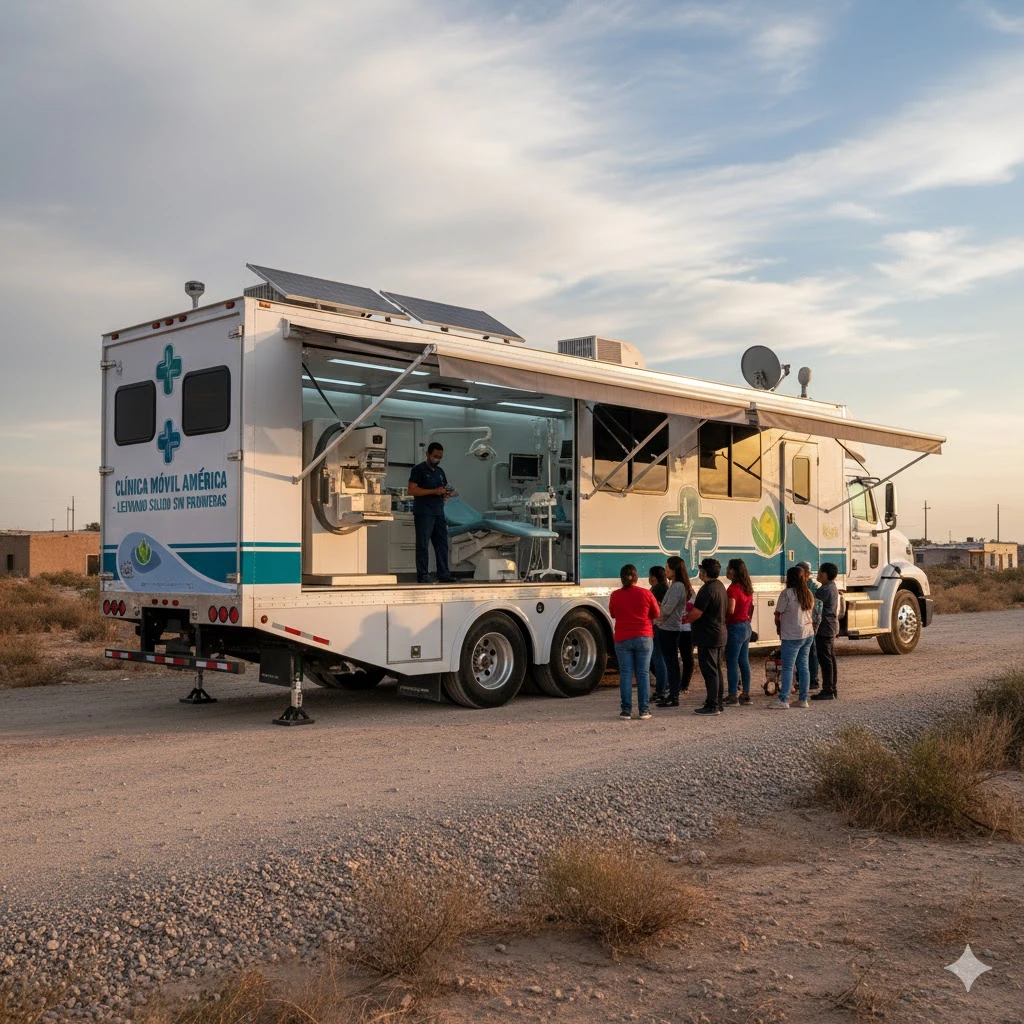
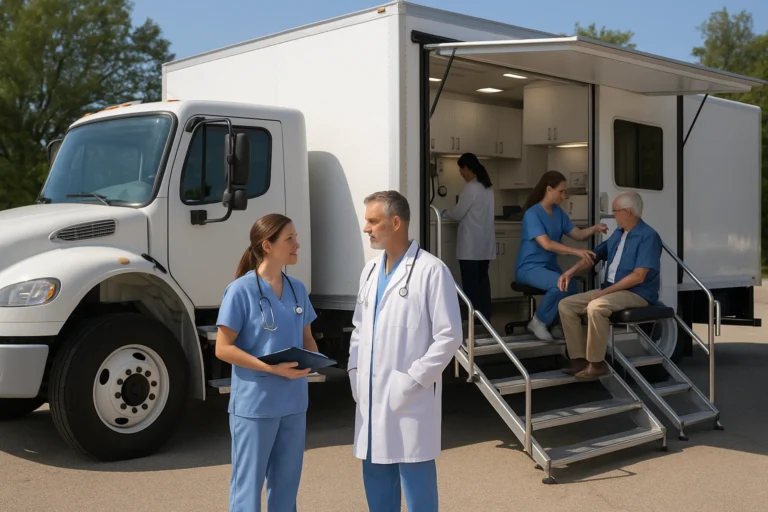
The mobile clinics are transforming America’s highways into lifelines of care, bringing doctors, diagnostics, and hope to rural and underserved communities where traditional healthcare often can’t reach.
The drivers of these massive trailers have become the unsung heroes of America’s roads, delivering life-saving medical services to every corner of the country.
When most people think of trucking, they picture long convoys of rigs hauling food, fuel, or manufactured goods. Yet, on the quieter backroads and in small towns that barely appear on the map, there’s another kind of fleet — one that carries not products, but health.
These mobile medical clinics travel across the United States providing free healthcare to rural areas, border regions, and communities far from the nearest hospital.
Clinics on Wheels: High-Tech Medicine in Motion
Across the U.S., there are over 2,000 active mobile health units, according to Harvard University’s Mobile Health Map. Built on heavy-duty truck platforms, these trailers have been transformed into fully functional hospitals on wheels — capable of operating autonomously for days at a time.
Each unit is equipped with state-of-the-art medical technology:
Digital mammography machines, X-ray systems, and portable laboratories.
Independent climate control and power systems to preserve vaccines and maintain sterile conditions.
Slide-out walls that expand the trailer’s interior, creating exam rooms and waiting areas.
Hydraulic and pneumatic stabilizers to keep the unit level and vibration-free during delicate procedures.
Hospital-grade floors and surfaces, designed for constant cleaning and disinfection.
Some of these trucks serve as diagnostic centers, others as dental clinics, testing labs, or preventive health units. Their design allows them to treat between 50 and 100 patients per day, staffed by small but highly trained medical teams.

Turning the Open Road into a Healthcare Network
In many rural parts of the U.S., where the nearest clinic may be more than 100 miles away, mobile units are often the only source of direct healthcare. Programs such as the Mobile Health Clinics Association and Remote Area Medical (RAM) operate routes that stretch from the Appalachian Mountains to the deserts of Arizona.
Their impact is measurable:
Over 7 million medical visits take place in mobile clinics each year.
Forty percent of patients receive care for the first time in years.
Healthcare costs are reduced by up to 60% compared to traditional hospital treatment.
Mobile clinics deliver vaccinations, blood pressure and diabetes screenings, dental and vision exams, and even early cancer and cardiac diagnostics. Many are operated by universities, hospitals, or nonprofit foundations that combine hands-on medical training with community outreach.
Drivers and Doctors: A Partnership on Wheels
Each mobile clinic relies not only on its healthcare staff but also on specially trained drivers who understand the routes, weather conditions, and technical systems of these complex rigs. Their role is crucial: they maintain generators, manage vehicle stability, and coordinate daily logistics.
These drivers aren’t just behind the wheel — they’re part of the mission. Many receive basic medical training and patient-support education, acting as the bridge between the open road and public health.
Innovation in Motion
The model of mobile medical trucks is rapidly expanding as regional hospitals and state health agencies seek to reduce healthcare inequities across the nation. These units bring essential services to farmworker communities, veterans, migrants, and uninsured citizens, making care accessible where it was once impossible.
In emergencies — from hurricanes to wildfires — mobile clinics deploy as temporary health centers. During the COVID-19 pandemic, they were vital in bringing vaccines and testing to rural and Native American populations, proving their flexibility and resilience.
More Than Transportation, a Human Mission
The heroes of the highway don’t always wear uniforms or drive ambulances. Sometimes, they sit behind the wheel of a white trailer that looks ordinary — but inside, it carries the promise of a longer, healthier life.
On America’s highways, each mobile medical truck is a promise on wheels — a reminder that the true value of transportation lies not only in what it moves, but in the lives it transforms along the way.

Teton Pass bridge will be closed to traffic for 10 days
Teton Pass is one of the most heavily traveled routes for truck drivers in Wyoming, serving as a vital corridor for the trucking industry. The

Terrifying Experiences of Truck Drivers Sleeping on the Road at Night

Cargo theft numbers drop for the third quarter of 2025
The cargo theft tracking company Verisk CargoNet released its report for the third quarter of 2025. The cargo theft tracking company Verisk CargoNet released its

40 major U.S. airports to see flight reductions due to government shutdown
40 U.S. airports, including those in New York, Los Angeles, and Chicago, will see flight reductions starting November 7 due to the government shutdown. 40

DOT Medical Card: Keeping Medical Certification Up to Date
Keeping your DOT Medical Card current is essential for both drivers and fleet operations.
Brake Safety Week 2025 results: almost 85% of commercial vehicles had no violations
Results of Brake Safety Week, organized jointly by the Commercial Vehicle Safety Alliance (CVSA) and the Department of Transportation, have been published. Results of Brake