 Hable con un agente al (888) 572-7520
 Enviar mensaje a un agente


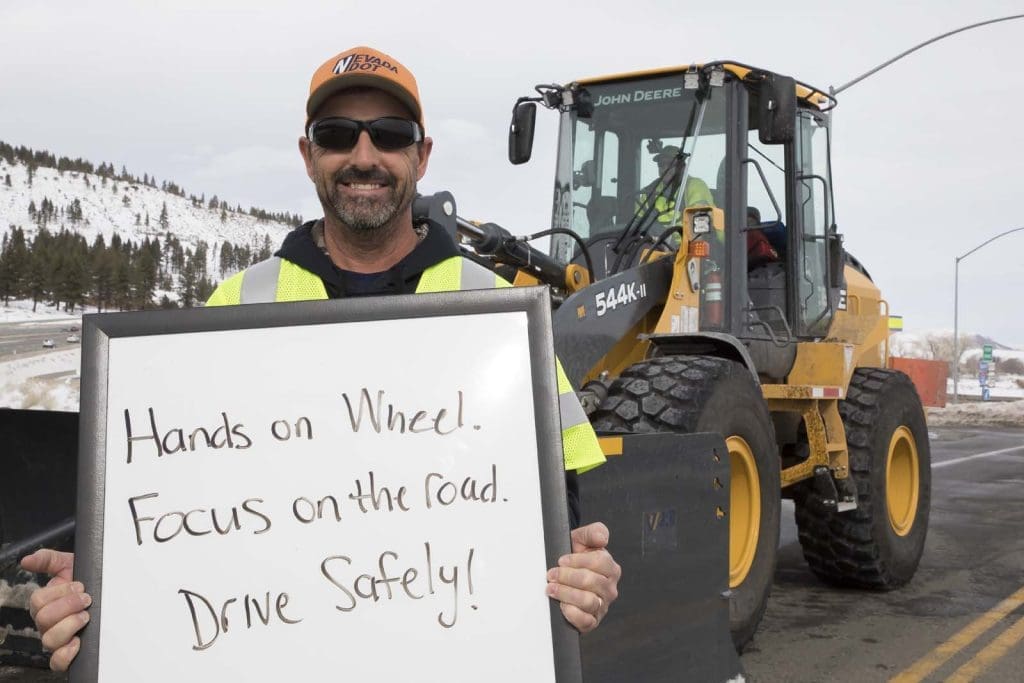

The Nevada Department of Transportation (NDOT) is reminding drivers of the importance of complying with the state’s Move Over Law, which is designed to prevent crashes and protect people working along highways. The law requires motorists to slow down, exercise caution, and move into another lane when it is safe to do so when approaching certain stopped vehicles and roadside incidents.
For truck drivers and freight carriers traveling through Nevada, these requirements are particularly important because of the size of commercial vehicles, their longer stopping distances, and the challenges of changing lanes on congested highways.
The law, established under NRS 484B.607, provides penalties for drivers who fail to comply. According to NDOT, drivers convicted of violating its provisions may face misdemeanor charges.
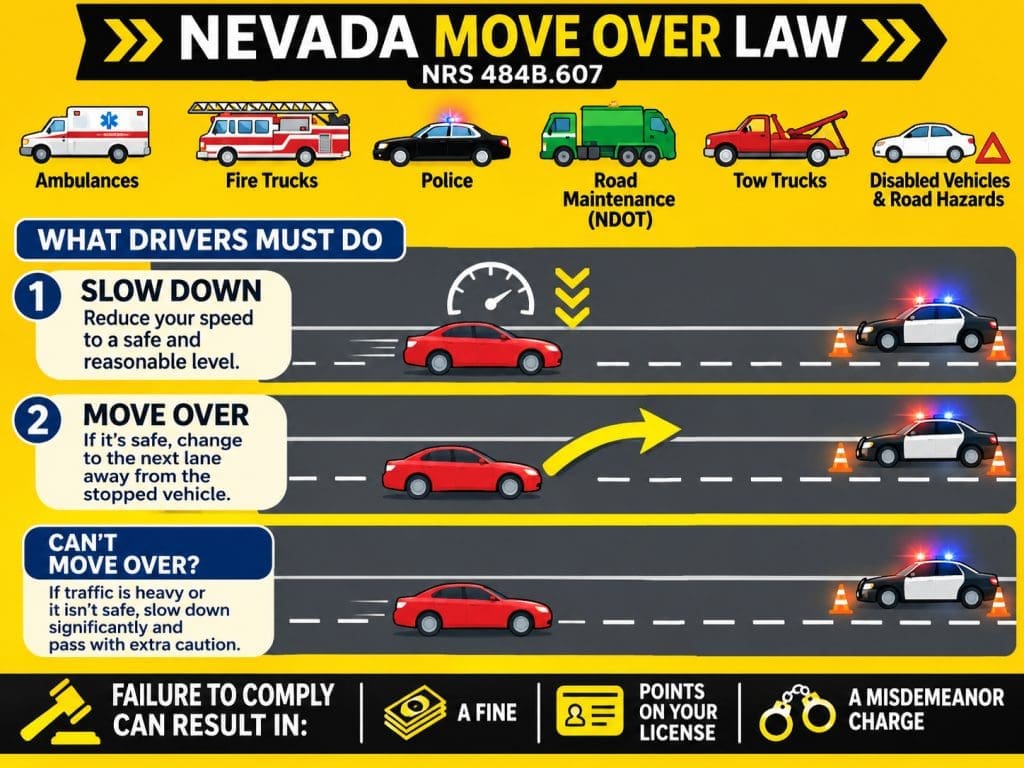
What Nevada’s Move Over Law Requires
Nevada first introduced its Move Over requirements in 2003, requiring drivers to reduce their speed and, whenever possible, change lanes when passing stopped emergency response vehicles.
The state subsequently expanded the law to protect additional roadside workers and highway users.
Beginning July 1, 2017, the requirements were extended to NDOT vehicles stopped along the roadway with flashing amber lights or non-flashing blue lights activated.
The protection also covers NDOT’s Freeway Service Patrol vehicles, which respond to incidents and help maintain traffic flow in the Las Vegas and Reno areas.
Another expansion took effect on October 1, 2017, extending the law’s application to additional traffic incidents, including disabled vehicles and roadway obstructions.
As a result, Nevada’s Move Over Law is not limited to police cars, ambulances, and fire trucks. It also addresses situations that may endanger highway maintenance crews, tow truck operators, and motorists requiring roadside assistance.
What Truck Drivers Must Do When Approaching an Incident
Under Nevada law, drivers must reduce their speed to a reasonable and appropriate level for existing traffic conditions, proceed with caution, and be prepared to stop.
On highways with multiple lanes traveling in the same direction, drivers must also move out of the lane immediately adjacent to the incident when they can safely do so.
If heavy traffic, weather conditions, or surrounding vehicles make changing lanes unsafe, drivers must slow down and exercise additional caution.
For commercial truck drivers, this means anticipating lane changes, maintaining adequate following distances, and avoiding sudden maneuvers.
A tow truck operating on the shoulder, an NDOT maintenance vehicle, or a disabled passenger car can create dangerous conditions that require drivers to react promptly and safely.
Extra caution is particularly important at night, when reduced visibility may make it harder to identify roadside workers or stopped vehicles in time.
Fines and Legal Consequences for Violations
Failing to comply with Nevada’s Move Over Law can carry legal consequences.
NDOT warns that drivers convicted of violating the law may face misdemeanor charges, reflecting the state’s commitment to protecting people working near moving traffic.
Financial penalties and other consequences depend on the applicable legal provisions and the circumstances surrounding each violation.
If a dangerous maneuver results in a crash, injuries, or property damage, additional traffic laws and legal responsibilities may also apply.
For professional truck drivers, these incidents can affect their careers, particularly when violations become part of their driving records.
Freight carriers should therefore ensure their drivers understand Nevada’s roadside safety requirements before operating in the state.
I-15, I-80, and I-580: Major Freight Corridors
Nevada’s Move Over Law is particularly relevant along major commercial transportation routes, including Interstate 15, which runs through Las Vegas and connects Southern California with Utah.
In Northern Nevada, Interstate 80 is a critical freight corridor linking California with other parts of the country.
Interstate 580, which serves the Reno and Carson City areas, also carries commercial traffic and regularly accommodates highway maintenance operations.
Along these routes, disabled vehicles, roadside assistance trucks, and maintenance crews may be exposed to passenger vehicles and heavy trucks traveling at highway speeds.
However, Nevada’s Move Over requirements apply statewide, not just on major interstate highways.
Nearly 25 NDOT Employees Have Died in the Line of Duty
According to the Nevada Department of Transportation, nearly 25 agency employees have lost their lives while performing their duties since 1948.
NDOT operates approximately 2,000 pieces of heavy equipment, including snow removal vehicles, and employs around 850 highway maintenance professionals and 350 construction administration personnel.
These teams work across more than 5,000 miles of state-maintained highways, performing tasks ranging from pavement repairs and roadway cleaning to maintenance and emergency response.
In many situations, NDOT employees are among the first to arrive at an incident and must work near vehicles traveling at high speeds.
That is why the agency emphasizes that slowing down and providing adequate space when passing roadside incidents can prevent serious crashes and save lives.
For truck drivers operating in Nevada, following the Move Over Law is not simply a way to avoid citations. It is an essential safety responsibility that protects highway workers, emergency responders, and everyone sharing the road.
Drivers can review the full requirements in Nevada’s official legislation, while the Nevada Department of Transportation provides additional information about the law and recommended roadside safety practices.
 Business hours: Monday to Friday from 8:00 AM to 5:00 PM. California time