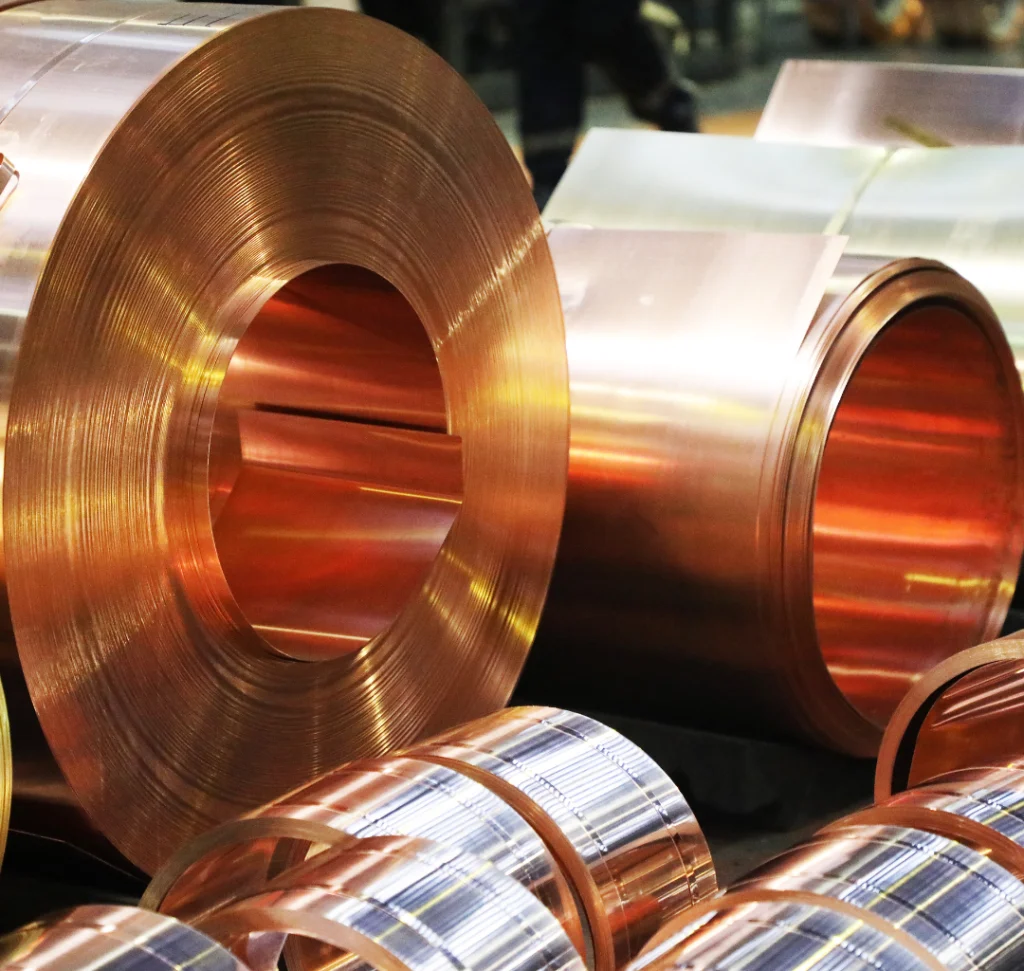
President Donald Trump announced a 50% tariff on copper imports and stated he is considering a 200% levy on imported pharmaceutical products.
As part of his plan to encourage the return of industrial production to the United States, President Donald Trump announced a 50% tariff on copper imports and stated he is considering a 200% levy on imported pharmaceutical products — a measure that could take effect later this year.
Commerce Secretary Howard Lutnick said the copper tariff could be implemented as early as August 1. “The idea is to bring copper home, to bring copper production home,” he said in an interview with CNBC.

Tariff increases on copper and pharmaceuticals
Although the U.S. has domestic copper production, the country imported approximately $17 billion worth of copper in 2024, according to the Department of Commerce. The leading suppliers were Chile, Canada, Peru, and Mexico.
In February, Trump ordered an investigation into copper imports under Section 232, a legal provision that allows the president to impose higher tariffs on the grounds of national security.
Experts warn that these tariffs could drive up prices for American consumers, as copper is a key component in electronics, machinery, and the automotive industry. Since the announcement, copper prices have surged to historic highs. Copper futures in New York rose by as much as 15%, reaching a record $5.68 per pound, according to CNN.
In addition to copper, President Trump also announced his intention to impose a 200% tariff on imported pharmaceutical products, although he acknowledged that the measure may take time to go into effect. During his previous administration, Trump exempted medicines from tariffs; however, he now aims to bring pharmaceutical production back to the U.S. through elevated import duties.
Several drug manufacturers have announced plans to expand their operations in the United States, although some of these initiatives were already underway before Trump took office in January.

Tariff pause extended, new rates possible in August
As trade negotiations continue, President Trump has extended the so-called “reciprocal tariff pause” until August 1. The tariffs, briefly implemented in April, were originally set to resume at 12:01 a.m. ET on Wednesday.
As part of his strategy, Trump has sent a flurry of letters to world leaders notifying them of the tariff rates that could take effect in August if no new trade agreements are reached. These notifications began on July 7, ahead of the original deadline for concluding trade talks this week.
President Trump has also warned countries against retaliating, stating that any countermeasures would be met with an equivalent increase in U.S. tariffs.

NSA Warns of Cyberattacks That Could Impact the Logistics Industry
A joint advisory from the National Security Agency (NSA), the FBI, and 16 other international cybersecurity agencies warns about vulnerable routers and network devices.

Freedom 250 Grand Prix Set to Make History in America’s Capital
Organized by INDYCAR in collaboration with the White House, the “Freedom 250 Grand Prix” will combine high-speed racing with a celebration of American patriotism.

Safe Driver Week 2026 Begins: Stay Prepared
The Safe Driver Week by the Commercial Vehicle Safety Alliance (CVSA), officially began on July 12.

ICE Expands Inspections for Truck Drivers: Required Documents
ICE agents have joined commercial vehicle inspections at selected U.S. weigh stations. Drivers should be prepared to present a valid CDL, vehicle documents, proof of legal work authorization, and meet the federal English proficiency requirement.

Common DOT Violations and How to Avoid Them
Common Department of Transportation (DOT) violations for truck drivers in Texas and California and how to avoid them.

New World Screwworm Cases Rise in Texas as Origin Remains Unknown
Uncertainty surrounds the spread of the New World screwworm in Texas; experts still don’t know how it entered the U.S.