OOIDA takes actions to support what’s best for truck drivers all over the U.S.
USDOT withdraws proposal to mandate speed limiters on commercial vehicles
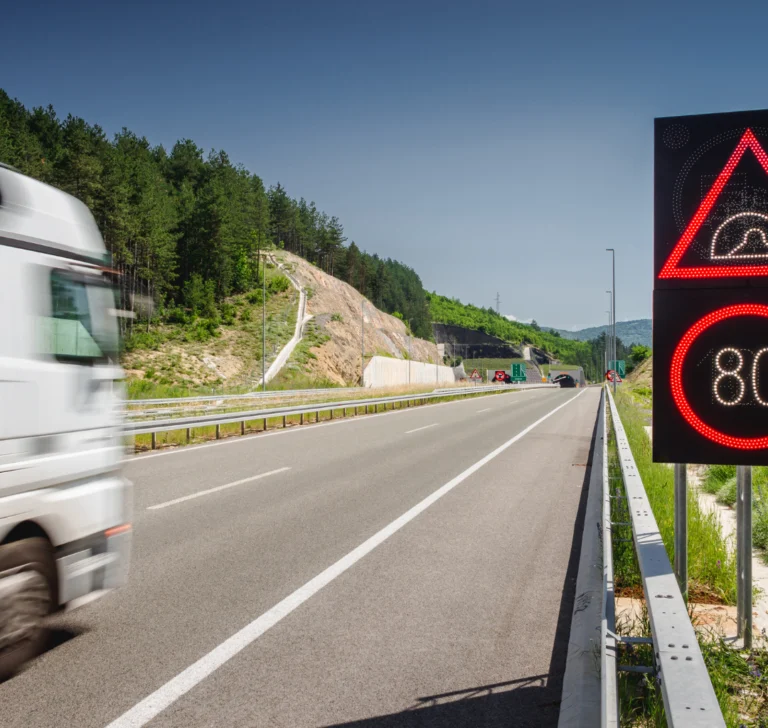
After receiving over 15,000 public comments on a 2022 notice issued by the Biden administration that considered requiring speed limiters on most commercial vehicles with a gross vehicle weight rating over 26,001 pounds, the U.S. Department of Transportation (USDOT) took action.
Truck drivers and organizations like OOIDA raised concerns about the risks associated with speed differentials on highways, increased road rage, and the inability to accelerate to avoid accidents. In response, the Federal Motor Carrier Safety Administration (FMCSA) and the National Highway Traffic Safety Administration (NHTSA) decided to withdraw the proposed regulation.
“The withdrawal is due to significant policy and safety concerns, as well as persistent data gaps that create considerable uncertainty regarding the estimated costs, benefits, and other impacts of the proposed rule,” the official notice stated.
However, the fight is not over. While speed limiters will not be mandated during the remainder of President Trump’s term, OOIDA is pushing to eliminate the proposal entirely. They are advocating for the passage of the DRIVE Act, which would prohibit FMCSA from issuing any regulation mandating the use of such devices.
Without the DRIVE Act, there is a possibility the proposal could be revived under a future administration. OOIDA continues to mobilize truckers and carriers in support of the legislation, aiming to put an end to a controversial issue that has affected the industry since 2016.

North Carolina, Indiana, and Illinois Join OOIDA to tackle predatory towing
The Owner-Operator Independent Drivers Association (OOIDA) continues to work with states to protect truckers from non-consensual towing, commonly referred to as predatory towing. Three more states have joined efforts to introduce laws to combat this practice:
In North Carolina, Governor Josh Stein signed a new law (formerly S311) prohibiting the immobilization of commercial vehicles as a method of parking enforcement. Violations carry penalties of up to $1,000 in fines and 60 days in jail.
The law also requires towing companies to return commercial cargo to the driver or owner upon request. Trailer swaps are allowed only if the replacement is similar, functional, and manufactured within five years of the original. The law takes effect December 1.
In Indiana, HB1390 is already in effect and limits towing charges in emergencies or on private property. It also mandates detailed invoices, including time estimates, usage certifications, and distance traveled.
Agencies must rotate service providers and review rates to prevent abuse. Violations are considered “deceptive acts” and can result in fines of up to $5,000. Additionally, customers may recover their vehicle by paying 75% of the fee and posting bond for the remainder.
In Illinois, a bill currently on Governor J.B. Pritzker’s desk (SB2040) aims to crack down on questionable towing practices. The measure would allow the state to impound tow trucks with unpaid fines, suspend their plates, and ban new licenses for three years. It also mandates protection of essential personal items left in towed vehicles.

OOIDA opposes the Modern Worker Empowerment Act
OOIDA has voiced strong opposition to the Modern Worker Empowerment Act (HR1319), arguing that it threatens the autonomy of independent truckers over their businesses.
In a letter to the House Committee on Education and the Workforce, OOIDA warned that the bill could allow large carriers to impose controversial “safety” technologies—such as speed limiters, inward-facing cameras, and other intrusive controls—without such mandates being considered employer oversight.
While the bill seeks to clarify the definition of employees versus independent contractors, one provision states that safety standards would not be considered as exerting control. OOIDA emphasized that many large carriers use these technologies not for safety, but to limit their legal liability. The group pointed out that this approach contradicts recent USDOT decisions, such as the withdrawal of the speed limiter mandate.
OOIDA believes HR1319 goes too far and would render many drivers “independent in name only.” As such, they urged lawmakers to vote against the measure when it is considered by the committee on Wednesday, July 23.


Teton Pass bridge will be closed to traffic for 10 days
Teton Pass is one of the most heavily traveled routes for truck drivers in Wyoming, serving as a vital corridor for the trucking industry. The

Terrifying Experiences of Truck Drivers Sleeping on the Road at Night

Cargo theft numbers drop for the third quarter of 2025
The cargo theft tracking company Verisk CargoNet released its report for the third quarter of 2025. The cargo theft tracking company Verisk CargoNet released its

40 major U.S. airports to see flight reductions due to government shutdown
40 U.S. airports, including those in New York, Los Angeles, and Chicago, will see flight reductions starting November 7 due to the government shutdown. 40

DOT Medical Card: Keeping Medical Certification Up to Date
Keeping your DOT Medical Card current is essential for both drivers and fleet operations.
Brake Safety Week 2025 results: almost 85% of commercial vehicles had no violations
Results of Brake Safety Week, organized jointly by the Commercial Vehicle Safety Alliance (CVSA) and the Department of Transportation, have been published. Results of Brake