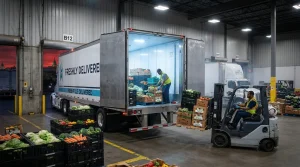
The OOIDA expressed its concern over compliance with safety regulations in a letter sent on to leaders of the U.S. Congress.
The Owner-Operator Independent Drivers Association (OOIDA) expressed its concern over compliance with safety regulations in a letter sent on October 20 to leaders of the U.S. Congress. In the message, OOIDA urged lawmakers to implement stricter measures in the training, licensing, and qualification processes for commercial vehicle drivers, arguing that current shortcomings in these areas are contributing to an increase in serious roadway accidents, according to the organization.
OOIDA President Todd Spencer warned that many individuals are entering the trucking industry without the essential skills needed to safely operate large trucks and other heavy vehicles. He added that the lack of consistency and rigor in state licensing systems has allowed hundreds of thousands of inadequately trained drivers to work on American highways, causing preventable tragedies that could have been avoided with stronger standards.
OOIDA calls for action to improve highway safety
The letter sent by OOIDA clearly outlines several requests that the organization believes Congress should approve. Among the main ones, OOIDA urged lawmakers to pass the bill introduced by Representative David Rouzer, a Republican from North Carolina, which seeks to codify the Department of Transportation’s final interim rule regarding the issuance of commercial driver’s licenses (CDL) to non-domiciled individuals. According to the association, this initiative would be an important step toward ensuring that all drivers meet the same training and competency standards.
Moreover, OOIDA’s appeal comes as Congress begins work on the next Highway Bill, given that the current Infrastructure Investment and Jobs Act is set to expire in September 2026. In this context, the organization proposed a series of measures it considers essential to strengthen road safety and promote professionalism within the freight transport sector.
One of the most notable recommendations is to tighten the Entry-Level Driver Training (ELDT) standards for new drivers. OOIDA proposes establishing a mandatory minimum of 30 hours of behind-the-wheel practice, as current regulations do not specify a required number of hours. According to Spencer, this measure would help ensure that new drivers gain sufficient hands-on experience before entering the professional workforce.
The association also urged the Federal Motor Carrier Safety Administration (FMCSA) to make better use of the Training Provider Registry (TPR) to more swiftly remove training centers that fail to meet requirements or display deficiencies. Additionally, OOIDA called for stricter oversight of new motor carrier applicants and the elimination of exemptions that allow commercial learner’s permit (CLP) holders to drive without a CDL holder in the front seat, a practice the organization believes endangers public safety.
Finally, OOIDA stressed the need for greater oversight of third-party CDL examiners, pointing out that cases of fraud and bribery continue to occur in this area.
Strong training, rigorous oversight, and consistent enforcement
The organization emphasized that only through strong training programs, rigorous supervision, and consistent enforcement of existing regulations will it be possible to enhance highway safety and elevate the professional standards of commercial drivers across the United States.

Human Trafficking: A Nationwide Call to Action on America’s Roads
Human trafficking is the focus of a nationwide awareness week aimed at educating truck drivers, motor carriers, law enforcement, and the public about human trafficking, how to spot the warning signs, and what to do if someone may be in danger.

TAA Compliance: When Safety Complaints Turn Into Six-Figure Losses
STAA compliance is no longer a technical detail for fleet owners—it is a financial, legal, and insurance exposure. A recent enforcement action in Texas shows how mishandling safety complaints can lead to termination claims, retaliation findings, and six-figure penalties, and what carriers must do to avoid becoming the next case

U.S. labor market raises red flags on Wall Street
The U.S. labor market closed 2025 with clear signs of weakening, as evidenced by the latest employment data released in December. In the latest episode

DOT finds half of North Carolina CDLs were issued illegally
The DOT warns that half of North Carolina’s CDL licenses are irregular after a federal audit uncovered serious compliance failures. The findings directly affect truckers, fleets, and transportation companies, raising urgent questions about road safety, legal operations, and the future of the trucking industry.

California’s Unhealthy Air: Impacts on Trucking and Freight
Unhealthy Air Quality in California: What Repeated Pollution Alerts Mean for Trucking and Freight Operations

Global Road Freight on Track to Hit USD 5 Trillion by 2033
Global Road Freight on Track to Hit USD 5 Trillion by 2033 as e-commerce growth, supply chain restructuring, and technology adoption accelerate demand for road-based cargo transport worldwide.
All content and original artwork, unless otherwise noted, is protected by copyright. Saint George uses certain images under license from various licensing vendors for this purpose. Any unauthorized commercial reproduction or distribution of copyrighted materials is prohibited.